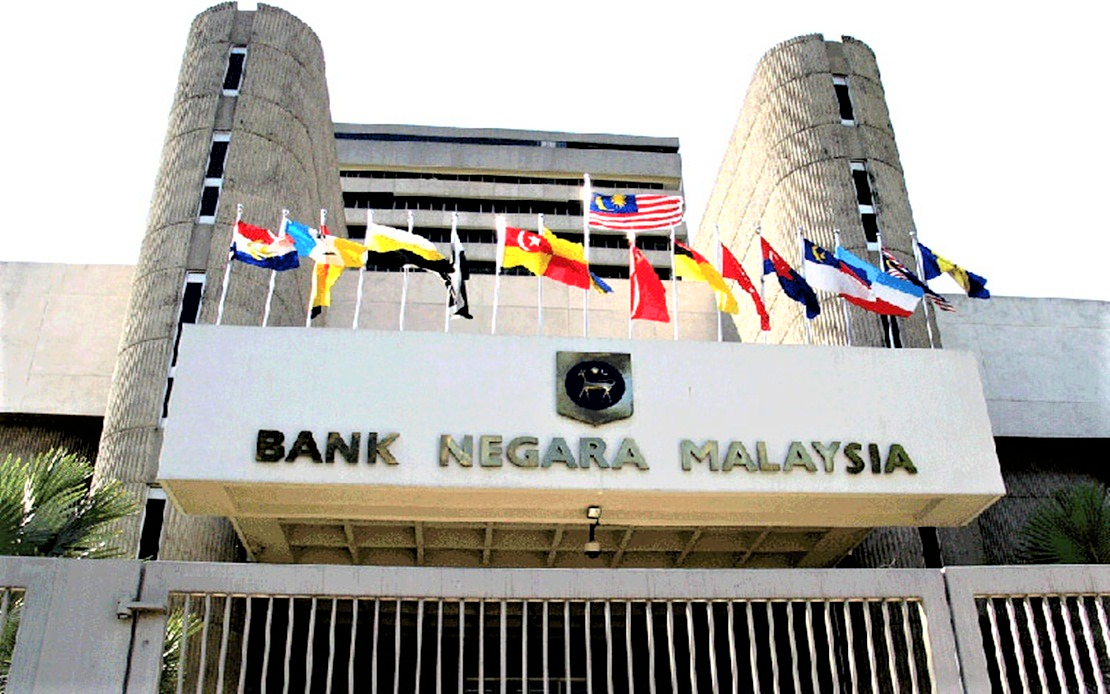
KUCHING: Malaysia’s economy grew by 5 per cent in the fourth quarter of 2024, slightly lower than the 5.4 per cent expansion recorded in the previous quarter, according to data released by the Central Bank of Malaysia (BNM).
According to the statement, growth was primarily fuelled by strong domestic demand, supported by sustained household spending and robust investment activity.
The statement added that investment activity remained strong, underpinned by the realisation of both new and ongoing projects.
“Household spending was sustained amid positive labour market conditions and continued policy support. In the external sector, exports of goods and services continued to expand, while capital and intermediate imports growth moderated.
“On the supply side, growth was mainly driven by expansion in the services sector, with increased support from both consumer-related and business-related subsectors.
“The manufacturing sector was supported by the electrical & electronics (E&E) and primary-related clusters, whereas the construction sector continued to record double-digit growth with robust activities in the residential, non-residential, and special trade subsectors,” it said.
However, the statement noted that growth was weighed down by contraction in the commodities sector following lower oil palm output, as well as the continued decline in oil production.
“On a quarter-on-quarter seasonally adjusted basis, Malaysia’s economy contracted 1.1 per cent in Q4 2024 (compared to 1.9 per cent growth in Q3 2024), reflecting a temporary slowdown,” it said.
2024 economic growth at 5.1 per cent, higher than 2023
For the year as a whole, BNM said that Malaysia’s economy expanded by 5.1 per cent, a significant improvement from the 3.6 per cent recorded in 2023.
BNM noted that growth was driven by stronger household spending, increased investment activity, and a recovery in exports. Government policy initiatives, including the New Industrial Master Plan (NIMP), the National Energy Transition Roadmap (NETR), and the National Semiconductor Strategy, played a key role in sustaining economic momentum.
“On the external front, exports recovered amid steady global growth, the ongoing technology upcycle, as well as higher tourist arrivals and spending.
“This provided support to the current account, leading to a continued surplus of 1.7 per cent of GDP in 2024, compared to 1.5 per cent in 2023,” it said.
Headline and core inflation edged lower
BNM further stated that inflationary pressures eased during the quarter, with headline inflation moderating to 1.8 per cent in Q4 (Q3 2024: 1.9 per cent).
According to BNM, lower inflation was observed for mobile communication services and RON97 petrol, although this was partially offset by higher inflation in food-related items, particularly fresh vegetables and seafood.
“Core inflation was lower at 1.7 per cent (Q3 2024: 1.9 per cent), driven largely by the moderation in inflation for mobile communication services, which declined by 10.0 per cent (Q3 2024: 0.0 per cent).
“Inflation pervasiveness remained moderate. The share of Consumer Price Index (CPI) items recording monthly price increases remained below the long-term average of 39.8 per cent (Q3 2024: 38.9 per cent; Q4 2011-2019: 41.7 per cent).”
For the entire year, both headline and core inflation dropped to 1.8 per cent, compared to 2.5 per cent and 3.0 per cent in 2023, respectively.
Ringgit strengthens against major currencies in 2024
BNM reported that in 2024, the ringgit recorded an overall appreciation of 2.7 per cent against the US dollar, making it one of the few Asian currencies to strengthen alongside the Hong Kong dollar and Thai baht.
BNM also noted that the ringgit appreciated against the Singapore dollar, Korean won, and Japanese yen, with an overall gain of 7.5 per cent in Nominal Effective Exchange Rate (NEER).
“This was despite the ringgit’s depreciation against the US dollar (-8.1 per cent) and major trading partners (NEER: -3.4 per cent) in the fourth quarter of 2024, which was in line with the broader movement of regional currencies.
“This movement was primarily driven by a stronger US dollar, influenced by revised financial market expectations of smaller US policy rate cuts in 2025 and increased investor risk aversion due to policy uncertainties under the new US administration,” it said.
As of February 12, 2025, BNM noted that the ringgit had appreciated by 0.1 per cent against the US dollar while declining slightly by 0.03 per cent on a NEER basis.
“External factors are expected to continue influencing the ringgit exchange rate. Nevertheless, Malaysia’s positive macroeconomic prospects and the ongoing implementation of structural reforms will provide medium-term support for the ringgit.
“BNM remains committed to ensuring the orderly functioning of the domestic foreign exchange market,” it said.
Credit growth remains strong
BNM further said that credit growth remained steady, with credit to the private non-financial sector growing by 5.2 per cent in Q4, compared to 4.8 per cent in Q3.
It pointed out that higher business loans and corporate bonds were the main contributors, particularly in the manufacturing and construction sectors.
“Household loans expanded by 5.9 per cent (3Q 2024: 6.1 per cent), following some moderation in loan growth for the purchase of housing and cars.
“Notwithstanding, the levels of loan applications and disbursements remained broadly sustained for the quarter,” it said.
Outlook for 2025
Looking ahead, BNM Governor Datuk Seri Abdul Rasheed Ghaffour remains confident in Malaysia’s economic prospects despite potential global challenges.
“While the global environment could be challenging, growth of the Malaysian economy will be driven by robust expansion in investment activity, resilient household spending and expansion in exports supported by Malaysia’s strong economic fundamentals,” he said.
He highlighted that on the domestic front, investment activities will be driven by the favourable progress of multi-year projects in both the private and public sectors and further lifted by the realisation of approved investments.
“Household spending will benefit from the continued support from employment and wage growth as well as government policy measures. This includes the upward revision of the minimum wage and civil servant salaries.
“On the external front, the ongoing global tech upcycle, continued growth in non-electrical and electronic goods and higher tourist spending are expected to lift exports,” he said.
He added that the growth outlook remains subject to downside risks.
“Such risks include an economic slowdown in major trading partners amid the heightened risk of trade and investment restrictions and lower-than-expected commodity production.
“Nevertheless, potential upside to growth includes greater spillovers from the tech upcycle, more robust tourism activities and faster implementation of investment projects,” he said.
Inflation expected to remain manageable in 2025
On the inflation front, BNM expects price pressures to remain manageable in 2025, with global cost conditions easing and domestic demand remaining stable.
“While the recently-announced domestic policy reforms would contribute to some upward pressure on prices, the overall impact on inflation is expected to be contained.
“Nevertheless, upside risks could arise from larger cascading effects from policies to broader CPI prices,” it said.