KUCHING: The Sarawak government is giving priority attention to homelessness along with 13 other social issues to ensure vulnerable and disadvantaged groups receive attention.
In stating this, Women, Childhood, and Community Wellbeing Development Minister Datuk Seri Fatimah Abdullah highlighted the importance of transit centres for the homeless (TTG), which provide temporary shelter (14 days) and essential support to those in need.
“The TTG in Kuching is the second in Sarawak, following TTG Sibu, which has been operational for about three years. The next TTGs planned will be in Miri which is currently undergoing renovation and Bintulu which is still under construction.
“Sarawak will soon have four transit centres for the homeless, aimed at addressing homelessness in the state,” she said.
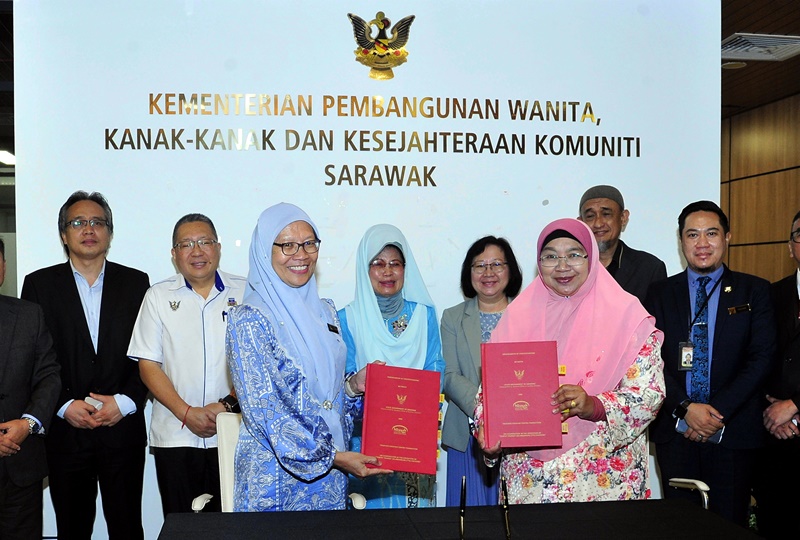
She said this after witnessing the signing and exchange of MoU documents between the Kuching Resident Office represented by Kuching Resident Dayang Joanita Azizah Abang Morshidi and Hidayah Centre Foundation represented by its Board Member Datin Dr Amalina Abdullah for the operation of TTG Kuching at Baitulmakmur II Building here Monday (Mar 3).
Fatimah noted that homelessness in Sarawak stems from various factors, including poverty, drug and substance abuse, alcohol addiction, family problems and mental health issues.
“We monitor not only the number of homeless individuals across Sarawak but also conduct a brief study on the factors that contribute to homelessness.
“With the establishment of TTG Sibu, we also assess its success stories and the achievements we have accomplished through this transit centre.
“Our approach incorporates best practices from other locations, such as Kuala Lumpur and Japan, to develop solutions suited to Sarawak’s context,” she said.
Fatimah emphasised that these centres provide clean, safe accommodation, food and access to hygienic facilities.
Additionally, all individuals entering the TTGs undergo health screenings to ensure their well-being.
Those found struggling with drug addiction are referred to the National Anti-Drug Agency (AADK), while individuals with mental health concerns are directed to Sentosa Hospital for further care.
“This is one of TTG’s key roles — to refer cases to the appropriate agencies. Beyond shelter, the goal is to provide a pathway to self-sufficiency. We assess individuals for their potential and offer skills training and job placement for those who are trainable.
“Eventually, they can become independent and live a dignified existence. This is what we want — a dignified existence.
“This is already being implemented at TTG Sibu, where some individuals have found employment in roles such as cooks, toilet attendants, and car wash workers, depending on their abilities,” she said.
Fatimah acknowledged that not all individuals are trainable, and that alternative long-term solutions must be explored for those unable to enter the workforce.
However, she reaffirmed the government’s commitment to reducing homelessness and ensuring that those in need receive proper attention.
“To us, these homeless individuals are still people, they are Sarawakians. Post-Covid-19 Development Strategy (PCDS) 2030 is very clear, social inclusivity means attention must be given to everyone, even the minority, the disadvantaged, and the needy.
“Our government emphasises economic prosperity, but at the same time, social inclusivity. No one is left behind,” she said.