TATAU: Traditional handicrafts, especially those made from Engkalat bamboo inherited by the Dayak community, must be strengthened so they do not vanish over time.
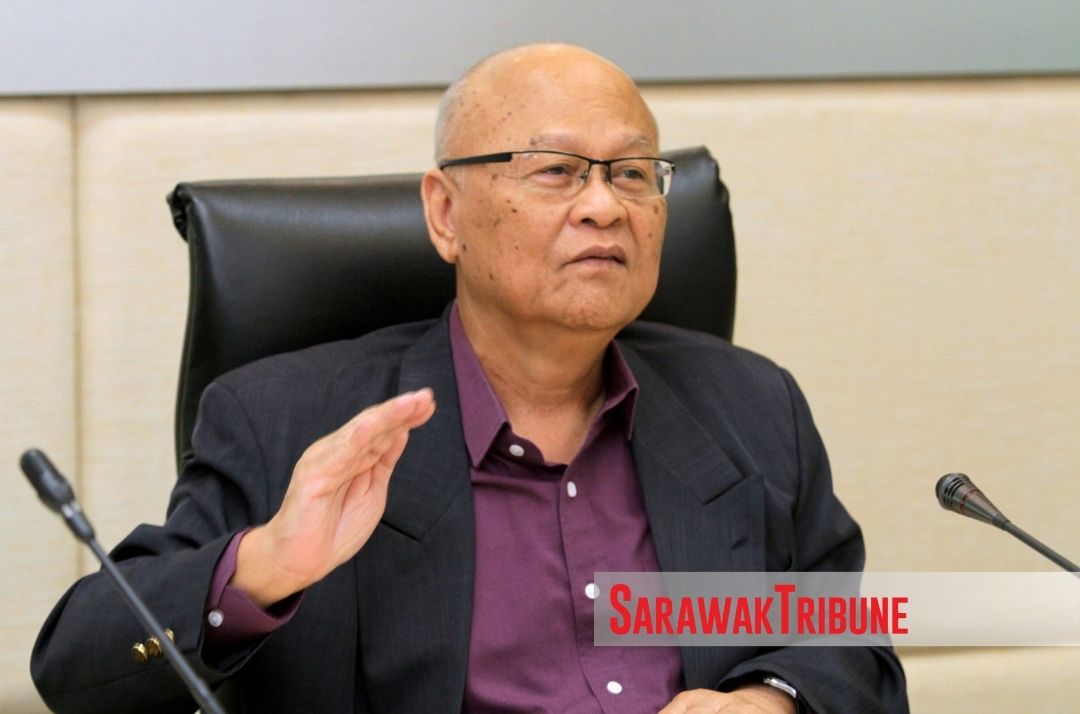
Minister in the Sarawak Premier’s Department, Datuk Seri John Sikie Tayai, said that this effort is not only important to preserve cultural identity but also holds potential to become a sustainable income source for rural communities.
According to him, the initiative driven by Universiti Malaysia Sarawak (UNIMAS) should be expanded with greater financial support from the Ministry of Finance, especially in the Kakus area, to involve more communities of various ethnic groups including Malays, Melanaus, Ibans, Chinese, and Orang Ulu, all rich in their own craft heritage.
“I urge craft practitioners to register with the Sarawak Craft Council and the Malaysian Handicraft Development Corporation so it will be easier to get assistance and market products to a wider audience,” he explained.

He said this when officiating the closing ceremony of the Community Empowerment Programme Universiti @UniMADANI Phase 2: KRAF BAGIAU – Sustainability of Engkalat Bamboo Craft at Rumah Banyang, Rantau Aur, Tekalit, Tatau, on yesterday.
He added that craft production not only helps preserve cultural and artistic heritage, but also creates income opportunities, particularly for housewives in longhouses who can use their time to produce items such as bamboo weaving, beadwork, and other forest products.
Sikie, who is also Kakus assemblyman, said by 2030, the government is targeting household incomes of no less than RM15,000, and handicraft production is among the potential economic sectors that rural communities should explore.
“In addition, with improved internet access in Tekalit, I encourage the community to use social media platforms to market their crafts online,” he said.
At the event, he also announced a Minor Rural Project (MRP) grant allocation of RM20,000 to the Village Development and Security Committee (JKKK) of Rumah Banyang in support of community development.
UNIMAS also contributed a bamboo splitting and slicing machine to facilitate the production of local bamboo crafts.
Earlier, UNIMAS Assistant Vice-Chancellor (Industry, Community, and Sustainability Network), Professor Noraziah Abdul Wahab, said that as a “community-driven university”, UNIMAS upholds the mission of empowering local communities through skill training, product branding, and more competitive modern marketing.
“The KRAF BAGIAU project serves as an important bridge between academic knowledge and community life, while also encouraging sustainable bamboo harvesting and fostering innovation in craft production,” she said.
Among the crafts now being promoted by the Tekalit community include Engkalat bamboo weaving, products made from bemban, rattan, wood, beads, sintung, traditional attire such as baju gagung, raga, lanji, sumpit, and various other ethnic products that reflect the richness of local cultural heritage.
This programme is part of the Komuniti@UniMADANI initiative funded by the Ministry of Finance Malaysia and coordinated by the Unimas Centre for University Sustainability as an effort to empower community economies and sustain traditional handicraft arts in Sarawak.