KUCHING: A near century-old equipment used to process and shape gold bars into plates and wires, which were subsequently fashioned into jewellery, is now in the possession of the Sarawak Museum Department.
Tourism, Creative Industry and Performing Arts Minister, Datuk Seri Abdul Karim Rahman Hamzah, said the set of traditional goldsmithing tools and machines is among several items handed over to the museum of late.
It was donated by Teo Keng Boon, the grandson of renowned goldsmith Teo Chai Seng.
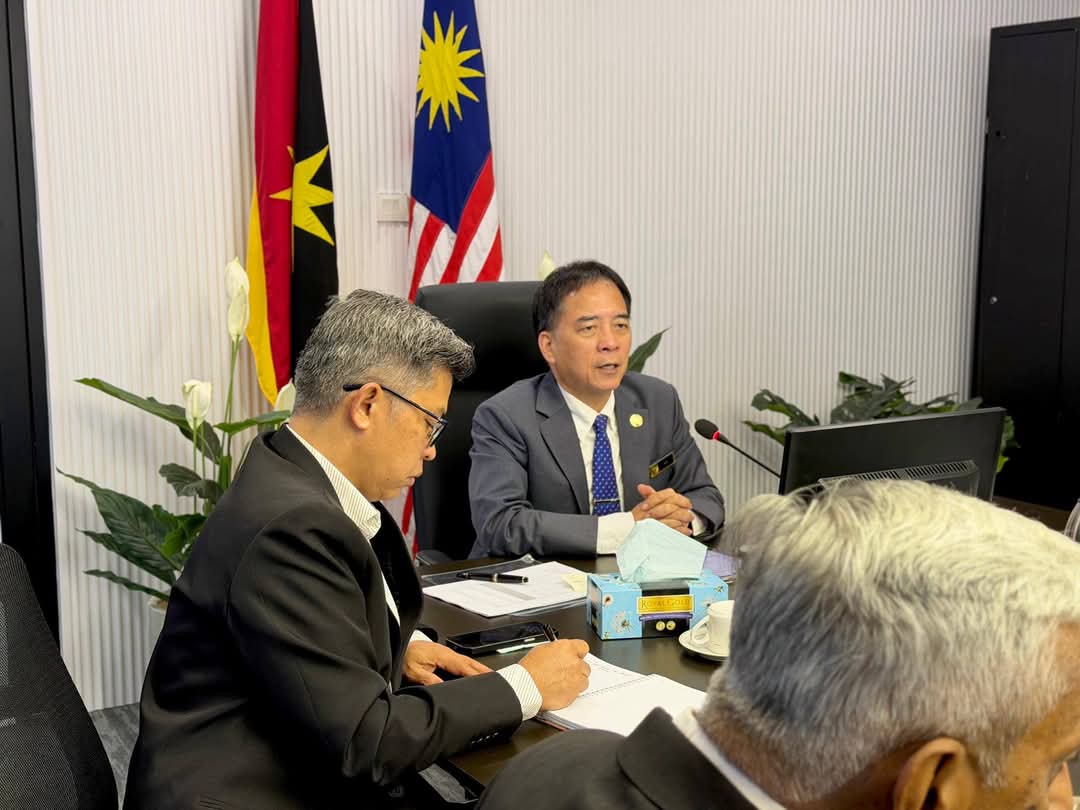
“The set comprises machinery, a work station, hand tools, a glass canister, a vault and the original shop signboard,” he told a press conference after chairing the Sarawak Heritage Council meeting here today (June 18).
.
“Entirely operated by hand, the tools are estimated to be approximately 93 years old. The goldsmithing establishment, Chop Swee Hin, initially operated at No 11 Jalan Rock until 1960, before relocating to No 8 China Street, Kuching on October 18, 1988. The business ceased operations permanently on November 29, 2005.”
In addition, he said two sunhats, originally from Sarawak, belonging to Bill and Pam Lavery were received from their son, John Lavery, who claimed that the authentic sunhats were obtained during the formation of Malaysia in 1963 in Kuching.
“Bill Lavery was posted to Limbang that same year as a teacher and later served as headmaster under the Colombo Plan of External Aid of the Canadian government to Sarawak.
“The Lavery family left Sarawak in 1965. The hats were later passed on to their son, John Lavery, who entrusted it to the Sarawak Museum for safekeeping,” said Abdul Karim.
The third item, he said, is an old parang from Tebakang, Serian, which was donated by Lewis Mengu, who claimed that this parang has been with his family for almost 100 years.
“The donor claimed that the parang originally belonged to a group of headhunters who confronted Bueng and his wife in the early 1900s. Bueng was Lewis’ forefather.
“In this ensuing fight, Bueng fought bravely and took one of their parangs. He brought it back to Kampung Tebakang Bidayuh, where it became a treasured family heirloom. The parang remained with the Bueng family, passed down through generations,” he added.
Abdul Karim said the department also received two unglazed ceramic vases from a donor named Mohd Rizal Bujang, who claimed that the pottery was discovered in the 1970s by his father, Bujang Abdullah, together with the late Ibni Zen and the late Othman Zen while fishing off the coast of Santubong.
Meanwhile, another two copper pots were donated by Surau Darul Falah, Kampung Tupong.
He said they were handed over to the museum by the surau’s chairman, Sakeran Bujang, on June 12 and that the copper pots which were used by the villagers to cook rice, porridge, and dishes during communal events, were kept at the surau.
“The pots are estimated to be over 70 years old, as they have been in use since the first surau was built,” he said.
He added that the department managed to obtain a 13-metre Sei Whale (Balaenoptera borealis) skeleton in November 2024.
Abdul Karim said the whale was initially found dead and drifting in the Pulau Seduku waters, before being trapped in the structure of the in-progress bridge near the Triso Ferry.
“Now part of the Museum’s zoology collection, it is the largest whale specimen ever obtained and holds significant value for research and exhibition.
“The acquisition was made possible through collaboration with the Sri Aman Resident Office, Lingga and Sebuyau District Offices, Sarawak Forestry Corporation, Fire and Rescue Department, Royal Malaysia Police, and the local community,” he said.