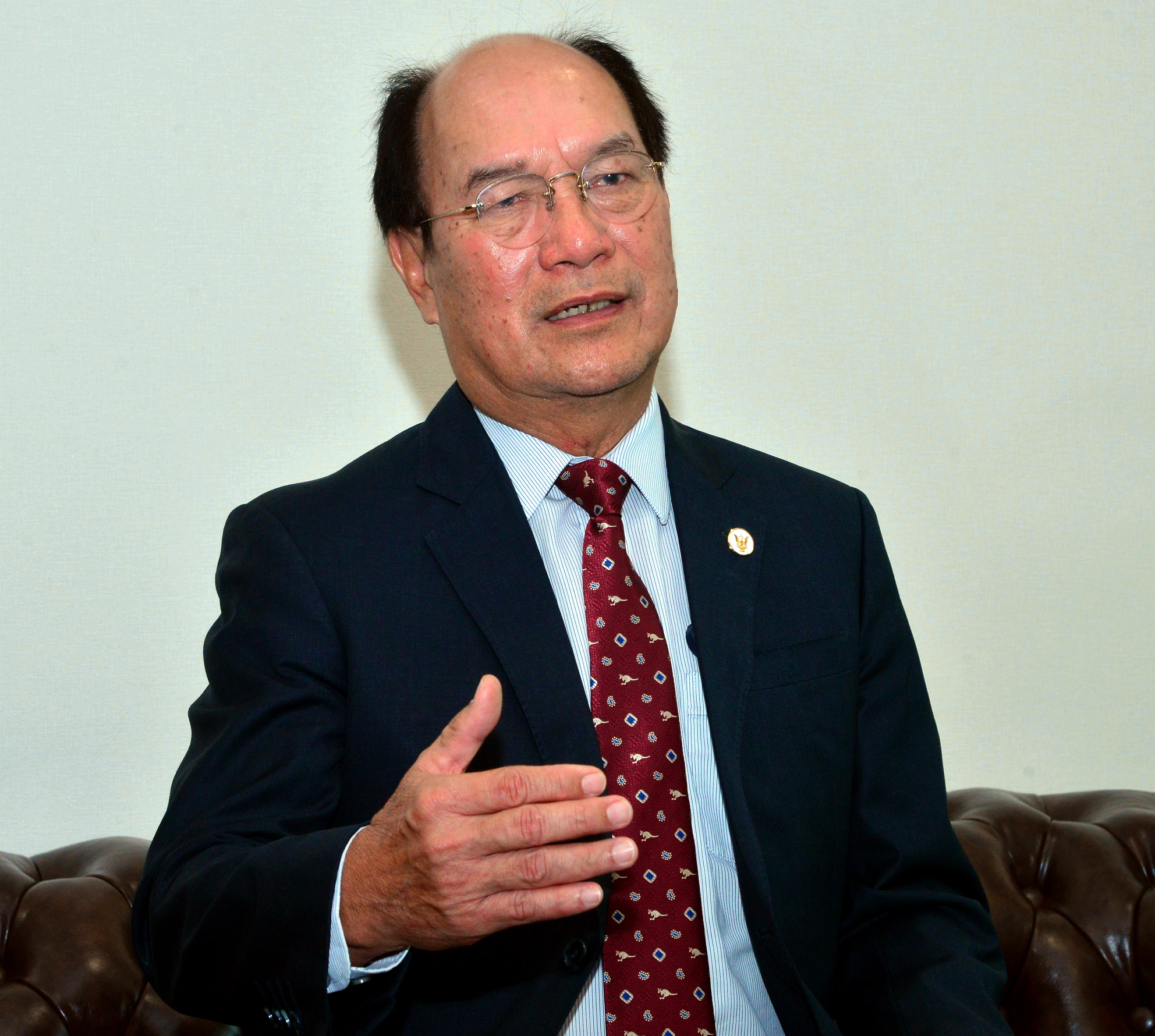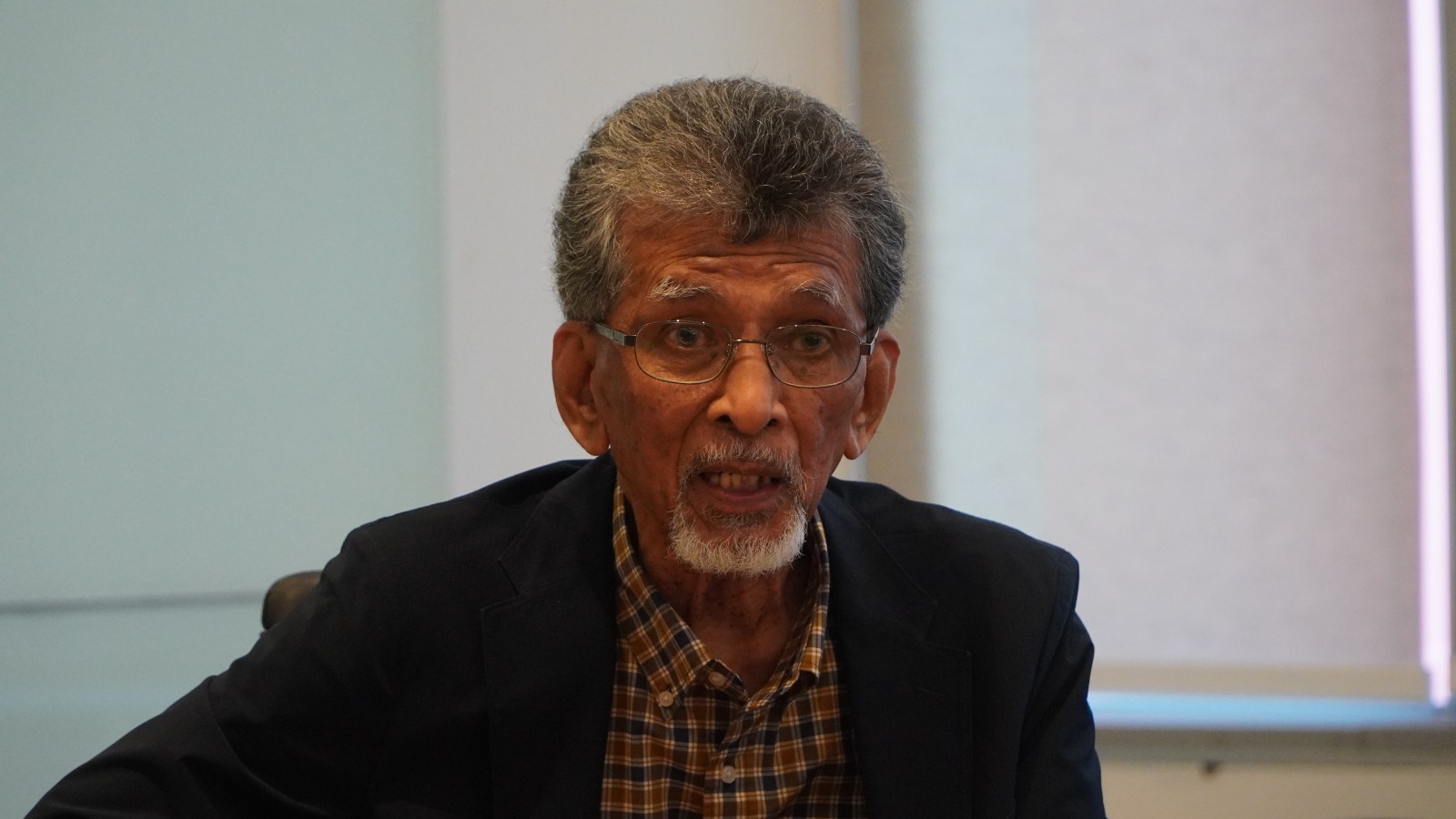
SAMARAHAN: Malaysia must stop relying on foreign professionals and start trusting its architects to shape the built environment, said veteran architect and PAM Gold Medallist Datuk Hajeedar Abdul Majid.

“Foreigners don’t do nation-building. We have all the skills and the capacity to design anything in this country. Why are we still looking for foreign professionals?”
Hajeedar said the recent AIR Architecture Competition revealed just how much design talent exists locally, especially among younger architects.
He credited developer Hock Seng Lee (HSL) for giving local firms a fair platform.
“If HSL had not given this opportunity, we would not have uncovered the potential that exists among these young architects.
“Now that they’ve done so, the challenge is to make the project viable and build it. You don’t produce a product nobody wants to buy. It has to be workable.”
Real design takes time and support
HSL Realty Director Yu Ji said the post-competition phase is just as important as the design itself.

“In 2021, after announcing the winners, we went back and interviewed all the finalists again. We assessed feasibility and picked one to proceed with,” he said.
That project took nearly three years to reach groundbreaking, and he shares his expectation of a similar timeline this time.
“We hope to break ground in about three years,” he added.
He also emphasised the importance of open and anonymous judging.
“In the first round, we didn’t know who submitted what. That’s how it should be. We spent the money to get the best ideas and to ensure the final product brings real value to the public.”
Designing with cultural intelligence
Hajeedar said architecture is more than structure—it carries culture.
He urged decision-makers to recognise the depth of local design values.
“Buildings are the tangible outcome, but the real value lies in the intangible: our culture, our history, our identity,” he said.
He argued that Malaysia’s strength is its diversity.
“If I show you a building in Perlis and one in Sabah, you’ll know where each came from. That’s what we should be celebrating.”
His concern is that these values are often ignored in favour of imported styles.
“When people say ‘Malaysian identity,’ they don’t always realise what it means. It’s in the subtle differences. It’s in the flavour of a place. Foreign architects can’t always understand that,” he said.
For Malaysian Institute of Architects (PAM) President Adrianta Aziz, Malaysian design is unique because it carries more than just form and function.
“When we start a design, we bring our culture and background into it. That is the beauty. Foreign architects can’t always replicate that.
“One entry in the AIR competition even preserved up to 76 per cent of the natural landscape. That kind of sensitivity comes from understanding the land.”
He said the architecture profession needs to be seen as a long-term continuum.
“We are not just individual names. We carry forward a legacy, from one generation to the next.”
Supporting the next generation
Adrianta said it is time to widen the platform to include students.

“Competitions such as the AIR Architecture Competition are important, but imagine if we also opened it up to student categories. Let them test their ideas in the real world,” he said.
He said PAM’s education committee already works closely with universities, colleges and polytechnics, running weekly talks and workshops. But he wants to see more collaboration with developers and local authorities.
“Students need to feel the bridge between academia and practice. That’s where they mature, not just in design, but in understanding context, regulations and project management,” he said.
He added that PAM also provides scholarships for diploma, degree and postgraduate students.
“This is the platform for our next generation of architects,” he said.
A future shaped by collaboration
Yu Ji believes competitions like AIR are worth the effort, despite the long timelines and planning complexity.
“We like doing competitions because they are open and merit-based. In the end, the real winners are the public,” he said.
Echoing the sentiment, Adrianta described the work of architects today as a kind of symbiosis.
“Nature and people. Senior and junior architects. When we help one another, the community benefits.”
He said PAM would continue advocating for open design platforms.
“This was only our second collaboration with HSL. We hope there will be more. We need local authorities and the government to see how this benefits everyone.
“We want the public, the stakeholders and the government to see that Malaysian architects are capable. We don’t need to look elsewhere. We are already here.”