WITH the rapid growth of artificial intelligence (AI) and how it is seeping into every corner of our lives, it is therefore important to understand our digital rights.
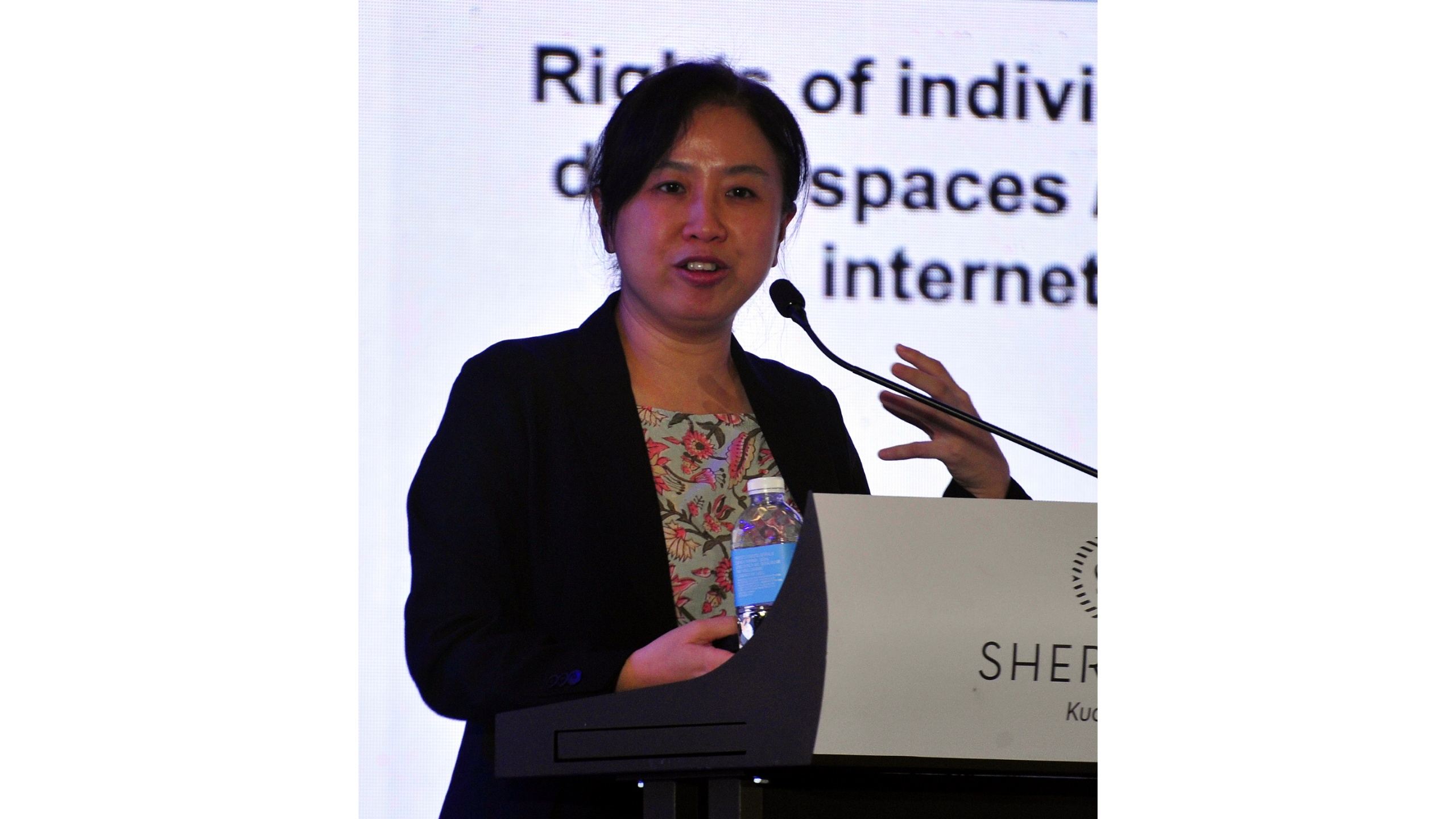
This was emphasised by Dr Jun-E Tan, Senior Research Associate at the Khazanah Research Institute, during her sharing at the recent Sarawak Media Conference 2025 on ‘Digital Rights and AI Governance in Malaysia’.
She shared insights from her and her team’s intensive research on the matter, highlighting the urgency to address these issues, especially with the boom in AI usage.
According to Sarawak Artificial Intelligence Centre CEO Patrick Then, during a panel discussion on the same topic, AI is evolving at an incredibly fast pace – “the slowest is three months, while the fastest is within three weeks”.
This shows how quickly AI is learning and adapting, hence the pressing need to understand its escalation.
“While researching for the report, we asked our stakeholders: what are the risks of AI? There was a long list of concerns, such as the risk of not adopting AI and being left behind, risks of unsafe AI and unintended consequences, and risks of malicious use of AI,” said Jun-E.
To cope with these risks, new laws must be created, or where appropriate, existing ones must be amended.
The workforce also needs to be trained and educated to raise awareness of AI risks.
“There is a lack of readiness, which can exacerbate AI risks, because if you don’t know how to use AI, how are you going to actually adopt it well?” she questioned during the talk.
“The issues we face with AI are a continuation and escalation of those we previously faced regarding digital rights and Internet freedom. Protecting digital rights will help protect us in the AI era,” Jun-E added.
To her, AI is about more than just job displacement. Emphasising the need to understand AI – rather than blindly trusting the convenience of its tools – is crucial.
“At this point, I would say we need to move beyond AI literacy. We need to look at things like consumer and civic education and relate that directly to our daily lives.
“So as a consumer, how is AI going to affect your consumer rights? As a citizen, how will AI affect your democratic institutions and processes?” she said.
“These are the things we need to think about and discuss as a society. A lot of work needs to be done. And lastly, we must support research and oversight on AI impacts.
“I would say this is the area most lacking. For instance, we don’t actually have an incident monitoring system to report AI-related harms. Why is that important? Because, as I mentioned earlier, many AI risks are speculative.
“They depend on what you think AI is, and then you come up with some imagined risks. But as we speak, incidents connected to AI are already happening in various sectors.
“It’s just that we are not really observing or recording them. It’s important to do so at the local level. That way, when the time comes, we’ll have data to support policymaking.
“These are the most significant AI harms that have occurred. And so, we need to pay extra attention to scams, or to ethics – things like that. Right now, we don’t have a repository of these harms.
“And we need to know where AI is being used. We need to help with its adoption. In order to make AI useful for our SMEs, we need a registry of AI providers that can actually serve their needs.”
Understanding our digital rights
According to Jun-E, our digital rights have changed since 2019. Back then, the concerns were more about freedom of expression and protection against discrimination.
People focused on data privacy, ownership, control, access to digital spaces, meaningful participation, and governance of the internet.
But today, as AI rapidly expands and the associated risks multiply, our digital rights have taken a slightly different – and more drastic – form.
The framework for digital rights in the age of AI
Conventional rights in digital spaces – rights of individuals in digital spaces:
- Online safety issues such as scams, cyberbullying, and non-consensual deepfake images
- Misinformation/disinformation, “AI slop”, and hate speech
- Mental health issues and loneliness
Data-centred rights – protection of digital data that represents physical entities:
- Automated decision-making on personal data, with far-reaching consequences
- Urgency in data sharing to unlock insights
- Corporate and state surveillance more powerful than ever
Access to the digital – access to digital spaces and meaningful participation:
- Fragmentation of digital spaces due to geopolitics
- Exacerbation of the digital divide – not only in access but also in AI literacy
Governance of the digital – participation in digital and Internet governance:
- Concentration of power
- Global South’s struggle to have a seat at the table
- Difficulty in participating at every layer of the tech stack – physical infrastructure, data governance, AI development, application, and deployment
The establishment of the National AI Office (NAIO)
Understanding the calculated risks, the federal government established NAIO in December to oversee AI-related challenges and digital rights. This establishment is crucial to coordinating AI adoption and governance.
Key functions include:
- Strategising and coordinating AI development
- Centralising resources for efficiency
- Standardising protocols and best practices
- Establishing and enforcing AI regulations
- Promoting AI innovation through collaboration
Mitigating and addressing risks
As Jun-E concluded her session, she advised that we should not be distracted by conversations about superintelligence or sentient machines.
“Let’s just focus on what AI means. How is it being used in everyday life? What are the impacts happening right now – without looking too far into the future. And lastly, we need collaboration and coordination,” she advised.
She believes that by focusing on the fundamentals and building AI readiness, we can address and reduce some of the risks.
“I think this is something we always emphasise. There are so many things happening at various levels – local, state, and even in Sarawak, for instance.
“At the national level, we must consider all states and coordinate a regulatory framework that fits everyone. Then, at the regional and international levels, a lot of collaboration and coordination need to happen.
“Honestly, this is also really important because we just don’t have the resources to do all of it on our own,” she concluded.