
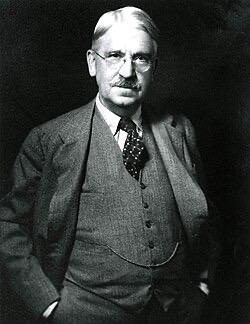
“Curiosity is the mother of inquiry, and inquiry is the mother of knowledge.“
– John Dewey (1859-1952), an esteemed American philosopher, psychologist, and educational reformer closely linked with pragmatism and functional psychology.
DEAR readers, in our previous discussion, we explored the intricacies of critical thinking – an essential skill that allows us to analyse information, question assumptions, and make informed decisions.
This week, we will pivot to an equally vital yet often overlooked element that underlies effective critical thinking: curiosity. At its core, curiosity is the spark that ignites our desire to learn, explore, and understand the world around us.
It is a potent driving force that fuels personal and professional growth, pushing us to question the status quo and seek knowledge beyond our immediate grasp.
What is Curiosity?
Curiosity is a fundamental human trait that compels us to seek new experiences, acquire new knowledge, and solve problems. Psychologists define curiosity as a desire to learn or know about something, which often manifests as an intrinsic motivation to explore and discover.
This yearning can take many forms – be it a child asking endless “why” questions or an adult diving deep into a complex subject.
Even in behavioural studies, curiosity has been linked to positive emotional responses, promoting not just learning but also emotional well-being (Kashdan & Silvia, 2009).
The nature of curiosity can be broken down into two primary types: perceptual curiosity, which is triggered by novel stimuli or unexpected changes in our environment, and epistemic curiosity, which involves a deeper desire for knowledge and understanding (Litman & Jimerson, 2004).
Both forms play a crucial role in how we engage with the world, encouraging us to ask questions, seek information, and refine our understanding of complex issues.
How to Build Curiosity
From what I have gathered and learned, building a curious mindset is not merely about seeking new information; it involves cultivating an environment that nurtures inquiry and exploration.
Let’s explore some practical strategies to cultivate and sustain a curious mindset in our everyday lives:
1. Embrace the Unknown: Allow yourself to engage with topics that are outside your area of expertise. Attend lectures, read books outside your usual genres, or have conversations with people from different backgrounds. This exposure can kickstart your curiosity and open your mind to new ideas.
2. Ask Questions: Never hesitate to ask questions, no matter how silly they may seem. Formulating and vocalising questions encourages deeper thinking. Create a list of topics or subjects you’re curious about and commit to finding answers.
3. Practice Reflective Thinking: Allocate time regularly to think critically about what you’ve learned. Reflect on your experiences and recognise patterns which can lead to new insights and questions.
4. Cultivate a Growth Mindset: Adopt the belief that intelligence and abilities can be developed through dedication and hard work. This mindset makes challenges more engaging and motivates you to explore further.
5. Surround Yourself with Curious People: Engage with individuals who inspire your curiosity. Their enthusiasm for learning can be contagious, creating a richer, more dynamic environment for exploration.
Sustaining Curiosity
While igniting curiosity is important, sustaining it requires consistent effort.
Here are effective strategies to maintain and nourish your curiosity:
1. Set Learning Goals: Establish specific, measurable objectives related to your interests. Setting goals can channel your curiosity into focused learning, which, in turn, nurtures an ongoing love for exploration.
2. Embrace Failures as Learning Opportunities: Don’t shy away from challenges or setbacks. Viewing failures as opportunities to learn and adapt fosters resilience and reinforces the value of curiosity.
3. Diversify Your Experiences: Engage in diverse experiences – travel, volunteering, or starting a new hobby. New experiences are potential goldmines for curiosity. They inspire fresh questions and avenues for exploration.
4. Create a Curiosity-Driven Routine: Dedicate time each day to pursue something that piques your interest, whether it’s reading, experimenting with new recipes, or learning a new language. Embed curiosity into your daily life to reinforce its importance.
5. Stay Informed: Subscribe to podcasts, journals, and platforms that cover a variety of subjects. Keeping up with diverse information feeds your curiosity and helps it thrive.
The Science of Curiosity
Scientific research underscores the vital role curiosity plays in learning and cognitive development. Neuroscience offers fascinating insights into how curiosity enhances memory retention and facilitates learning.
When we are curious, our brain releases dopamine, a neurotransmitter associated with reward and pleasure (Kang et al., 2009).
This creates a feedback loop where curiosity leads to exploration, which leads to the acquisition of new knowledge, and in turn fuels further curiosity.
Additionally, studies have shown that a curious mind is more adept at processing complex information. Individuals who exhibit higher levels of curiosity tend to perform better in problem-solving tasks and are more likely to grasp difficult concepts (Gruber et al., 2014).
Curiosity also promotes social interaction, fostering connections with others that can lead to collaborative learning and shared insights.
Curiosity also correlates with numerous psychological benefits. Dr David A. V. DeYoung, a professor at the University of Minnesota, found that curiosity contributes significantly to life satisfaction and overall well-being.
When we nurture our curiosity, we actively engage with our environment, forming deeper connections and enhancing our emotional intelligence. This integrated approach will not only enrich our knowledge but also enable us to relate more meaningfully to those around us.
The Consequences of Lack of Curiosity
Conversely, a lack of curiosity can have detrimental effects on personal and professional growth. Without curiosity, we might settle into a routine that inhibits creativity, innovation, and critical thinking.
In the workplace, employees who lack curiosity may struggle to engage with new ideas, leading to stagnation and diminished problem-solving abilities.
Research shows that a decline in curiosity can result in decreased motivation and job satisfaction (Goleman, 1995).
Furthermore, an uncurious mindset hampers adaptability, essential in today’s fast-paced world characterised by constant change and disruption.
In essence, curiosity is not just beneficial; it is essential for thriving in our increasingly complex world.
As we conclude this exploration of curiosity as a driving force for learning, let us take a moment to recognise the profound gift of curiosity.
It is an essential tool for personal and professional growth, fostering deeper connections with the world and the people within it.
Curiosity is a divine gift that enables us to seek knowledge, explore creativity, and develop emotionally, intellectually and even spiritually.
When we cultivate and sustain our curiosity, we engage fully with our lives, making room for growth and discovery. Let us be reminded to embrace this precious gift, allowing it to illuminate our paths and propel us toward lifelong learning.
Whether through the lens of faith or a philosophical pursuit of knowledge, let us glorify the source of our curiosity – God, whose creation stirs our minds, hearts and spirits to explore the wonders of existence.
Through curiosity, we not only learn but grow deeper in our understanding of the world and our purpose within it. We may even be in tune not just with the what’s but even with the why’s.
Dear readers, I look forward to welcoming you to join me next week as we explore ‘Mind Mapping for Clarity and Creativity’. We will learn how to use visual tools to organise our thoughts and inspire our creativity.
Meanwhile, may we remember: In the beautiful tapestry of human experience, curiosity allows us to learn, grow, and appreciate the world in all its marvellous intricacies.
Let’s forever strive to remain curious and open-hearted, as we explore the depths of knowledge and experience. Life indeed is fueled by curiosity.