The 21st century has transformed the world into a digital village, and its youngest residents are embracing it without hesitation. How they grow, adapt and innovate in this landscape will shape not only their future but ours as well. This is the final part of a five-part series exploring the effects of children growing up in an era of rapid digital advancements, an era that offers opportunities beyond the horizon, yet poses significant threats when left unchecked.
Raising children in a digital world
Looking back, having a digital presence has become inevitable in the 21st century. It envelops us at every turn, shaping how we live, work and connect.
Take China, for instance. The country is rapidly becoming a leading innovator and global tech powerhouse, with large-scale deployment of emerging technologies including 5G, advanced AI, IoT and blockchain. These advancements are not just revolutionising systems but also unlocking new job opportunities in emerging industries.
Technological progress offers unique opportunities, with new industries constantly emerging. Increasingly, people are shifting their attention towards careers in software development, data analysis and, most recently, AI prompt engineering.
In Sarawak, Premier Datuk Patinggi Tan Sri Abang Johari Tun Openg has taken bold steps to ensure the state keeps pace. Through the Sarawak Digital Economy Blueprint 2030 and the Post-COVID-19 Development Strategy (PCDS) 2030, he has laid out a clear roadmap for Sarawak to become part of the global digital ecosystem.
He envisions a state that is not only economically advanced but also inclusive, technologically driven and environmentally sustainable. Ultimately, he aims to cultivate a digitally savvy society — one that is prepared for the demands of the future. By aligning education, entrepreneurship, governance and technology, he has set the stage for a resilient digital ecosystem that benefits all levels of society.
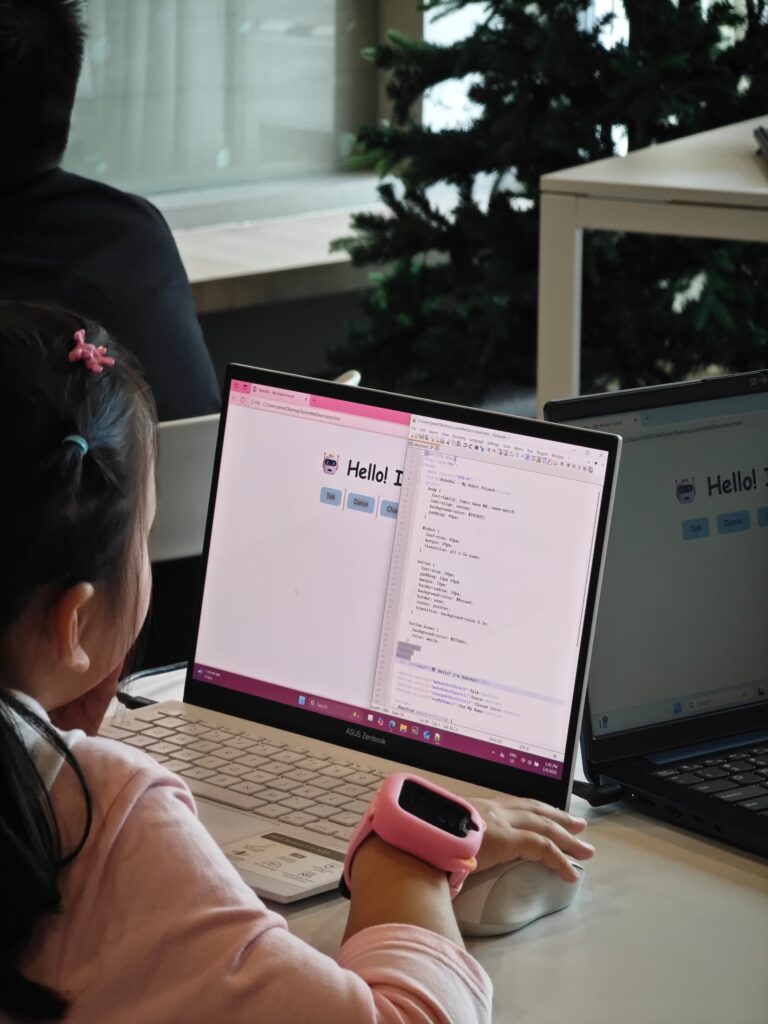
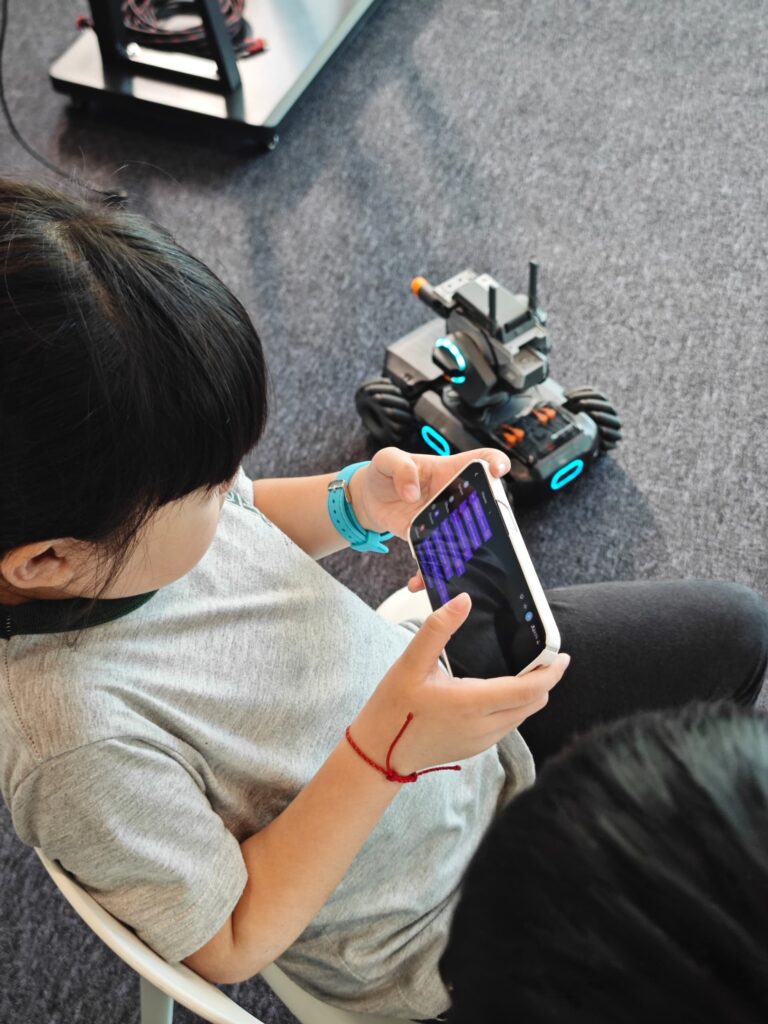
And what does this mean for the children of Sarawak?
Teacher and co-founder of The Learning Curve, Kenneth Chai, shared that with children growing up in this era, he is optimistic about the potential for this generation to create more equitable technological futures.
“With digital literacy and digital education, children develop a unique combination of traditional problem-solving skills and digital fluency. What excites me most is seeing rural children who understand both their local contexts and global digital possibilities. They’re not just adapting to technology created elsewhere — they’re innovating solutions that serve their communities. This suggests a future where technology development is more distributed and culturally responsive,” said Chai.
Children are naturally digitally savvy, being born into an era of touchscreens, voice commands and instant connectivity — where swiping comes before writing and curiosity is just a tap away.
Speaking to Genevieve Goh from Algorithmic Kuching, she explained that children, when surrounded by technology, have a special chance to combine creativity with the tools at their fingertips.
“They might grow up doing jobs we have not even thought of yet, but they will be ready to create those jobs themselves. Whether it is making new apps, diving into virtual worlds or solving big problems using data and AI, the opportunities are endless.”
Reflecting on her own experience, Goh said that witnessing the digital shift — from a time without smartphones, social media and the internet, to how far we have come today — still amazes her.
“From slow dial-up connections to having AI help us with our everyday tasks, it has definitely been a learning journey, but I’ve enjoyed figuring things out along the way. I feel grateful to be part of a generation that experienced life before everything went digital, and now I get to witness the younger generation grow up with so many tools and possibilities right at their fingertips,” she added.
Meanwhile, Chai observed that children raised in the digital era show significant cognitive and social differences.
Those attending his academy demonstrate enhanced visual processing skills and can intuitively navigate complex interfaces. They are comfortable with multimedia learning and able to process information from multiple sources simultaneously.
“However, when we conduct our Science On Wheels outreach programmes, I notice that children who’ve had less digital exposure often demonstrate stronger sustained attention and hands-on problem-solving skills. They approach STEM challenges with more patience and persistence,” he said.
The key difference is that digital literacy creates new pathways for learning. Children can now collaborate on projects across schools, access global STEM resources and use AI tools to enhance their understanding. However, they also need to develop new skills such as digital citizenship and the critical evaluation of online information — skills that were unnecessary for previous generations.
Tech skills start young
With these rapid advancements comes the need to prepare children for the future. At Goh’s centre, the aim is to help children think creatively, solve problems and build real skills with technology.
Digital courses are no longer limited to tertiary education; they are now available to children as well. From coding classes to game design, Algorithmic has also recently launched its Artificial Intelligence course, which gives children hands-on experience with basic AI.
“Today’s children do not just need to know how to use technology; they need to understand how it works. Instead of just playing games, they can learn how to build them. Instead of watching videos, they can learn how to make their own. They should be taught to think logically, solve problems and express their ideas through technology.”
Goh emphasised that these skills are crucial, as they prepare children to become future coders, designers and more.
“In a world where digital fluency is as important as reading or maths, this gives them a solid head start.”
Chai added that beyond access, digital literacy empowers children to become creators and innovators.
“In our science fairs, students who understand technology don’t just consume content — they build solutions. Most importantly, in today’s world, digital literacy is economic empowerment. The communities we serve often lack traditional economic opportunities, but digital skills can connect these children to global markets and remote work opportunities as they grow older. It’s about breaking cycles of geographical and economic disadvantage.”
As Sarawak moves steadily towards its vision of a digitally empowered society, its youngest generation is already stepping into a future where technology is not just a tool but a language they speak fluently.
With all that’s been discussed, it remains clear that children are our most valuable asset for the future. It is therefore vital to equip them with the knowledge, resilience and digital fluency to thrive in a rapidly evolving world. The choices we make today — from safeguarding their online spaces to nurturing their creativity — will shape not only their future, but also the society we leave behind.