With the world watching the Sipadan hostage crisis in 2000, Sarawakian photographer, Zulazhar ‘Apai’ Sheblee went where few dared – deep into Abu Sayyaf’s stronghold, where every handshake could be a trap. This is the first of a three-part series on photographer Zulazhar Sheblee’s perilous journey into Abu Sayyaf territory in the aftermath of the 2000 Sipadan kidnappings.
The lensman who went into the lion’s den
ON the frontlines of history, the camera is often as powerful as the pen. For Zulazhar Sheblee – known to many as ‘Apai’ – that camera became both shield and weapon.
Today, he is a respected media photographer with The Star’s Sarawak Bureau.
But rewind two decades, and his career held a chapter that still sounds almost unbelievable: he was one of the very few Malaysian media who entered the heart of an Abu Sayyaf stronghold, deep in the jungles of the southern Philippines.
It was the year 2000. The internet was young, mobile phones were clunky, and news from conflict zones travelled slowly.
Yet, what unfolded on April 22 reverberated across the globe: 21 people were kidnapped from a diving resort on Pulau Sipadan, Sabah.
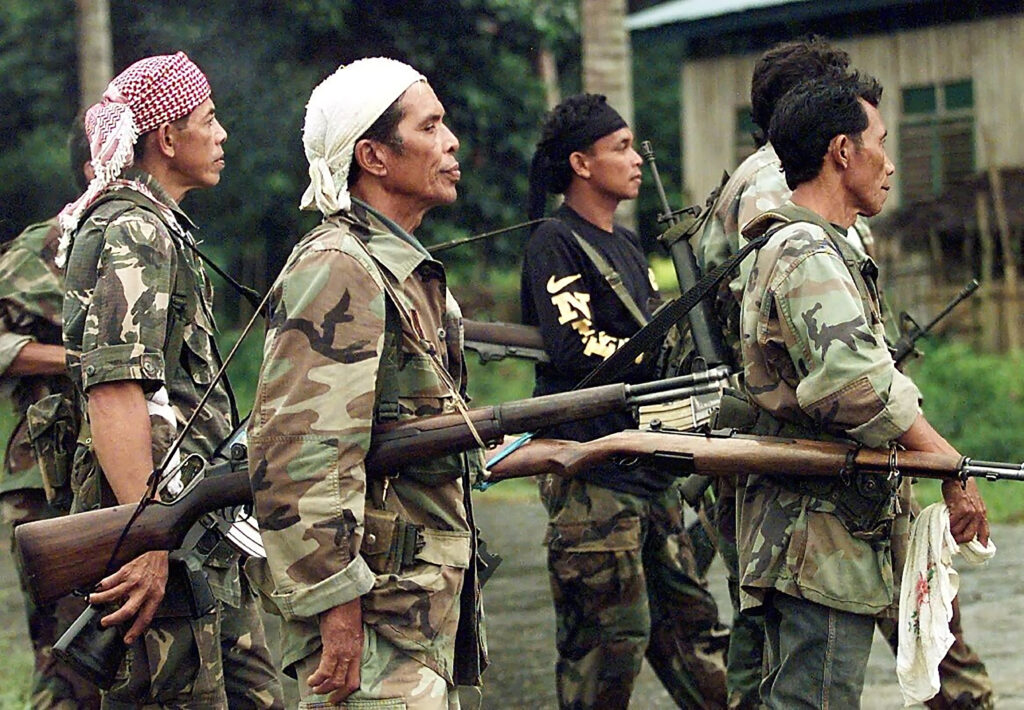
The victims included tourists from Germany, France, South Africa and Lebanon, as well as nine Malaysians. The perpetrators were none other than the Abu Sayyaf, the ruthless militant group notorious for kidnappings, violence and ransom demands.
For ordinary Malaysians, the Sipadan kidnappings were shocking headlines. For Apai and his colleague, Kamaruzaman Mohamad – better known as Pok Mei – it became a mission that would test the very limits of journalism.
“We were told to go to Jolo – pronounced ‘Holo’. At first, I thought it was just to cover the story from afar.
“But soon it was clear – the company wanted us to try and meet the hostages. To interview them. To bring back proof of life,” Apai opened our conversation.
The call to Jolo
At the time, Apai was still early in his career, a young photographer with Utusan Malaysia. Covering politics and daily assignments in Kuala Lumpur was familiar enough, but the summons to Jolo was something else entirely.
Jolo, the capital of Sulu province, was synonymous with lawlessness. Government troops and rebels traded fire almost daily. The Philippine State’s reach there was fragile, and kidnapping had become a grim local economy.
“Even hearing the name Jolo made people uneasy. When I told my family, they were shocked. They knew it wasn’t safe. But for us as journalists, when the assignment came, we went,” Apai said.
Utusan Malaysia’s editors were resolute: recycled wire stories would not suffice. With CNN, Reuters and AFP already entrenched in Zamboanga and Manila, the paper demanded Malaysian eyes on the ground – journalists who could venture into danger and return with images no one else could capture.
International media, meanwhile, focused almost entirely on stories about foreigners, paying little attention – if any – to the plight of Malaysians.
The responsibility now fell squarely on Apai and Pok Mei, after the first team had been unable to enter and secure the vital information.
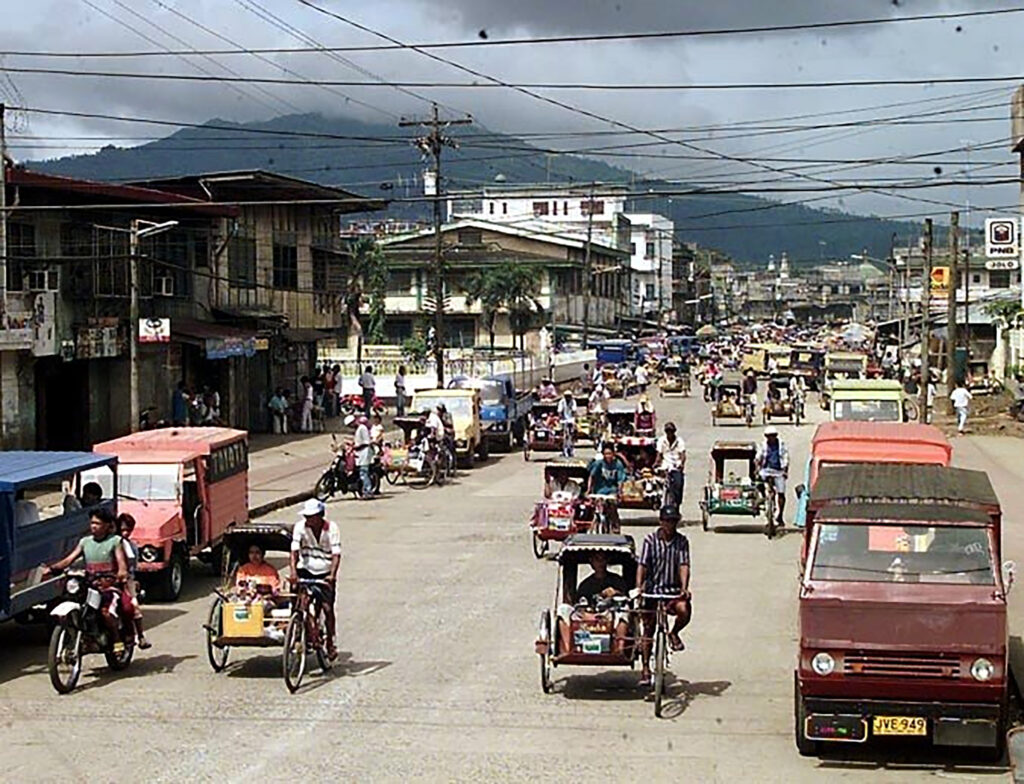
First steps into uncertainty
In May 2000, slipping across the border into the Philippines was the easy part. The real test began in Zamboanga – the restless Mindanao city that had become a staging ground for journalists, aid workers and negotiators.
The air was thick with tension. Hotels brimmed with foreign correspondents, some restless, others paralysed by military restrictions and the constant fear of being kidnapped themselves.
“Some of them told us straight – don’t go. It’s too dangerous. The militants could kidnap us too. But we were determined. We had to try,” Apai said.
No official channels existed to guide them into Jolo. If they wanted to meet the hostages, they had to weave their way through a patchwork of contacts – translators, boatmen and community leaders who knew the rebel terrain.
Trust, not money, became the most precious currency.
The perilous path ahead
In Zamboanga, Apai and Pok Mei were introduced to Bong, the translator from the first team that had failed to gain access.
On the way to their hotel, they mentioned a wish to meet Nur Misuari, the then Governor of Mindanao and leader of the Moro National Liberation Front (MNLF).
To their surprise, Bong made a call and soon returned with astonishing news: Misuari would see them.
At his residence, armed guards patted them down until a commanding voice interrupted. It was Misuari himself, scolding his men for being discourteous. He personally apologised and ushered them in.
The governor opened with warm words, thanking Malaysia – and even Utusan Malaysia – for its support in building a mosque and aiding development in Mindanao. He spoke of a new mosque in Jolo, almost completed, and invited them to pray there.
When Pok Mei explained their mission, Misuari picked up the phone and spoke briskly in Tagalog. Ten minutes later he smiled and, in English, told them: “Go to Jolo today. My general will be waiting to help you. Insya-Allah.”
They wasted no time, heading straight for the jetty.
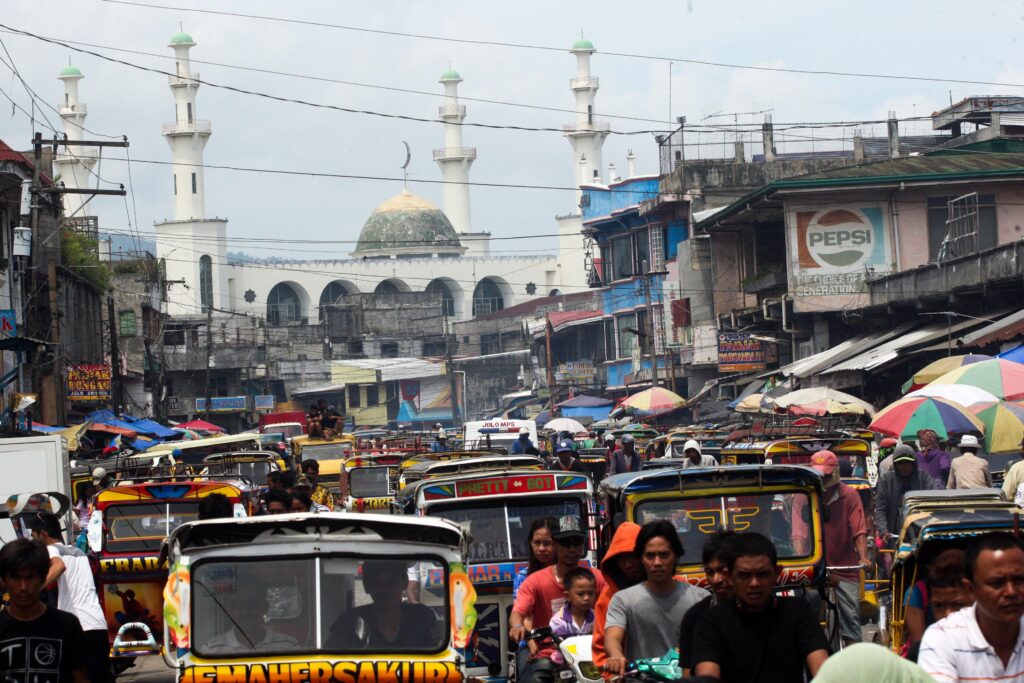
To Apai’s surprise, the express boat looked almost identical to those plying the Kuching-Sibu route back home in Sarawak.
“Bong said it actually belonged to a Sarawakian from Sibu. No wonder – the design was identical, right down to the narrow seats and noisy engine.
“For a moment, it felt less like entering a conflict zone and more like catching the Kuching-Sibu boat home,” Apai laughed.
On board, they met General Mujahid, the man Misuari had promised. The three-hour journey passed quickly as Mujahid shared stories of the islands, the rebels and the uneasy peace.
When they docked in Jolo, more than 20 heavily armed MNLF fighters were waiting with M60s, M16s, HK11s and even RPGs.
They escorted Apai and Pok Mei to their base, briefed them on the tense standoff with the Philippine troops, and then accommodated them at Hellen Lodge.
There, among the cigarette smoke and hushed conversations, they found a crowd of journalists. Among them was Philip Golingai, who was then a reporter with The Star and is now its editor.
A journey without a map
The tension broke suddenly. As soon as Apai placed his bag in the room, a voice called out from below: “Zul, Zul, come down quickly!”
He rushed downstairs to find General Mujahid waiting with 30 armed men and a line of pickup trucks. The street had gone quiet. Even the journalists had fallen silent, some slipping into kitchens to hide.
“Come, we’re leaving now. Call your friend,” Mujahid ordered.
Within minutes, Apai and Pok Mei were in the back of a pickup, bouncing along a dust-choked road into the unknown.
At a roadside market, Mujahid stopped casually to buy fish. Among the piles of seafood lay a gleaming yellowfin tuna.
“Who’s that fish for?” Apai asked.
“For tonight’s dinner. You are our guests, so we must prepare food our way,” Mujahid replied.
Apai frowned. “But will there be enough for everyone?”
“They don’t need it,” Mujahid said, nodding at his men. “They’re used to going without.”
Apai hesitated, then offered to buy the tuna so that all could share. Mujahid chuckled and agreed.
As Apai later confided to me during our interview, it was actually he who had been craving the fish all along.
He paid 1,000 pesos (around RM100) for a big yellowfin tuna. Mujahid announced proudly that they would feast, courtesy of their Malaysian guest.
Faces lit up. Some fighters raised thumbs; others murmured in halting English, “Thank you, sir.”
After 45 more minutes over rough roads, they reached Mujahid’s home, guarded by 50 fighters. The general proudly showed them around, even recounting how his father once shot down a Philippine warplane with an M60 machine gun.
That night, they finally sat down for dinner. The tuna was boiled with shallots, lemongrass and chillies and served with steaming rice, soy sauce and sliced hot peppers.
Apai remembered it vividly: simple, comforting, and deeply satisfying.
Talking to Abu Sayyaf
But the evening was far from over. Later, Abu Sayyaf representatives arrived for talks. The discussion dragged on, tense and heavy.
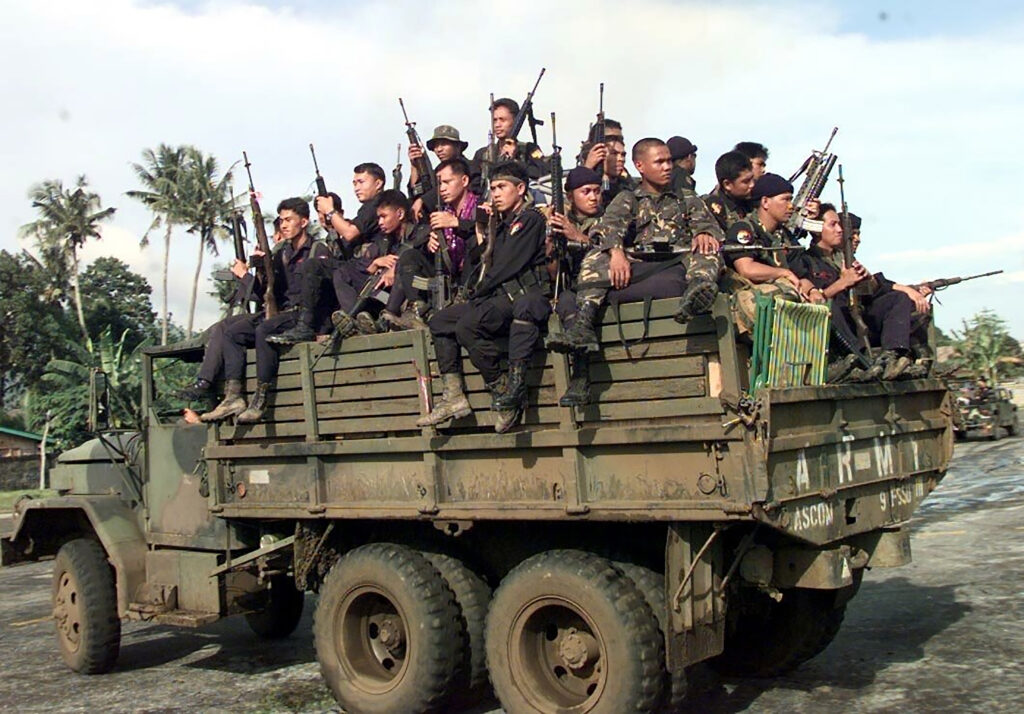
The militants made their demand plain: any journalist wishing to meet the hostages would have to pay USD1,000 (RM4,200) each – money they said was needed to survive after years of fighting the Philippine Government.
They also cited their leader, Commander Robot, who claimed that Sabah belonged to Mindanao and that a Sabah Commission should be held to let its people decide whether to remain part of Malaysia or join the Philippines.
Apai seized his chance. He argued that if their commander wanted his voice heard, he should allow an interview.
Utusan Malaysia, Apai stressed, was Malaysia’s number one daily, read even by the prime minister every morning.
The reasoning struck a chord. The representative agreed to arrange a meeting the next day.
Apai handed over his business card, pointing to the Jawi script of Utusan Melayu Malaysia Berhad as proof of their shared faith. The man nodded slowly.
“Tomorrow, before noon,” he promised, before disappearing into the night.
To be continued …