In a small village in Bau, women are rediscovering loom beadwork — not only as heritage, but also as a craft that brings confidence, creativity, and livelihood.
Weaving the past into the future
In Kampung Suba Buan, a small village in Bau, beads once strung quietly in kitchens and longhouses are now sparking a revival.
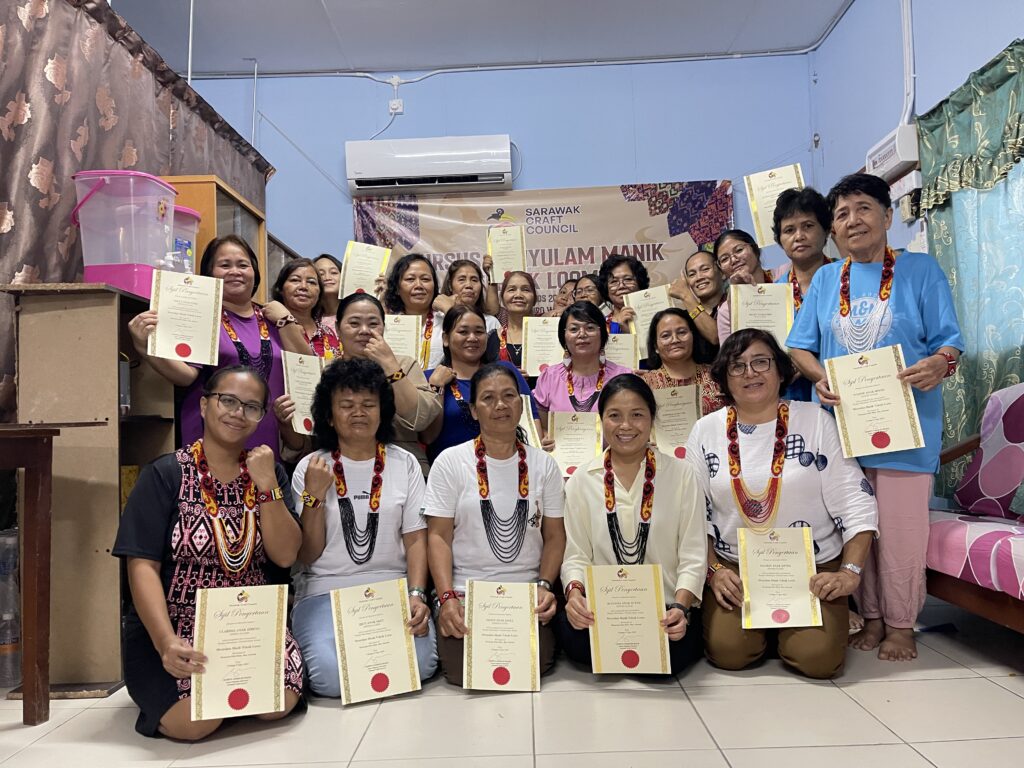
In early August, 20 women gathered for a three-day workshop not just to preserve tradition but to reimagine it — transforming colourful beads into designs that feel as contemporary as they are cultural.
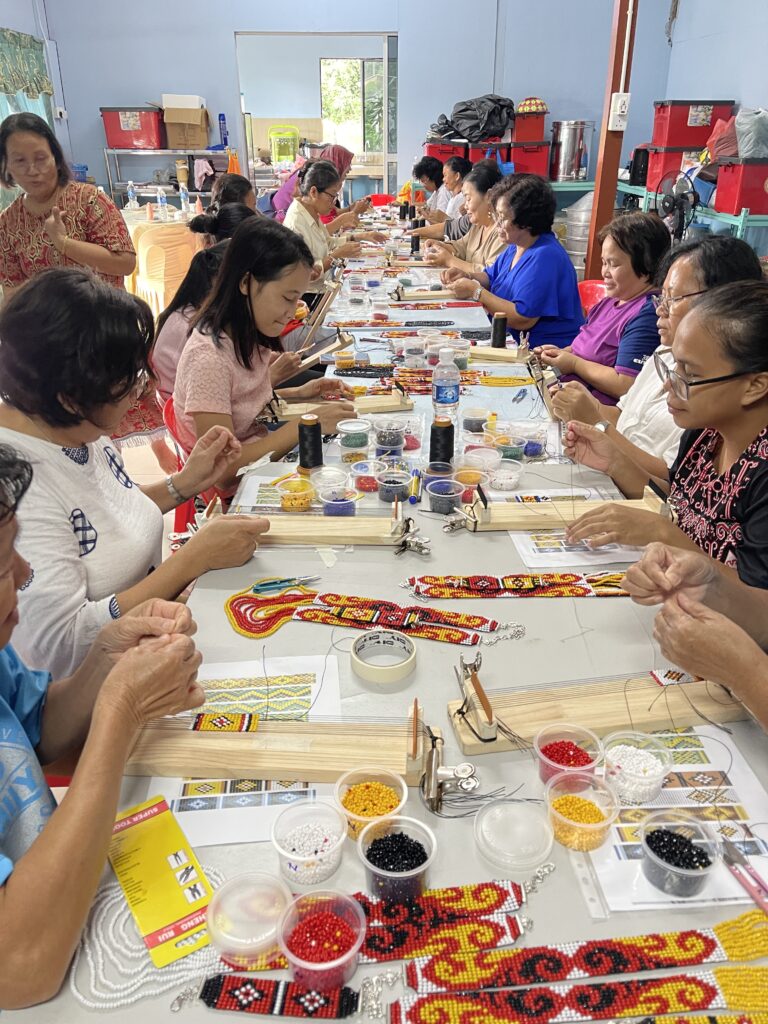
Inside the village’s women’s bureau hall, chatter and laughter mixed with the steady rhythm of beads being threaded onto looms, proof that this old art still has the power to bring people together.
What was once seen as a skill reserved for the older generation is now attracting housewives, young mothers, and even curious beginners inspired by YouTube.
Guided by experienced craft entrepreneur Johiam Jitui, or Cikgu Angela as she is fondly known, the participants discovered that beadwork could be more than a pastime — it could be a source of pride, creativity, and even income.


Born to bead
Cikgu Angela knows this world well. An entrepreneur since 2013, she has dedicated herself to beadwork for more than a decade, teaching the loom technique since 2016.
She is registered with the Sarawak Craft Council and the Malaysian Handicraft Development Corporation (Sarawak branch), and is often invited to conduct workshops across the state.
Her journey into loom beadwork began with a single experiment.
“My first loom piece surprised me — it was tidy, balanced, almost alive. From then on, I understood that beadwork wasn’t limited; it was a world of infinite patterns and colours,” she recalled.
For her, each bead is not just an ornament but a small act of resistance against forgetting. By teaching others, she sees herself not only as a craftswoman but also as a culture-keeper and innovator.
Since then, she has been determined to share the skill with others. Beyond teaching, Cikgu Angela also runs her own shop, Bidayuh Traditional Collection, at the Bau Multipurpose Market, where she showcases both her own creations and those of her students.
Tradition, with a twist
The loom technique itself is simple but meticulous. Using a wooden frame as the base, threads are stretched tightly to form the foundation.
A special long “big eye” needle makes it easier to slip beads row by row, almost like following a stitching pattern.
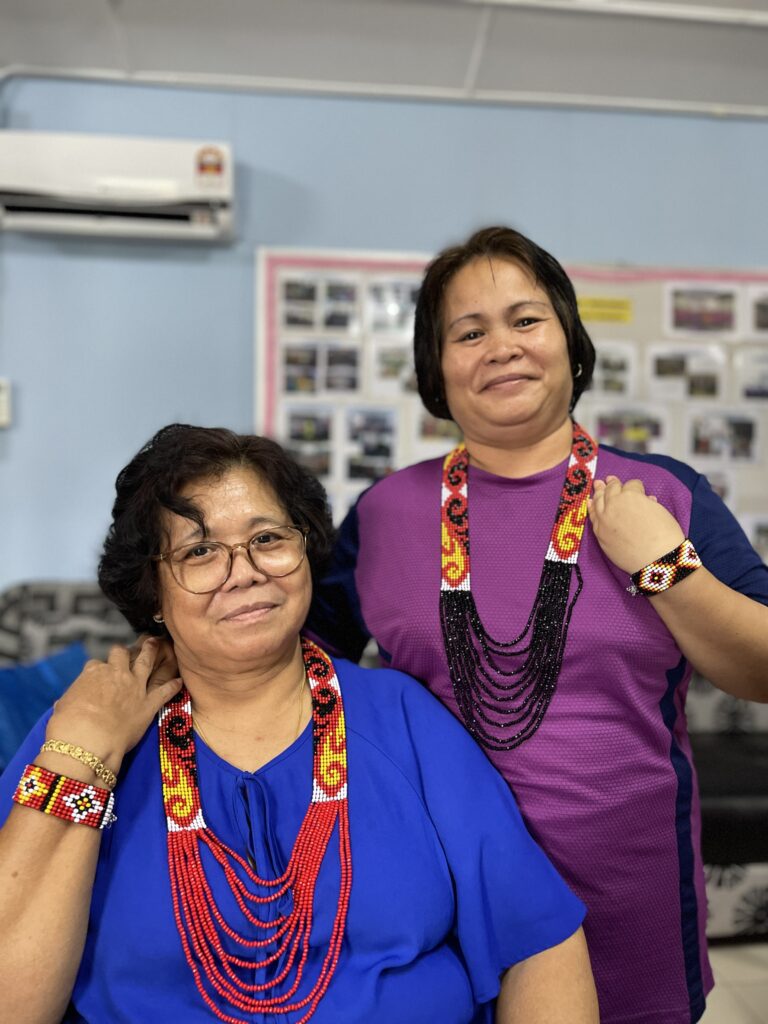
Once the design is complete, the finishing process involves weaving in loose threads and adding clasps or fringes to create necklaces, bracelets, or decorative pieces.
For those unfamiliar, loom beadwork is both practical and versatile. The loom itself is no more than a wooden frame, yet it allows endless possibilities.
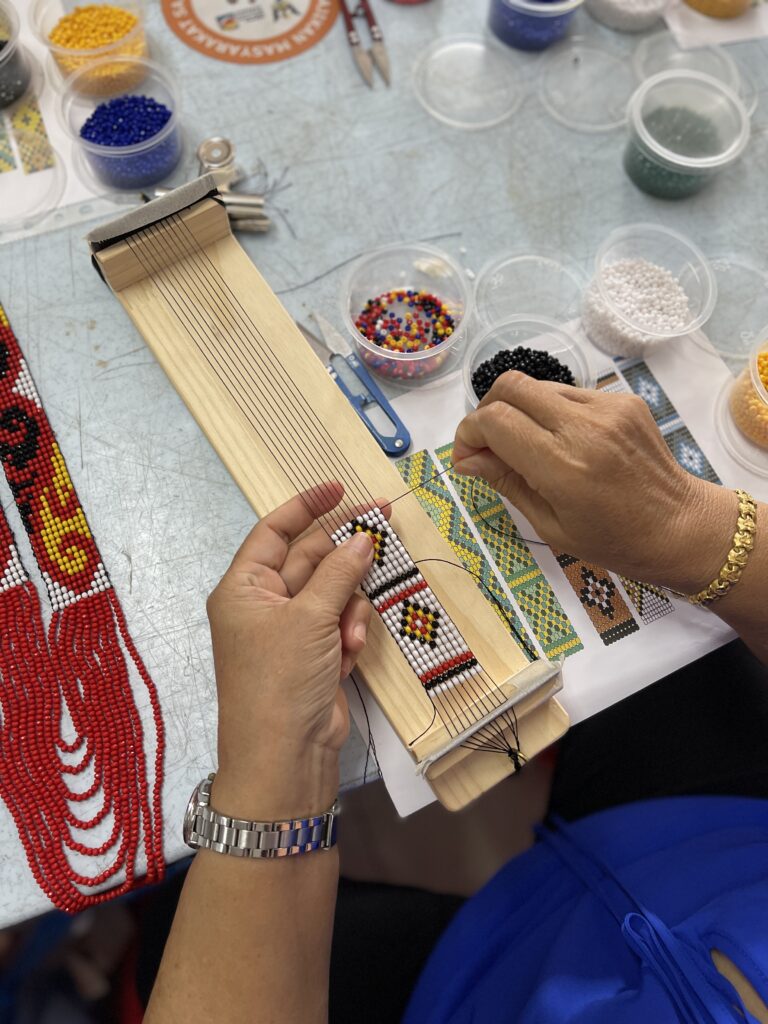

Patterns can be read like sewing charts, where each bead is a stitch and every row builds into a larger design.
Traditional floral or geometric motifs remain popular, but contemporary twists — simpler shapes, unexpected colour palettes — make the pieces feel fresh and modern.
Common creations include bracelets, necklaces, and decorative sashes. Prices range from just a few ringgit for simpler items to several hundred for intricate, labour-intensive designs.
For many women, the appeal lies in its accessibility: it requires only a few tools, can be done from home, and carries the satisfaction of turning cultural heritage into wearable art.
In Suba Buan, Cikgu Angela chose motifs inspired by tradition but tweaked with a modern touch. The aim was clear: to make beadwork appealing not just as heritage but as a form of creative expression that resonates with younger generations.
“By the second day, most participants had grasped the fundamentals. Some even became skilled within just one day,” she said with a smile.
The trickiest part, she admitted, was creating the bead fringes at the bottom — a process that involves repeatedly unpicking and re-threading until the pattern sits perfectly.
From doubt to confidence
For many, this was their first time attempting beadwork. At the start, some were hesitant, unsure whether their fingers could manage the tiny beads and precise threading.
But with encouragement from Cikgu Angela and her assistant trainer, Josephine Utik, the room soon filled with small triumphs — completed rows, neat patterns, and eventually entire pieces ready to wear.
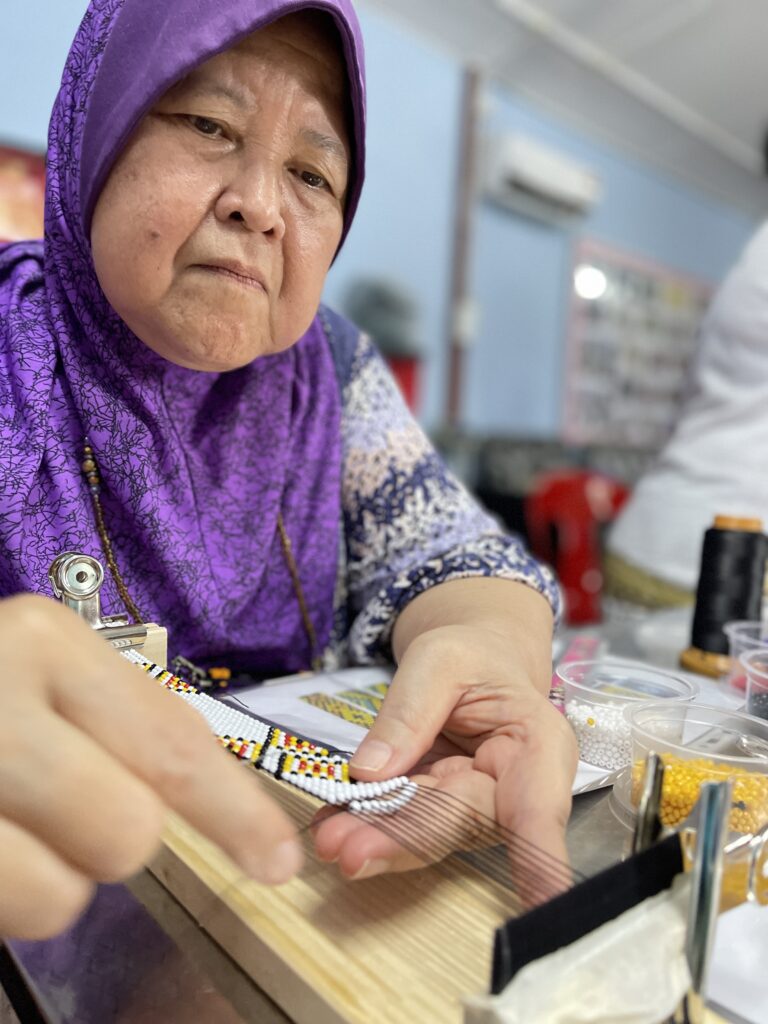
Josephine admitted she was surprised by their progress.
“At first, many of them doubted their ability. But with encouragement, they managed to produce neat, beautiful pieces. I didn’t expect them to finish within the timeframe,” she said.
It was more than a craft lesson; it was empowerment. Women who rarely set aside time for themselves left the hall with new skills, new confidence, and a glimpse of what tradition could mean in their own hands.
The youngest and the oldest
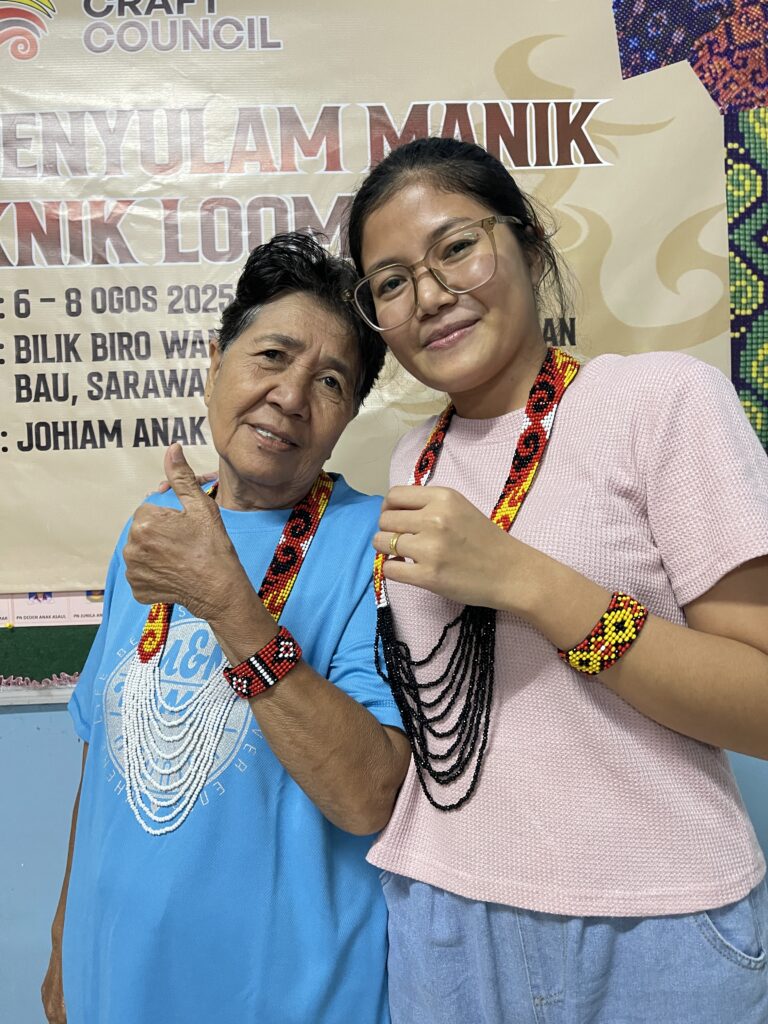
Among the participants was 25-year-old Elisha Ivy Nikson, the youngest in the group. A mother of one, she discovered loom beadwork online and was eager to try it for herself.
“I felt excited and inspired the first time I saw the results on YouTube. That’s what motivated me to try it myself,” she said.
On the other end of the spectrum sat 69-year-old Nodew Miyed. Her steady hands and curious spirit showed that age is no barrier to learning something new.
“I’m happy to have joined this course. If there’s another in the future, I will definitely take part again,” she shared warmly.
Together, Elisha and Nodew embodied the spirit of the workshop — proving that the loom can connect generations, from digital-savvy youth to elders who still value hands-on tradition.
Beyond hobby, towards livelihood
For Cikgu Angela, loom beadwork is more than just preserving heritage. It is also about unlocking economic opportunities for women.
She often involves her students in fulfilling orders for government agencies, turning classroom practice into practical business.
Depending on the design, loom-beaded products can fetch anything from a modest few ringgit to several hundred for elaborate pieces.
“My hope is that participants will use this knowledge to supplement their income, especially housewives who have free time at home,” she said.
Here, empowerment is not abstract. It is measured in necklaces sold, sashes ordered, and the confidence of women discovering that their culture can be both heritage and livelihood.
A craft still breathing
By the end of the three days, the women of Kampung Suba Buan had done more than complete their beadwork projects. They had revived a tradition, discovered new confidence, and glimpsed the possibility of turning artistry into income.
What began as a simple community workshop had grown into something larger: a reminder that cultural heritage does not have to sit quietly in the past.
With patient hands, curious minds, and a little guidance, traditions can evolve — breathing new life into old forms, connecting generations, and inspiring creativity in ways that surprise even those who thought they already knew the craft.
For Cikgu Angela, every finished piece tells that story.
“One bead at a time, we are keeping our heritage alive,” she said, smiling as her students admired their own work.
In Suba Buan, beads still catch the light — but now they also catch new stories, binding past and present in threads that refuse to break.