KUCHING: Carbon tax and the rise of artificial intelligence will define how Malaysia’s Budget 2026 reshapes its economy, testing whether the country can pursue growth without losing its industrial and energy footing.
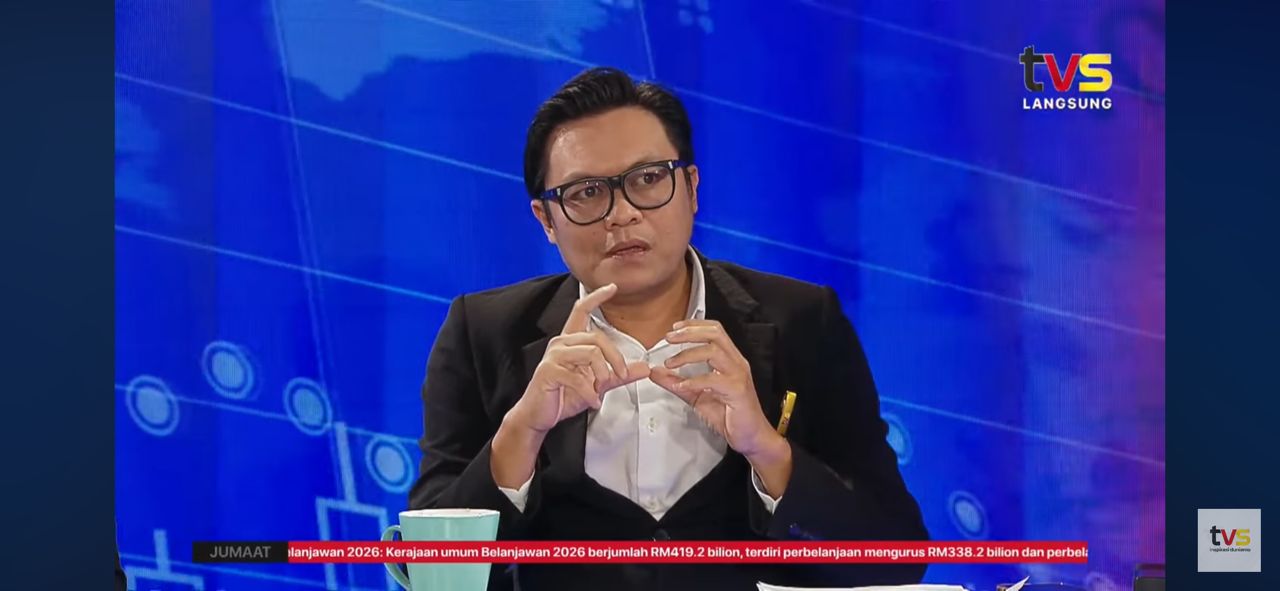
Universiti Malaysia Sarawak (UNIMAS) senior lecturer Dzul Hadzwan Husaini said the budget represents both a fiscal reform plan and a test of execution as Malaysia seeks to balance sustainability, innovation and competitiveness.
“Beyond the headline figures and spending priorities, the key test lies in how these new policy measures are implemented with clarity, coordination, and sensitivity to their long-term implications,” he told Sarawak Tribune.
Balancing sustainability with industry needs
To illustrate the challenge of aligning growth with sustainability, Dzul described the planned carbon tax in 2026, beginning with the iron, steel, and energy sectors, as a major step towards Malaysia’s 2050 net-zero target but cautioned that it must be carefully phased.
“Malaysia remains a carbon-intensive economy, with manufacturing still serving as the main engine of growth and exports.
“The carbon tax must be rolled out carefully and communicated clearly to avoid harming competitiveness and jobs,” he said.
Each targeted sector, he added, should undergo an industrial impact assessment to gauge its ability to absorb new costs.
“Without proper consultation, the policy could erode production margins and weaken export competitiveness at a time of global uncertainty,” he said.
He said the tax should act as ‘a catalyst for low-carbon transition, not an added fiscal burden’.
Powering AI through energy reform
Following the same focus on sustainable growth, Dzul said Malaysia’s ‘AI Made by Malaysia’ strategy shows ambition but raises questions about energy readiness.
“The International Monetary Fund recently warned that global AI development will drive a surge in electricity demand.
“In 2023, data centres consumed around 500 terawatt-hours of power, nearly double the average between 2015 and 2019. By 2030, this could exceed Japan’s annual electricity use,” he said.
He stressed that the country’s AI roadmap must align with the National Energy Transition Roadmap.
“Renewable energy alone may not suffice. Stable baseload sources such as Small Modular Reactors should be explored to ensure a clean and reliable supply.
“If we aim for an AI truly made by Malaysia, we must also ensure that our energy system is ready for it,” he added.
Building talent for a technology economy
Dzul said the success of Malaysia’s digital ambitions also depends on education reform.
He noted Budget 2026’s ‘Tekad Empat: Driving Malaysian Made’ agenda can only succeed if reforms strengthen basic literacy and numeracy.
“The OECD PISA 2022 report paints a worrying picture. More than half of 15-year-olds in Malaysia failed minimum proficiency in mathematics, while nearly half struggled with reading.
“An AI-based economy cannot emerge from universities alone; it must be built from strong early education,” he said.
He said reforms should prioritise academic recovery, early intervention for at-risk students, and psycho-social support, particularly in rural areas.
“At the secondary level, we must renew focus on STEM and English proficiency to prepare a workforce ready for technological transformation,” he added.
He cited the Sarawak Standard Assessment (PSS), developed with Cambridge University Press and Assessment, as an example of how diagnostic evaluation can raise national learning standards.
Financing a sustainable future
Turning to the financial sector, Dzul said Malaysia’s renewed emphasis on Islamic finance and Green or Climate Sukuk could help fund energy transition and climate adaptation.
“A robust taxonomy that integrates Islamic Financial Taxonomy with ASEAN and EU Green Standards is essential to attract investors and build global credibility.
“Harmonisation allows Sukuk instruments to satisfy both Shariah principles and sustainability standards,” he said.
He added that better regulation, transparency, and digital integration would reinforce Malaysia’s position as a global hub for Islamic finance.
Competing in the tourism market
Dzul said competitiveness must also extend to Malaysia’s tourism sector.
The RM700 million allocation for tourism, including RM500 million for Visit Malaysia 2026, reflects continued support for the sector, but he said domestic cost structures remain a barrier.
“Promotion alone is not enough. Many Malaysians now prefer travelling abroad, especially to Thailand, where accommodation, food, and services are cheaper and often better value,” he said.
He said Malaysia must address inefficiencies and focus on authentic community-based tourism.
“Support for local artisans, cultural entrepreneurs, and digital marketing can turn crafts and heritage into valuable export products,” he said.
Linking Sarawak and Kalimantan
On infrastructure, Dzul said improvements to the Kalabakan–Simanggaris road in Sabah are welcome, but the Entikong–Tebedu corridor between Kuching and Pontianak deserves equal attention.
“Indonesia has already modernised its Entikong facilities, but Malaysia’s side remains behind. This affects logistics, trade, and our image as a regional partner,” he said.
He added that upgrading the Pontianak–Kuching highway through public–private partnerships could boost trade, healthcare, and SME activity as Nusantara’s development progresses.
“With stronger connectivity, Sarawak can become the gateway to Borneo and a bridge for sub-regional integration,” he said.
Extending inclusion to rural areas
Social inclusion, Dzul added, remains a key measure of policy success.
He welcomed the expansion of the Sumbangan Asas Rahmah (SARA) scheme to nine million recipients but urged improvements in access.
“Recipients in remote longhouses or interior villages often travel long distances to redeem goods, which reduces the real value of the assistance.
“To address this, the government should consider extending the MADANI Mobile Service to include SARA distribution. That would ensure the programme delivers on equity and inclusion,” he said.
Execution remains the test
Dzul said Budget 2026 presents a coherent national vision that blends fiscal prudence with social and structural reform but warned that implementation remains the deciding factor.
“Policies such as the carbon tax, AI readiness, and education reform require coordination and close monitoring.
“Only through effective delivery can Malaysia translate its fiscal ambition into real progress in competitiveness and resilience,” he said.