HAVE you ever wondered how different life would be for our children if Sarawak had full control over its education system?
For decades, our schools have operated within a framework shaped far beyond our shores – one that has not always reflected our needs, our identity, or our aspirations as a people. We often speak of education as the great equaliser, but how “equal” can it truly be if the system itself is not built for us?
Today, Sarawak is taking bold and deliberate steps to reclaim that space. The push for greater education autonomy under the Malaysia Agreement 1963 (MA63) is no longer a distant aspiration or a ceremonial slogan. It is becoming a reality – one carefully shaped with the future of Sarawak’s children at its core.
Just this week, Premier Datuk Patinggi Tan Sri Abang Johari Tun Openg reinforced this direction during the 29th Convocation Ceremony of Universiti Malaysia Sarawak (UNIMAS). He revealed that Sarawak has tabled 15 key requests in its negotiations with the Ministry of Education (MOE), and some have already gained traction. These are not minor administrative adjustments – they represent structural shifts aimed at reshaping how young Sarawakians learn, think, and compete in a rapidly evolving world.
One of the most significant areas of progress is that English has been allowed to be used as a medium of instruction for STEM subjects in schools. For Sarawak, this is not a rejection of Bahasa Malaysia; it is a practical, strategic decision grounded in global realities. Science, technology, engineering, and mathematics are fields driven by international research, innovation, and collaboration – and English remains the dominant language that connects these disciplines.
Choosing English for STEM does not make us any less Malaysian. Rather, it reflects an understanding that our children must be equipped to operate confidently in both worlds – anchored in our national identity, yet fluent in the language of global knowledge. If we want Sarawakian innovators, researchers, engineers, and digital experts to thrive internationally, access to the world’s vocabulary of innovation becomes essential.
This is why Sarawak took the initiative as early as 2020 through partnerships with the University of Cambridge and Swinburne University. It was not a sudden shift, but a carefully planned strategy. Today, we are witnessing more schools embrace the Dual Language Programme (DLP), supported by teachers, students, and parents who see the benefits firsthand.
But Sarawak’s ambitions extend far beyond classroom language.
Our push for greater education autonomy forms part of a larger vision: to build a generation of Sarawakians who are knowledgeable, skilled, confident, and globally competitive – yet deeply rooted in their identity and values.
This vision is clearly reflected in the state’s latest initiatives. Beginning next year, free tertiary education will be offered to Sarawakians studying at four state-owned universities – Swinburne Sarawak in Kuching, Curtin University, Sarawak Campus in Miri, i-CATS University College in Kuching and Universiti Teknologi Sarawak (UTS) in Sibu.
This is a transformative step – one that removes financial barriers and ensures that higher education becomes accessible to all, not only those born into privilege. When a society removes cost as the gatekeeper, it signals a shift from education as a privilege to education as a right.
However, Abang Johari stressed that this is just the beginning. The state government is now studying ways to extend this initiative to cover Sarawakian students studying in public universities throughout the country. Such a move will require careful planning and financial prudence, but the message is clear: No Sarawakian student should have to abandon their dreams because of financial limitations.
This direction aligns with Sarawak’s broader ambition under the Post COVID-19 Development Strategy (PCDS) 2030 – to become a high-income, innovation-driven region powered by skilled human capital. To achieve this, Sarawak must nurture its own experts: engineers, scientists, researchers, digital specialists, medical professionals, educators, and thinkers.
Beyond tuition fees, the state is also addressing the real-life burdens faced by students, particularly those far from home. The Special Financial Assistance for Sarawak Students, amounting to RM1,200 per year, acknowledges that education is not just about lectures and assignments – it is also about affording meals, transport, and survival.
The Student Rental Assistance Scheme (SRAS), which provides RM200 monthly to eligible students renting accommodation in major cities in Sarawak, also reflects a compassionate and grounded approach. Many students from rural and interior areas struggle with the rising cost of city living. This initiative ensures that opportunities do not become limited to those who can afford them.
These policies share a common purpose: to uplift Sarawak’s people by strengthening the foundation that shapes the mind — education.
As the Premier has often emphasised, eradicating poverty is not achieved through one-off financial aid, but through sustainable empowerment – by equipping people with knowledge, skills, and pathways to upward mobility. When we speak of autonomy, this is its truest essence: the ability to shape our own future by shaping the minds of our young.
Education autonomy is not about competing against anyone. It is about ensuring that the children of Sarawak receive an education that prepares them for the world they will inherit – not the world of yesterday.
If Sarawak is to stand tall as a developed, high-income, and innovation-led region, we cannot rely on a “one-size-fits-all” system. Our geography, our multicultural identity, and our socio-economic landscape are distinct. So too are our aspirations. That is why we must have the flexibility to craft policies that reflect who we are – and who we aim to become.
For years, MA63 conversations revolved around oil, gas, revenue, and state-federal relations. But perhaps one of the most meaningful expressions of autonomy lies in this: the right to shape the minds, values, and competencies of our future generations. When we take charge of education, we take charge of our destiny.
The road ahead will not be free of challenges. Reforms take time to bear fruit. Policies require consistent focus, financial strength, and political will. But the direction is clear and the commitment firm.
Sarawak is not waiting to be told what is possible – we are defining it.
This is how a self-reliant society is built. This is how we prepare a generation confident enough to stand on its own feet, yet wise enough to stay rooted in its heritage.
Strengthening our education system is not merely an investment in schools or universities – it is an investment in the future soul of Sarawak.
If we remain focused, united, and bold in this pursuit, we will not only empower our children – we will shape a Sarawak that commands respect, earns its place on the global stage, and charts its future with dignity and pride.
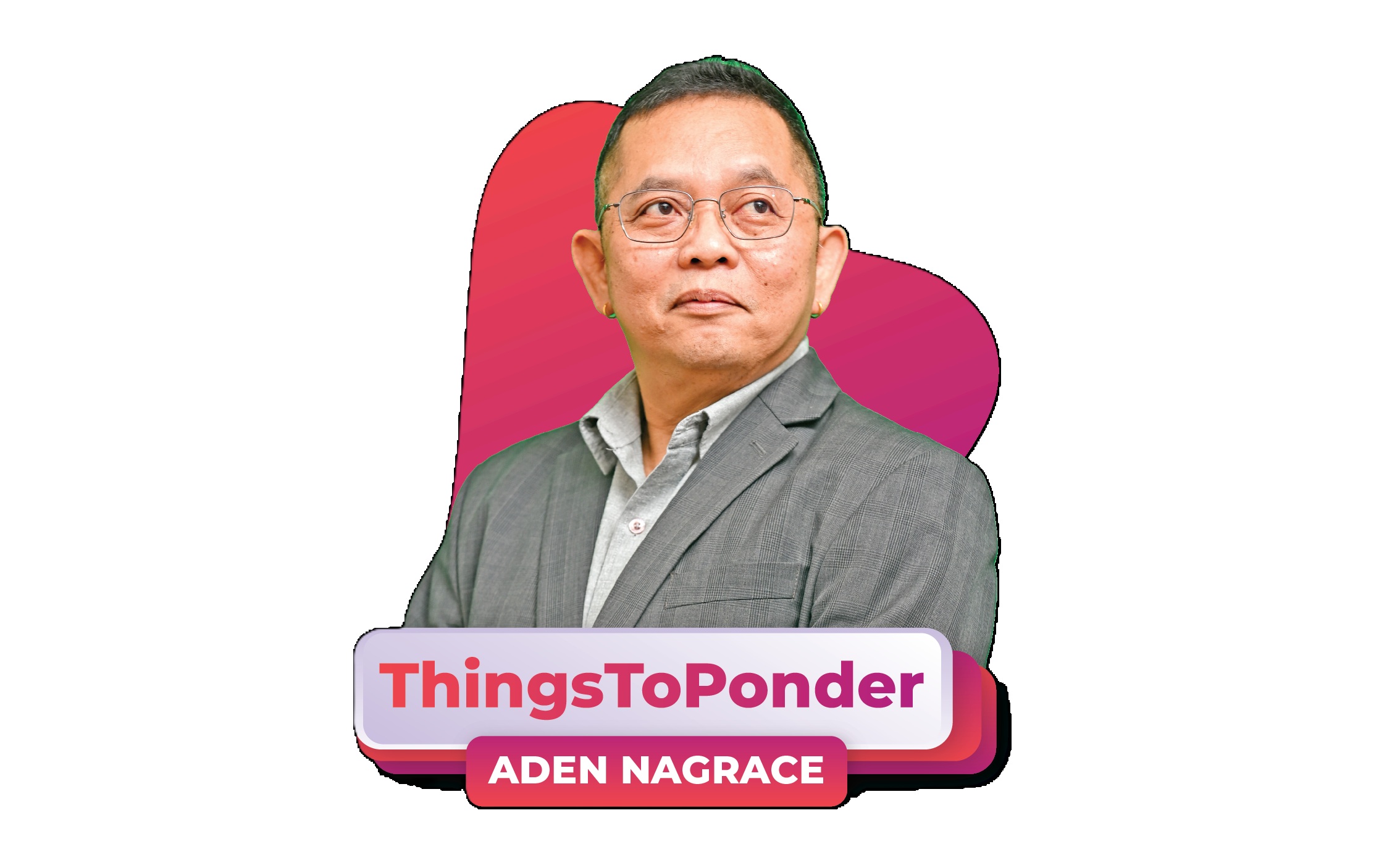
Aden Nagrace is the Editor-in-Chief of Sarawak Tribune. The views expressed here are his own and do not necessarily reflect those of Sarawak Tribune. He can be reached at drnagrace@gmail.com.