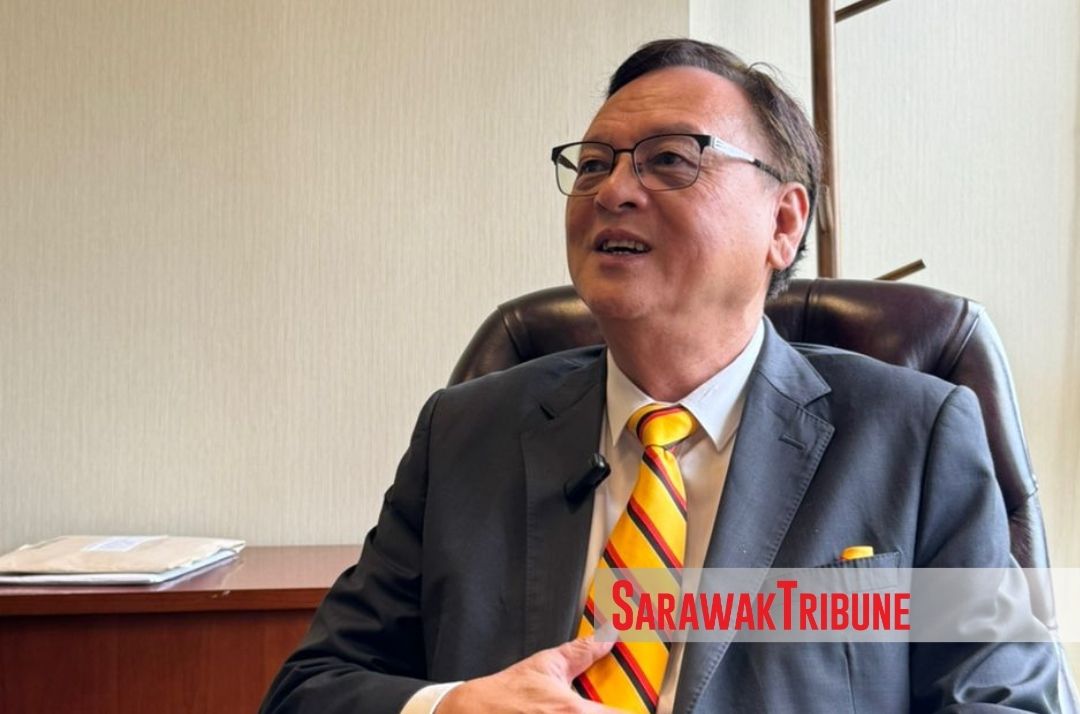
KUCHING: Sarawak’s financial position for 2026 reflects one of the strongest state budgets in the country, with Batu Kitang assemblyman Datuk Lo Khere Chiang describing it as “the best” among all Malaysian states and a clear indicator of Sarawak’s economic resilience.
He said the government’s projected revenue of RM13.05 billion and ordinary expenditure of RM12.91 billion would place Sarawak in a favourable fiscal position next year.
“It was very good. We expect to record a surplus of RM144 million in 2026.
“No other state in the whole of Malaysia can compare with our budget in Sarawak. So, we are the best!” he said.
He added that the government’s fiscal strength enables it to focus on improving disposable income among Sarawakians, a priority repeatedly emphasised by Premier Datuk Patinggi Tan Sri Abang Johari Tun Openg.
“Our Premier mentioned improving the disposable income of our people, and I have always believed in that.
“To improve the livelihood of our people, we must ensure they have a little bit more to spend.”
He credited the state’s ability to strengthen household disposable income to a series of targeted policies, particularly the rollout of free tertiary education for Sarawakians beginning in 2026.
“It is unfortunate that education has always been a burden to parents, and with free education reduces a huge burden,” he said.
“When take-home salary no longer goes to paying school fees, that immediately increases disposable income.”
Lo said that Sarawak’s low municipal assessment rates, water tariffs and subsidised services also help reduce the cost of living for ordinary families.
“Our water bills and assessment rates are the lowest in Malaysia. Even housing is heavily subsidised.
“Public transport, soon, like the ART, will also ease expenses.”
Lo said housing subsidies under the People’s Housing Programme (PPR) have significantly lightened household costs, citing an example from his constituency.
“In the People’s Housing Project (PPR) Landeh, the rental is RM250 a month, but the Housing Commission subsidises RM200,” he added.
“So, my constituents only pay RM50, and this greatly improves the economic situation of families there.”
He added that the introduction of the Kuching Autonomous Rapid Transit (ART) system would further benefit residents by reducing transport expenses.
“Very soon, people can commute from Batu Kitang to Kuching without worrying about expensive taxis or fuel costs,” he said.
Lo encouraged the public to remain united and committed to the state’s long-term development agenda.
“Work hard. The least we can do is support our Premier and the GPS government for providing all this. Don’t take these benefits for granted,” he said.
Lo also stressed the importance of safeguarding Sarawak’s rights under the Malaysia Agreement 1963 (MA63).
“We still have a lot under MA63 that we need to take back.
“We must remind the federal government, including the Prime Minister, to honour the promises made,” he said.
“Everything under MA63 must be returned to Sarawak.”
He concluded by urging Sarawakians to remain united behind local leadership.
“Sarawak must stand firm. We need to be united and strong,” he said.