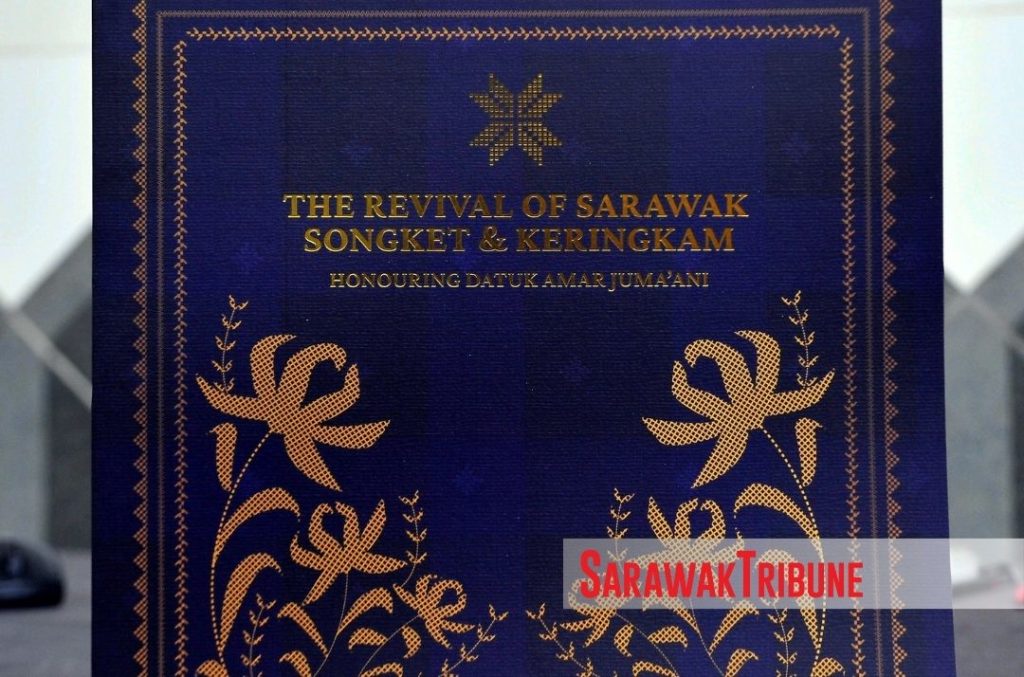
KUCHING: ‘The Revival of Sarawak Songket and Keringkam: Honouring Datuk Amar Juma’ani’ serves as both a historical record and a contemporary narrative of Sarawak’s textile heritage.
It traces the evolution of songket and keringkam from treasured family heirlooms to revitalised cultural assets supported by a structured ecosystem of artisans, communities and institutions.
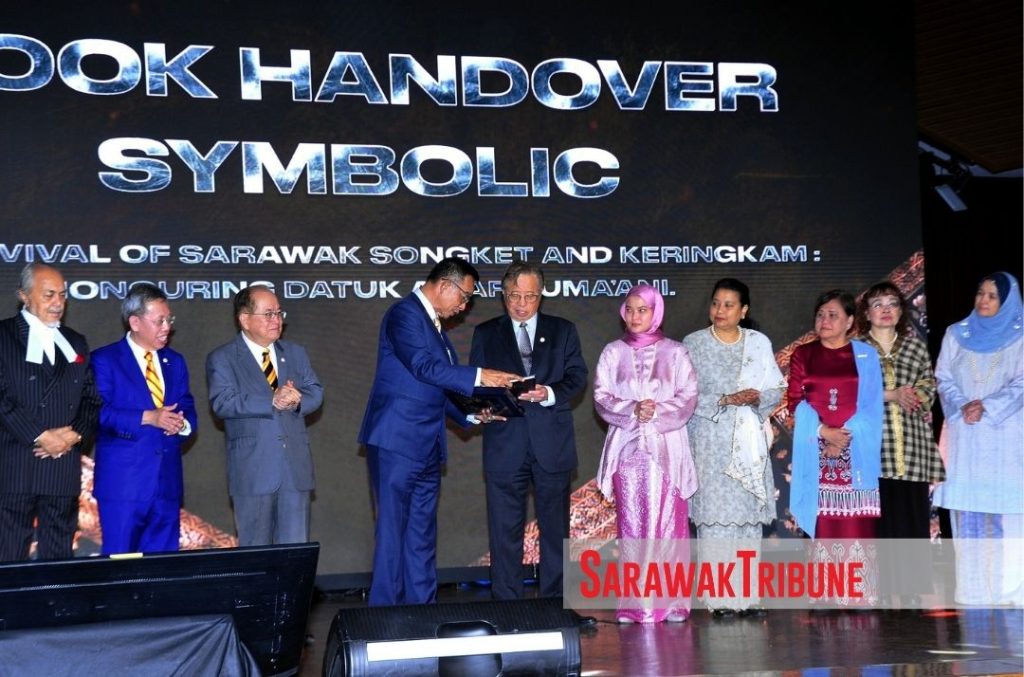
Tourism, Creative Industry and Performing Arts Minister, Datuk Seri Abdul Karim Rahman Hamzah, said the book is not merely a documentation, but also a living testament to the late Puan Sri Datuk Amar Juma’ani Tuanku Bujang.
“Among the many stories that reflect her love for heritage is one that is profoundly personal.
“Within her collection of keringkam was a piece commissioned for her daughter, Dayang Norjihan, while she was still unborn — intended for use at her wedding and to be handed down as a cherished family heirloom.
“That intention, heritage made visible as love, reveals how she wove legacy with deliberate care long before others would see it,” he said during the handing over ceremony of the book at Dewan Santapan, State Legislative Assembly (DUN) Complex here on Thursday.
Abdul Karim said the future of songket and keringkam depended on continuity, with ongoing efforts needed to train young artisans, protect traditional motifs and techniques and maintain a strong, well-supported ecosystem.
He assured that the ministry, through the Sarawak Craft Council, CENTEX and other related agencies as well as non-governmental organisations (NGOs), would remain committed to the movement as a joint heritage preservation effort.
He said it also serves as a pillar of the local creative economy.
“With rising global visibility, Sarawak’s textiles can contribute meaningfully to cultural tourism, creative industries and economic empowerment.
“As we present this book, let us recommit to the work she has started — to honour our local artisans, strengthen the ecosystem and ensure every future thread carries a piece of her heart.
“May her memory be a blessing, and may her legacy continue to inspire,” he said.
The book documents the statewide effort launched in 2018 through the Sarawak Heritage Innovation Project: Songket and Keringkam, initiated under the patronage of the late Juma’ani.
It outlines how the initiative strengthened the craft’s value chain — from sourcing raw materials and training new weavers to protecting traditional motifs, enhancing design capabilities and expanding market access.
Through this framework, the revival of songket and keringkam evolved into a structured and sustainable movement supported by artisans, communities and relevant agencies across Sarawak.
The book also highlights its impact, including the training of more than a thousand artisans statewide and the re-emergence of weaving and embroidery as viable, community-rooted cultural practices.
“Today the effort reaches across Sarawak, from Kuching and Samarahan to Gedong, Betong, Sibu, Rajang, Limbang and Lawas, touching families, youth and communities who once carried these crafts as part of daily life.
“As of 2025, 1,022 weavers and embroiderers have been trained statewide, a remarkable testament to her leadership and to the artisans whose hands carry memory,” Abdul Karim said.