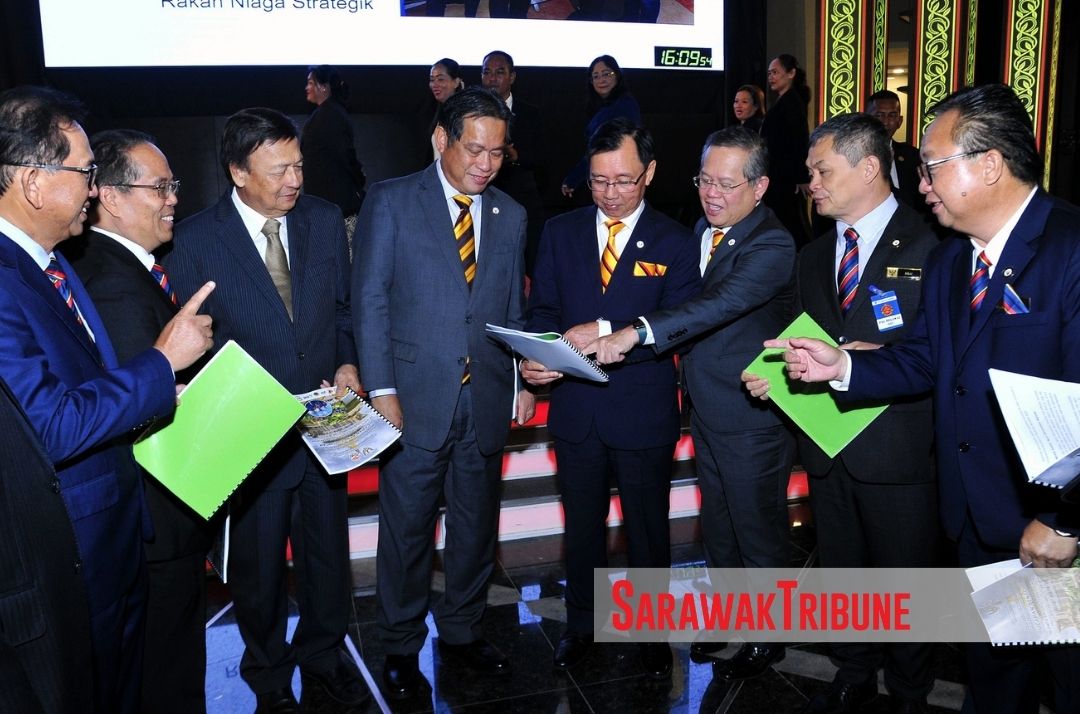
SARAWAK is intensifying its waste-to-wealth initiatives, with the Sarawak Land Consolidation and Rehabilitation Authority (SALCRA) now embarking on Bio-Compressed Natural Gas (BioCNG) production through methane trapping facilities under a Public-Private Partnership (PPP) approach.
Minister for Food Industry, Commodity and Regional Development, Datuk Seri Dr Stephen Rundi Utom, said this is in addition to the current practice of using biomass, particularly palm kernel shell and mesocarp fibre, to power the palm oil mill’s boiler and reduce the diesel consumption, with SALCRA and its group of companies adopting other technologies to further enhance renewable energy generation.
“BioCNG offers a cleaner alternative to diesel for heat and power generation while at the same time reducing greenhouse gas emissions.
“At present, SALCRA operates three methane trapping plants, with another plant expected to commence construction in early 2026,” he said in his ministerial winding-up speech at the Sarawak Legislative Assembly (DUN) sitting today.
Dr Rundi said the initiative aligns with Sarawak’s green and circular economy agenda and supports the newly passed Sustainable Resources and Wastes Management Bill, 2025.
“In addition, this initiative not only enhances environmental sustainability but also creates new revenue streams consistent with the Bill’s framework.”
He added that SALCRA is also developing oil palm-based animal feed to reduce reliance on imported feed ingredients and strengthen feed security for the livestock industry.
“With the completion of the Kernel Crushing Plant, SALCRA now has a steady supply of palm kernel expeller (PKE), which is currently used internally to feed its cattle before scaling up for external distribution.”
He said the construction of a Smart Insect Farm for producing Black Soldier Fly (BSF) meal from decanter cake is progressing on schedule and is expected to be completed by Nov next year.
Once operational, he explained that the farm will provide a sustainable local protein source for both ruminant and non-ruminant livestock.
Dr Rundi also highlighted the implementation of the Solid Removal and Oil Recovery System (SRORS) at SALCRA’s Bau Palm Oil Mill, which began operating in Feb this year.
“The system recovers waste oil from palm oil mill effluent (POME) and empty fruit bunches (EFB), providing feedstock suitable for Sustainable Aviation Fuel (SAF). It also generates pressed EFB fibre for use as boiler fuel in palm oil refineries.
“This system will be progressively extended to other mills, with installation at the Saratok Palm Oil Mill scheduled to begin in early 2026.”
In addition, he said the SALCRA’s Serian Palm Oil Mill is converting EFB into fibre mats (Ecomat) for mulching, weed suppression and slope erosion control.
“These fibre mats serve as organic fertilizers and natural weed suppressors, supporting sustainable plantation management.”