KUCHING: Sarawak’s architectural identity must be understood as a living, evolving expression of its people and culture, not a static symbol confined to the past.
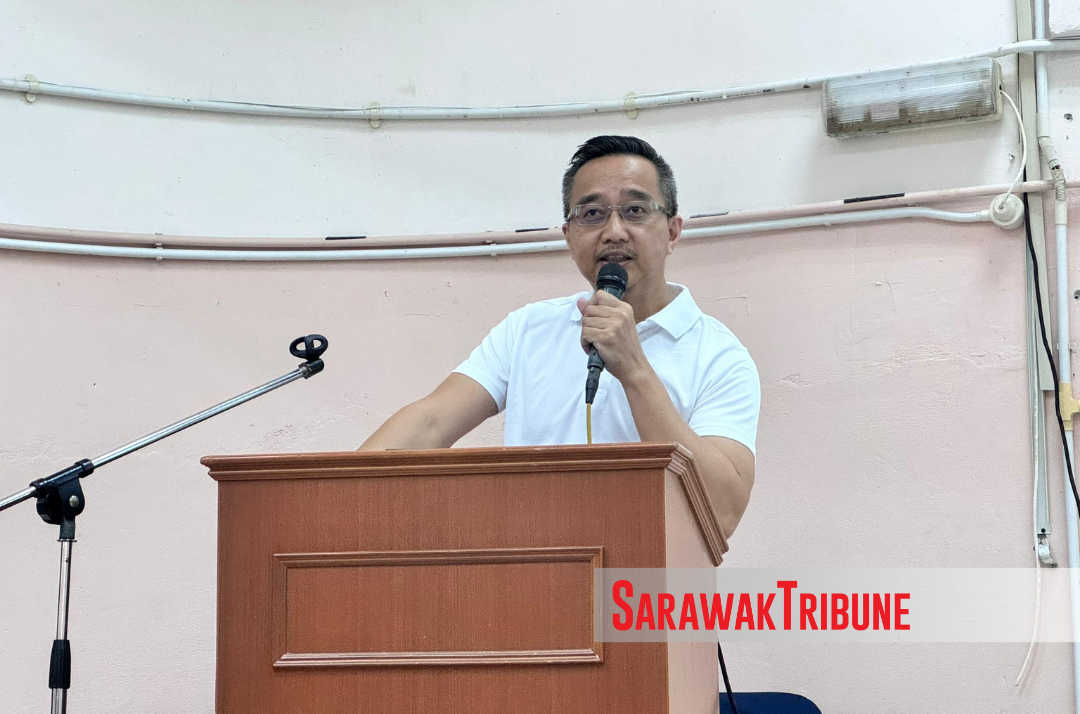
Ar. Mitchell Tony Mos, principal of Mitchell Mos Architect and a lecturer on Malaysian Architecture and Heritage at Universiti Teknologi MARA (UiTM), emphasised that identity in Sarawak’s architectural context was alive, growing, and constantly reshaped by community, culture and space.
He said that exploring spatial qualities and understanding how people interacted with their surroundings were essential for Sarawak to express its cultural roots within contemporary development.
“We are still struggling to adapt and integrate our culture and our identity into architecture.
“Many new developments might be visually appealing but they must also convey a true sense of place,” he told Sarawak Tribune yesterday (Dec 8).
He added that while travellers could instantly recognise iconic cities around the world, Sarawak’s built forms often did not project the local identity.
“When you arrive in certain countries, you immediately know where you are. But here, what tells you that this is Sarawak? It cannot only be the food or the friendly people. Our architecture must speak too,” he added.
According to him, local designs are often influenced by foreign styles, which most of the time do not enhance Sarawak’s own visual language.
“We’re not relying on foreign styles but we are influenced. We tend to look outward before looking inward.
“Much of what we see as ‘good architecture’ is shaped by what global media showcases but we forget to draw from our own roots,” he said.
He said that modern developments sometimes leant toward neo-colonial or imported aesthetics, weakening the sense of belonging and local identity that communities needed.
While progress was welcomed in Sarawak’s architecture in built environment, he stressed that it should not erase identity.
Mitchell emphasised that one of the strongest tools for shaping identity was the thoughtful integration of arts into architectural creations, as opposed to merely buildings.
“Different ethnic communities possess rich design traditions — whether motifs, linework or patterns—that can be enhanced, sharpened and reimagined into contemporary designs.
“We can develop and re-interpret them into digital and geometrical patterns by collaborating with artists, researchers and ethnics design experts. The goal is to evolve, not freeze the designs in time,” he said.
Mitchell also raised concerns about cultural knowledge loss, noting that many traditional designs risked becoming misunderstood when removed from their original contexts.
“When heritage is stored only in museums, it becomes static. Identity should be lived, not archived,” he said, urging designers to revitalise cultural elements through everyday use and creative adaptation.
Looking ahead, he encouraged young Sarawakian architects and designers to view identity as dynamic and forward-moving.
“I don’t want our identity to be perceived as something old school or traditional. We must learn from the past, bring it into the present and project it into the future,” he added.
He reminded the audience that preserving identity did not mean resisting innovation.
“I’m not stopping progress — we welcome it. But we must ask ourselves: what is our identity, and how do we ensure it continues to grow with us?,” he said.