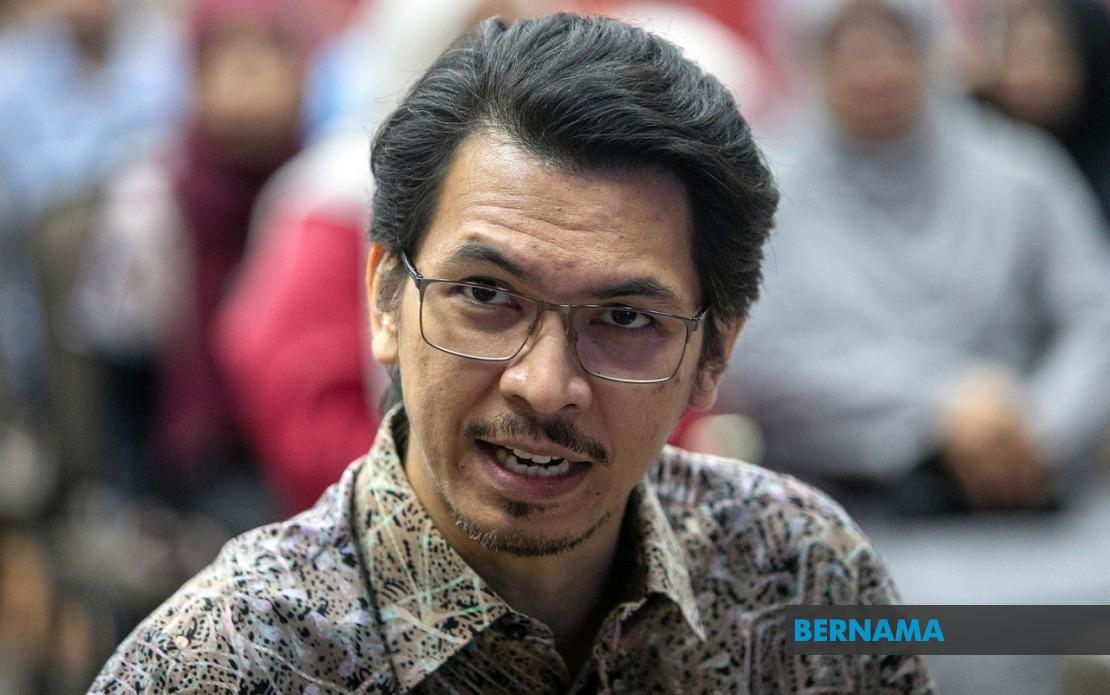
Sarawak’s cost pressures and development gaps cannot be separated from distance, logistics and access, with transport costs alone varying sharply between towns and remote areas, Deputy Prime Minister Datuk Amar Fadillah Yusof said.
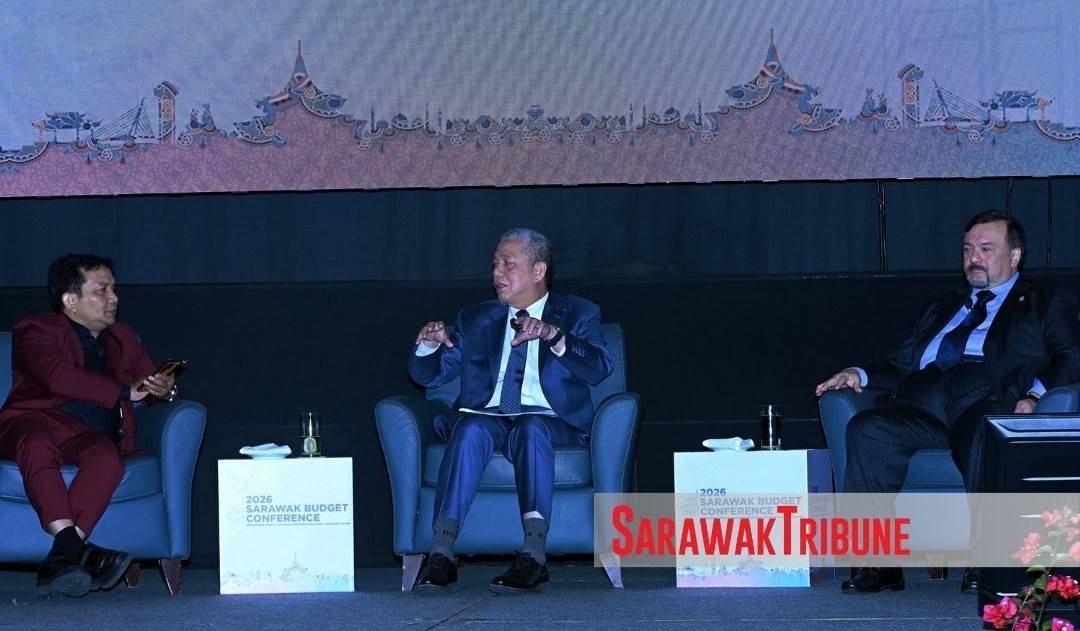
Speaking during a forum session titled ‘Exploring Sarawak’s Future: The Fourth Madani Budget & RMK13 as Catalysts for Growth’ at the 2026 Sarawak Budget Conference, he said the 2026 Madani Budget marks a shift after three years shaped by post-COVID-19 recovery pressures, including inflation and fragile investor confidence.
He said the focus has now moved towards building long-term resilience and competitiveness, transitioning from short-term measures to a longer-term plan that sustains growth amid challenges faced by the people.
He added that the government anticipates 4.5 per cent growth, easing inflation at 1.1 per cent, and a commitment to reduce the fiscal deficit to 3.5 per cent of GDP.
He said delivery depends on discipline in budgeting and spending, targeted subsidies, tax compliance, anti-corruption measures to reduce leakages, and the Government Procurement Act.
He said Budget 2026 focuses on economic flow, supporting people’s financial position, and raising the “ceiling” to increase that flow.
Meanwhile, Finance Minister II Senator Datuk Seri Amir Hamzah Azizah said Economy Madani is built around raising economic complexity, lifting the floor so the rakyat benefits and disparity narrows, and getting governance right through fiscal discipline.
He said Sarawak is already transforming, citing green technology, hydrogen development, and gas-induced growth, which he said are tied to higher-wage jobs.
Fiscal discipline, targeted subsidies and procurement accountability
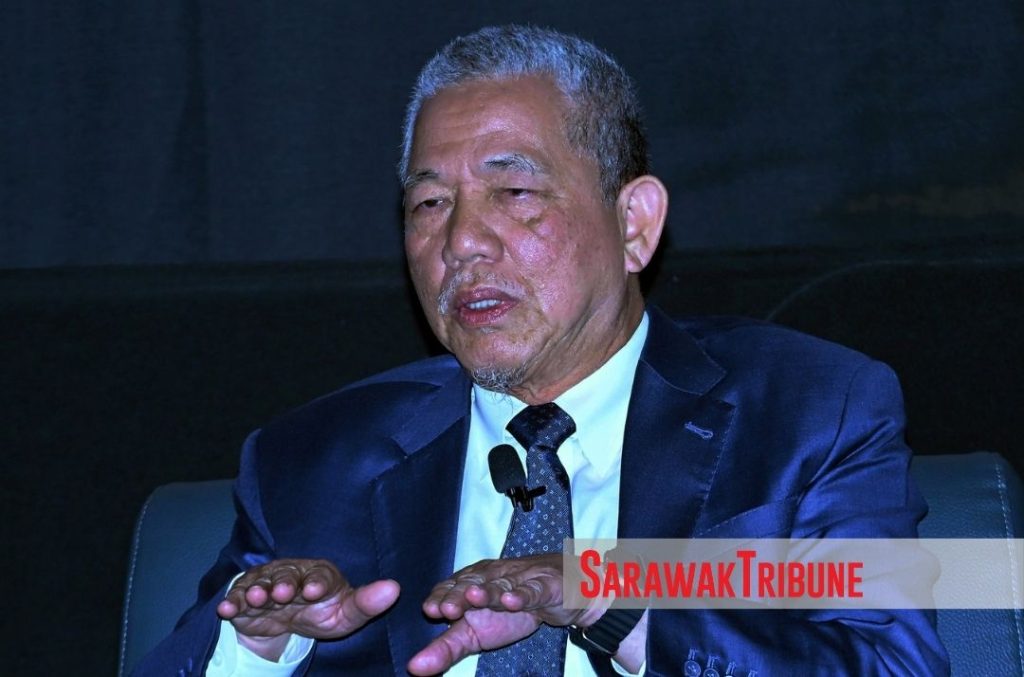
Fadillah said the government’s approach to meeting its targets begins with discipline in budgeting and spending, alongside a shift towards targeted subsidies.
He linked the fiscal position to compliance and enforcement, including tax payment and anti-corruption action to reduce leakages.
On procurement, he said the Government Procurement Act has been introduced in Parliament, warning of liability for non-compliance.
“We will be liable and responsible if we do not comply and conform to the Government Procurement Act,” he said, adding that liability extends beyond ministers to the civil service.
Cost of living and logistics challenge
Fadillah said Sarawak is somewhat unique compared with Peninsular Malaysia due to structural factors.
“In terms of our distance, in terms of our logistics, and also access. Because some areas are very remote, the cost of transportation alone will definitely vary from the town areas to the rural areas in terms of basic needs of the people.”
He said the government aims to address the root causes, acknowledging that short-term assistance alone is insufficient.
“We acknowledge that it’s not enough,” he said, after citing expanded assistance including STR and SARA.
He linked relief efforts to connectivity, describing infrastructure projects as critical to reducing transport costs and improving mobility of people, services and goods.
“But more importantly, we need to connect with people. So that’s why the infra project is very critical,” he said, referring to progress on the Pan Borneo Highway and improved amenities such as electricity and rural water supply.
He said the first phase in Sarawak has been completed, with the next phase focusing on connecting from the Pan Borneo bypass.
He added that Sarawak is also pursuing rural connectivity through the coastal highway initiative, which links with the Pan Borneo Highway to improve the movement of services and goods.
Fadillah also cited targeted subsidies to manage price gaps.
“We have assistance of about RM200 per month, assistance to all these people,” he said, referring to support for farmers and fishermen, adding that the federal government has provided RM250 million to stabilise prices between towns and rural areas.
He said transport costs are also subsidised so that ride prices in city centres and rural areas remain the same.
“It’s already ongoing”: rural inclusion as delivery
When asked about rural inclusion, Fadillah said this is not a future plan but work already underway.
“It’s not on the future plan. We have planned for it. It’s already ongoing,” he said.
He said the next challenge is reaching more remote areas where costs rise sharply, citing the Rural Electricity Scheme and Rural Waterscape.
Beyond physical infrastructure, he said the goal includes hospitals, clinics and other facilities so rural communities can access services comparable to those in towns.
Federal development allocation and what it unlocks
Amir said federal development expenditure (DE) allocation for Sarawak has increased from RM4.5 billion in 2021 to RM6.02 billion for 2026, describing it as nearly a 50 per cent increase and a commitment to accelerate development.
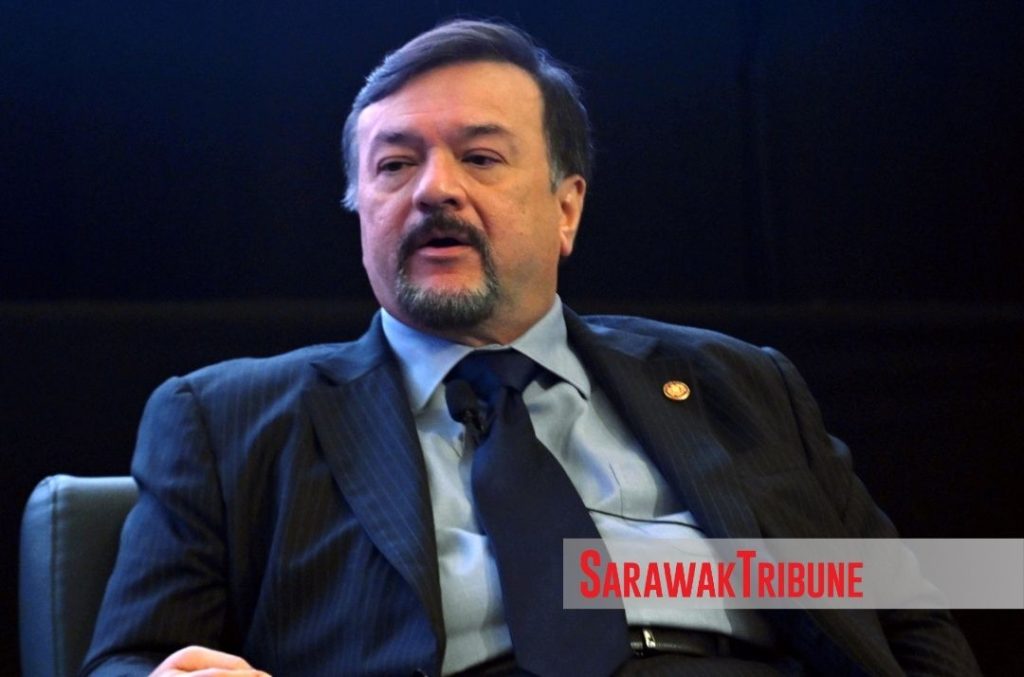
He said infrastructure is fundamental as it opens up development, reduces transport costs, and eases cost-of-living pressures linked to migration.
“Our whole objective is actually to make sure the people within those areas get to stay in the area.
“Because it also elevates cost of living pressures. Because migration sometimes causes its own problem over time.”
He said the Pan Borneo Highway has been a “game changer” for Sarawak and Sabah, with further improvements planned through the Sabah-Sarawak link and rural road projects.
He also said Sarawak receives a significant share of development expenditure for education.
“Among the states that get the biggest allocation for education is Sarawak. The state gets about 30 per cent of all DE expansion for education in the country at this point of time,” he said.
Social protection and service access
On social protection, Amir said SARA is being expanded through retail outlets.
“In Sarawak now, we have 777 outlets that can use SARA. And we’ll continue to expand it out,” he said.
He also cited service delivery beyond cash support, noting that Sabah and Sarawak have 14 mobile banks deployed to reach harder-to-access areas, with EPF adding 12 mobile units.
“BSN is a key channel used for distributing STR and support to the rakyat.”
Jobs at home and economic complexity
On job prospects for Sarawakians, Fadillah said the state has identified focus areas and is investing in people wherever they are, including those who may not return due to the need to remain within established R&D ecosystems.
“So these people will need to be where the ecosystem is to support them. They do not need to be in Sarawak.
“But they can be funded by Sarawak, of which the IPs, the patents and so on will be owned by the state, jointly with them,” he said.
He said returns are already happening in specific sectors.
“It’s already happening actually. In the medical sector, in oil and gas,” he said, adding that Sarawakians and Malaysians working in places such as the UK and Singapore are already returning.
Amir said raising economic complexity is fundamental under Economy Madani, noting that higher technology and industry translate into better-paying jobs.
“Raising economic complexity is fundamental as a transformation for the nation.
“Means that jobs will be higher paid in Sarawak. This will mean that they will likely want to stay in Sarawak. Because the opportunity is there.”
Investment, wages and “lifting the floor”
Amir said Malaysia recorded RM384.5 billion in approved investments last year, with RM282.5 billion approved as of end-September this year, stressing the importance of investment quality.
He said semiconductor investments are tied to building a stronger ecosystem, citing companies such as Intel, Infineon and Motorola.
On wages, he cited minimum wage increases to RM1,200, RM1,500 and RM1,700.
“15 per cent for the civil service, broken into 8 per cent last year and 7 per cent this year, will go through the civil service.
“GLICs and GLCs have committed to a living wage, citing RM3,000 as the level they aspire to,” he said.
MA63: allocations and delivery capacity
On MA63, Fadillah said development allocations have increased to RM600 million, alongside special programmes for connectivity.
He said implementation capacity remains a challenge, noting that allocations are sometimes not fully utilised by year-end.
He cited annual allocations of RM6 billion, with spending often reaching only 80 to 90 per cent, prompting a shift towards effective and efficient implementation.
He said technical committees have agreed that around RM50 million would be passed to Sabah and Sarawak for implementation, but capacity constraints persist.
A task force has been created to monitor project delivery within the budget year.
He also said unresolved issues include differing interpretations of laws between federal and state governments.
Amir said attention often focuses on what has not been done under MA63, overlooking progress achieved under Fadillah’s chairmanship, including federal facilitation and subsidies related to rural air services and electricity support in Sabah.
Ringgit strength and economic signals
On the ringgit, Amir said one of his first tasks upon joining the government was stabilising the currency amid sharp US interest rate hikes.
He said a stronger ringgit improves margins for local companies and supports tourism, as people feel they have more spending power.
“The currency movements will reflect the economic strength of our country. As Malaysia’s prospects go up, of course the ringgit will strengthen along the way.”
He said productivity and system efficiency must rise faster than currency appreciation for those exposed to ringgit movements.
“It is a positive movement. A recognition by investors that Malaysia is a good investing country,” he said.