ABU DHABI, United Arab Emirates: Sarawak’s integrated planning on energy, environmental sustainability and infrastructure has enabled the State to translate policy into delivery.
Deputy Minister for Energy and Environmental Sustainability, Datuk Dr Hazland Abang Hipni, said Sarawak’s development model focuses on aligning energy, environmental and urban infrastructure planning to ensure systems remain resilient and functional, particularly under pressure.
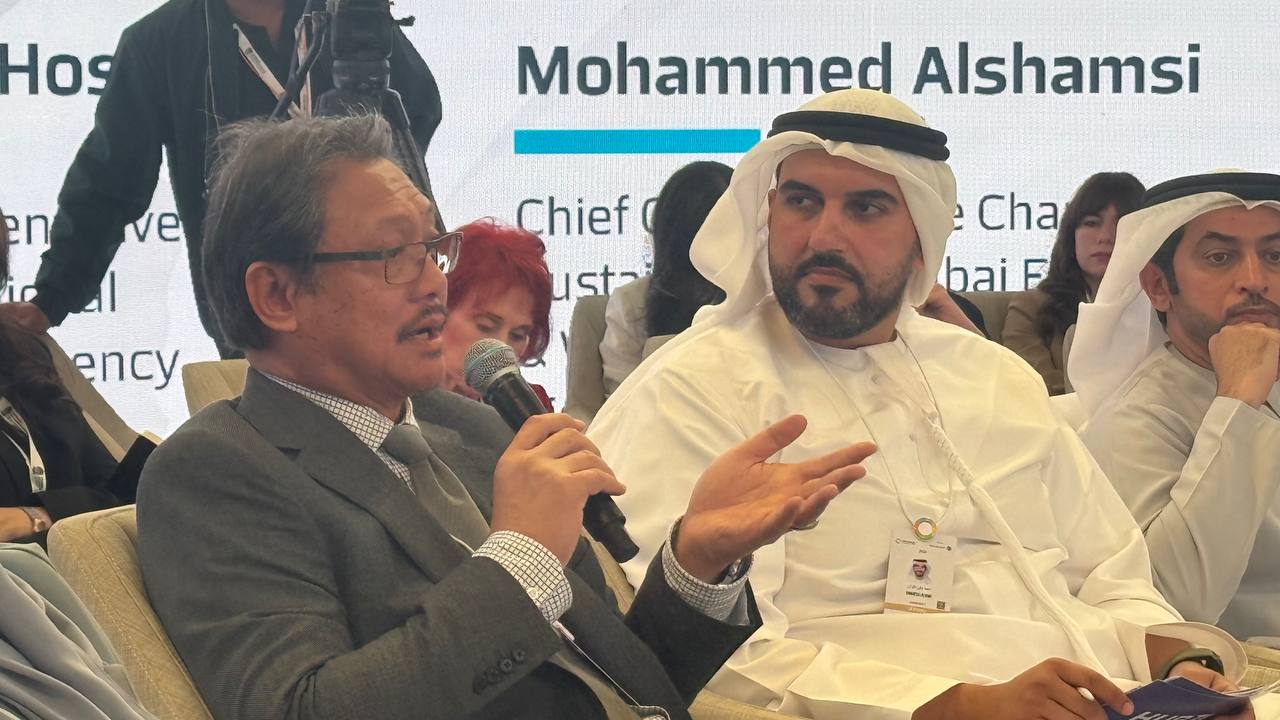
“At the core of Sarawak’s approach is integration. By aligning energy, environment and development planning under a single framework, we have been able to move from strategy to delivery,” he said during the panel session on ‘Resilient Systems, Real Results’ at the Abu Dhabi Sustainability Week (ADSW) 2026 on Thursday (Jan 15).
He said the Sarawak Sustainability Blueprint 2030 (SSB 2030) serves as the state’s central planning framework, setting clear targets across sectors and enabling agencies to synchronise planning cycles, align investments and coordinate implementation.
“Infrastructure modernisation is a key focus, including upgrading transmission and distribution networks to support higher renewable energy penetration and reliability,” he said.
Dr Hazland also noted that hydrogen refuelling stations are being developed alongside electric vehicle charging networks, while industrial corridor planning is aligned with renewable energy hubs to ensure power generation grows in tandem with demand.
He added that environmental protection and climate adaptation are embedded in Sarawak’s development planning.
“Sarawak is restoring degraded forests, targeting up to 10 per cent restoration over five years, and expanding protected areas to safeguard watersheds, biodiversity and carbon sinks.
“These efforts are reinforced by the Environment (Reduction of Greenhouse Gases) Ordinance 2023 and strict regulations on flaring and venting,” he said.
Dr Hazland stressed that energy and sustainability initiatives are aligned with Sarawak’s broader economic agenda under the Post COVID-19 Development Strategy 2030 (PCDS 2030).
“Leveraging low-cost hydropower, Sarawak anchors energy-intensive industries within the Sarawak Corridor of Renewable Energy (SCORE), ensuring clean energy investments also support economic growth and resilience,” he said.
He added that institutional coordination has been strengthened through multi-stakeholder collaboration involving state ministries, federal agencies and private sector partners.
“Key agencies such as the Natural Resources and Environment Board (NREB) and Sarawak Energy Berhad (SEB) play defined roles in enforcement, emissions management and infrastructure delivery,” he said.
Dr Hazland highlighted that Sarawak has progressed from policy to implementation through flagship projects and firm regulatory enforcement.
“These include SEDC Energy’s PETROS multi-fuel station in Batu Kawa with hydrogen dispensing facilities, and Sarawak Energy’s integrated hydrogen production plant, the first of its kind in Southeast Asia,” he said.
He added that Sarawak began enforcing restrictions on routine flaring and venting from Nov 1, 2025, supported by mandatory annual emissions reporting, with a full state greenhouse gas inventory targeted by 2027.
Looking ahead, Dr Hazland said Sarawak is targeting at least 60 per cent renewable energy in its power mix by 2030.