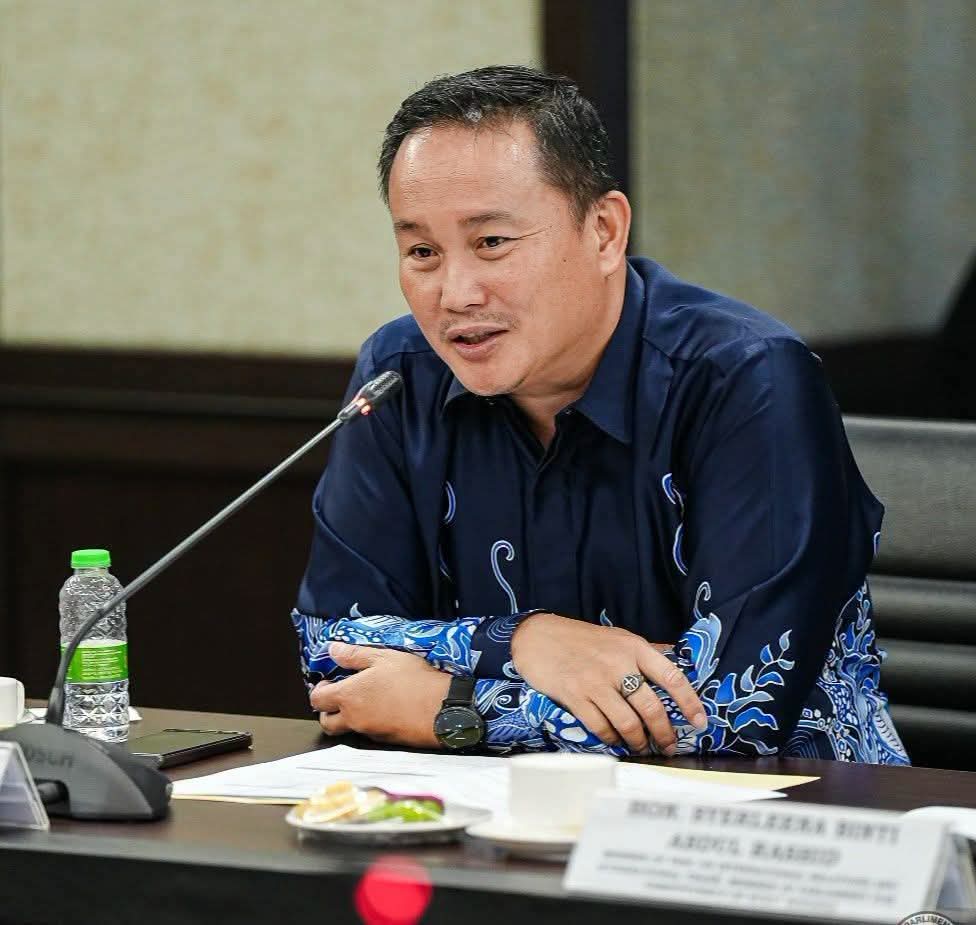
KUCHING: The Sarawak Teachers’ Union (STU) has responded positively to the government’s efforts to strengthen national education standards, including improvements to the assessment and examination systems that have been introduced.
President Kullin Djayang said the national education policy clearly positions Bahasa Melayu (BM) as the national language and the main medium of instruction in schools, including an emphasis on fluency among non-native speakers.
He noted that studies have shown teachers in national-type schools, such as Chinese national-type schools (SJKC), face challenges and pressure in balancing mastery of the national language without compromising the learning progress of non-native speakers, and therefore require specific support from relevant authorities.
“STU views efforts to strengthen Bahasa Melayu as a positive step, but stresses that its effectiveness must be supported through continuous teacher training, the provision of effective teaching resources and approaches that are sensitive to the needs of non-native speakers so that they are not left behind,” he told Sarawak tribune.
At the same time, he added that STU is open to changes in the national education landscape.
“As a teachers’ union that largely supports the reintroduction of examinations, we also welcome the Year Four Learning Assessment, which is being implemented starting this year.
“However, we hope that the test results will not be used as a basis for comparisons between schools or students to the extent that it leads to an overly exam-oriented education system,” he said.
He also stressed that the issue of teacher shortages in Sarawak, particularly in rural and interior areas, must be addressed first before implementing education policies that emphasise the learning of multiple additional languages such as Chinese and Tamil.
“We see these subjects as being offered if there is demand from students or Parent-Teacher Associations (PTAs), and if they are supported by the availability of sufficient teachers,” he explained.
To ensure that the RM100 million allocation announced by the government has an optimal impact, Kullin said STU has highlighted several urgent priorities, including upgrading infrastructure in rural and interior schools classified as dilapidated.
“Basic needs such as electricity supply, clean water, adequate classroom space and stable internet access are crucial factors in ensuring effective teaching and learning,” he said.
In a related development, he said teachers’ welfare must also be given serious attention, including the provision of physical facilities such as staff quarters, special allowances and internet data assistance, especially for teachers serving in rural and interior areas.
According to him, these measures are important to ensure teachers remain motivated and proactive in carrying out their duties.
“Additionally, the recruitment and training of new teachers must emphasise high-level skills and rigorous screening to produce quality educators and further improve the standard of teaching in schools,” he said.
Prime Minister Datuk Seri Anwar Ibrahim at the launch of the National Education Development Plan (|RPN) 2026–2035 on Tuesday (Jan 20) announced that all schools across various education streams, including international schools, religious schools and those following the Unified Examination Certificate (UEC) pathway, will be required to take Bahasa Melayu and History as subjects in the Sijil Pelajaran Malaysia (SPM) examination.
He said the approach is expected to resolve controversies surrounding the Bahasa Melayu issue, while also ending ongoing debates over entry requirements to public universities.