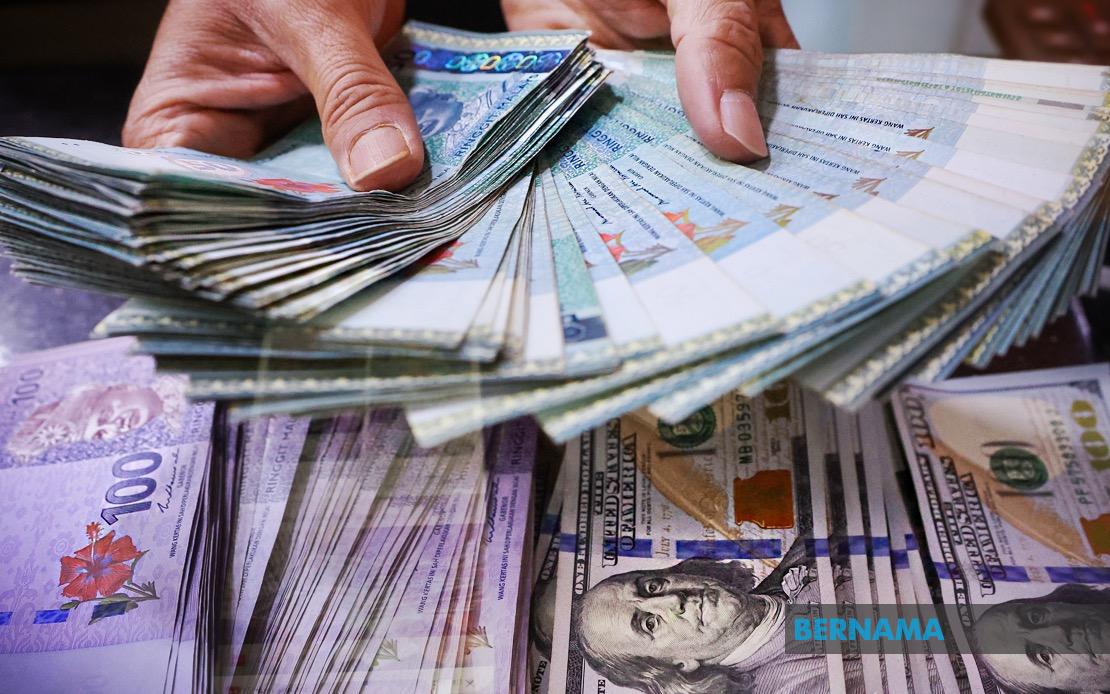
KUALA LUMPUR: The strengthening of the ringgit to its highest level in more than seven years against the US dollar has been welcomed as positive news for the public and is seen as reflecting the effectiveness of governance policies, political stability and growing investor confidence in Malaysia’s economic prospects.
Earlier this week, the ringgit broke through the psychological level of 4.00 against the US dollar and extended an upward trend that began the previous week, signalling improved sentiment towards the country’s economic fundamentals and political stability.
While the stronger local currency is expected to bring significant benefits to consumers and import-dependent businesses, experts caution that its impact will take time to be fully felt on the ground.
Distinguished Professor Datuk Shamsul Amri Baharuddin said the delayed impact is largely due to existing inventories, namely goods purchased or imported, as many goods currently in the market were imported when the ringgit was weaker, preventing immediate price reductions.
In this regard, he told Bernama that the public should not rush into spending or question the absence of immediate effects, but instead understand the time lag between currency strengthening and its actual impact on retail prices in the market.
Shamsul Amri, who is Director of the Institute of Ethnic Studies at Universiti Kebangsaan Malaysia, said four main groups stand to benefit from a stronger ringgit, namely consumers, import-reliant businesses, the government and Malaysians who travel or reside overseas.
“When the ringgit strengthens, imported goods such as smartphones, vehicles, medicines, wheat and milk become cheaper. However, consumers will only feel the impact after older stock is cleared.
“Price reductions generally take two to three months, and in some cases up to four months, especially for high-value items such as vehicles,” he said.
He stressed that the public should not misinterpret the delayed impact as a failure of government policy, as price transmission varies according to product type, value and supply chain dynamics.
On essential goods, Shamsul Amri said items with faster turnover, such as fresh food and medicines, are likely to reflect price changes earlier than durable or infrequently purchased goods like canned food or vehicles.
“Goods bought daily or weekly tend to show price adjustments more quickly, while high-value items take longer and should not be used as immediate indicators of the ringgit’s impact,” he said.
From a business perspective, he noted that the stronger ringgit allows importers to gradually reduce operating costs, although the extent to which these savings are passed on to consumers depends on pricing structures, distribution chains and the role of middlemen.
He added that strict enforcement and price monitoring by authorities are crucial to ensure that lower import costs translate into fairer prices for consumers.
Meanwhile, economist Prof Dr Ahmed Razman Abdul Latiff described the ringgit’s strengthening as a “positive signal” for the national economy that enhances foreign investor confidence and brings long-term benefits, including job creation.
The Director of the Master of Business Administration (MBA) and Doctor of Business Administration (DBA) programmes at Putra Business School said the impact of a stronger ringgit is not limited to macroeconomic indicators but also affects daily life, with sectors such as livestock farming expected to benefit earlier.
“For example, Malaysia’s chicken farming industry depends almost entirely on imported animal feed. When the ringgit strengthens, the cost of importing chicken feed becomes cheaper and may contribute to lower chicken prices in the market,” he said.
In addition, Ahmed Razman said the stronger ringgit also increases the purchasing power of local people who wish to travel overseas as exchange rates become more favourable than before.
When asked to comment on sceptical views that the current strengthening of the ringgit is driven mainly by US dollar weakness, Ahmed Razman said the performance of the local currency is actually driven by a combination of external and internal factors.
“It is true that the US dollar is weakening, but Malaysia’s domestic economic factors also play an important role. Compared with other Asian currencies, the ringgit recorded among the strongest performances, showing that the national economy has been in a positive and expanding state since last year,” he said.
In addition, he said domestic economic stability, including accommodative monetary policy with the overnight policy rate (OPR) at 2.75 per cent throughout 2026, provides room for more robust economic activity growth in the near term.
However, the economist said the government must pay attention to the impact of ringgit strengthening on the export sector and domestic tourism because local export goods risk becoming more expensive in overseas markets, which could weaken demand.
“It is important for Malaysia to continue maintaining competitiveness through the production of high-value-added products. The strengthening of the ringgit will not hurt Visit Malaysia Year 2026 even though the purchasing power of foreign tourists becomes smaller against the ringgit,” he added. – Sakini Mohd Said/BERNAMA