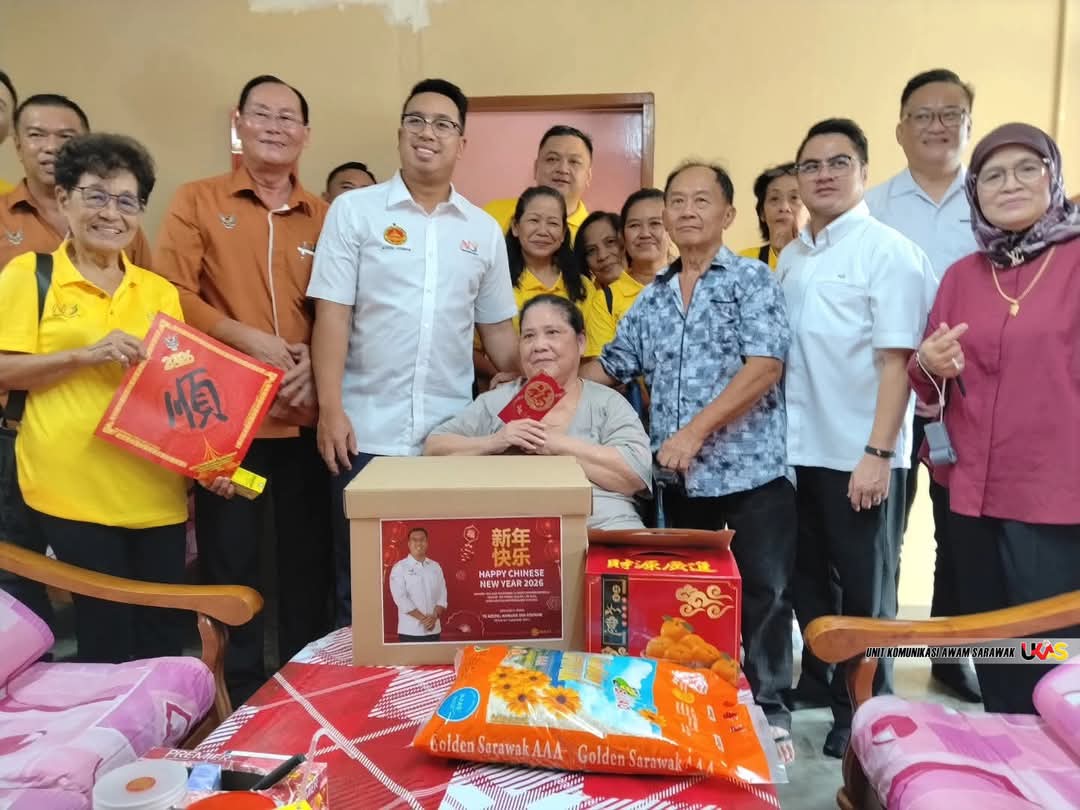
LUNDU: The approach of ‘ziarah kasih’ (community visits) and the presentation of contributions in conjunction with the upcoming Chinese New Year celebration in the Tanjong Datu area continues to reflect the strength of interfaith and interethnic unity that forms the foundation of social harmony in Sarawak.
A total of 66 recipients were reached through the Chinese New Year 2026 asnaf contribution programme, implemented through a combination of official events and home visits, further strengthening ties between leaders and the local community.
Of the total, 50 recipients were from the asnaf group, with 30 receiving contributions at Dewan Serbaguna Mahligai Gading Lundu, while another 20 were visited at their homes through the ‘ziarah kasih’ programme.
Tanjong Datu state assemblyman, Azizul Annuar Adenan, said that the practice of reaching out to people across religious and ethnic backgrounds is not merely a festive tradition but a reflection of Sarawak’s identity, which is rooted in mutual respect and togetherness.
He added that the social harmony enjoyed in Sarawak today is the result of an inclusive approach and sustained leadership that rejects any form of racial or religious sentiment that could undermine community unity.
“Sarawak has its own model in managing a diverse society. Through the role of UNIFOR (Unit For Other Religions), the needs of various houses of worship are met fairly and in a well-planned manner, fostering understanding, trust and mutual respect among communities and religious adherents,” he said on Wednesday (Feb 11).
In addition to asnaf recipients, 13 community leaders (KMKK) and three Chinese members of the Lundu District Council also received contributions in recognition of their roles in preserving harmony, strengthening unity and supporting local community development.
He also reminded the Village Development and Security Committees (JKKK) to ensure that grant management is carried out transparently and with accountability, in line with good governance principles that underpin social stability and public trust.
“Good governance practices not only ensure the effectiveness of programme implementation but also directly contribute to strengthening unity and harmony at the grassroots level,” he said.