BUSINESS matching only works when companies are ready to transact after the first conversation.
The recent leadership conference WE2025: Future in Motion, Women in Trade, Investment & Leadership held at MITEC Kuala Lumpur on 25 – 27 November 2025, reported a huge opportunity of RM109 million in potential trade and investment leads and more than 200 curated business engagements through its matching sessions.
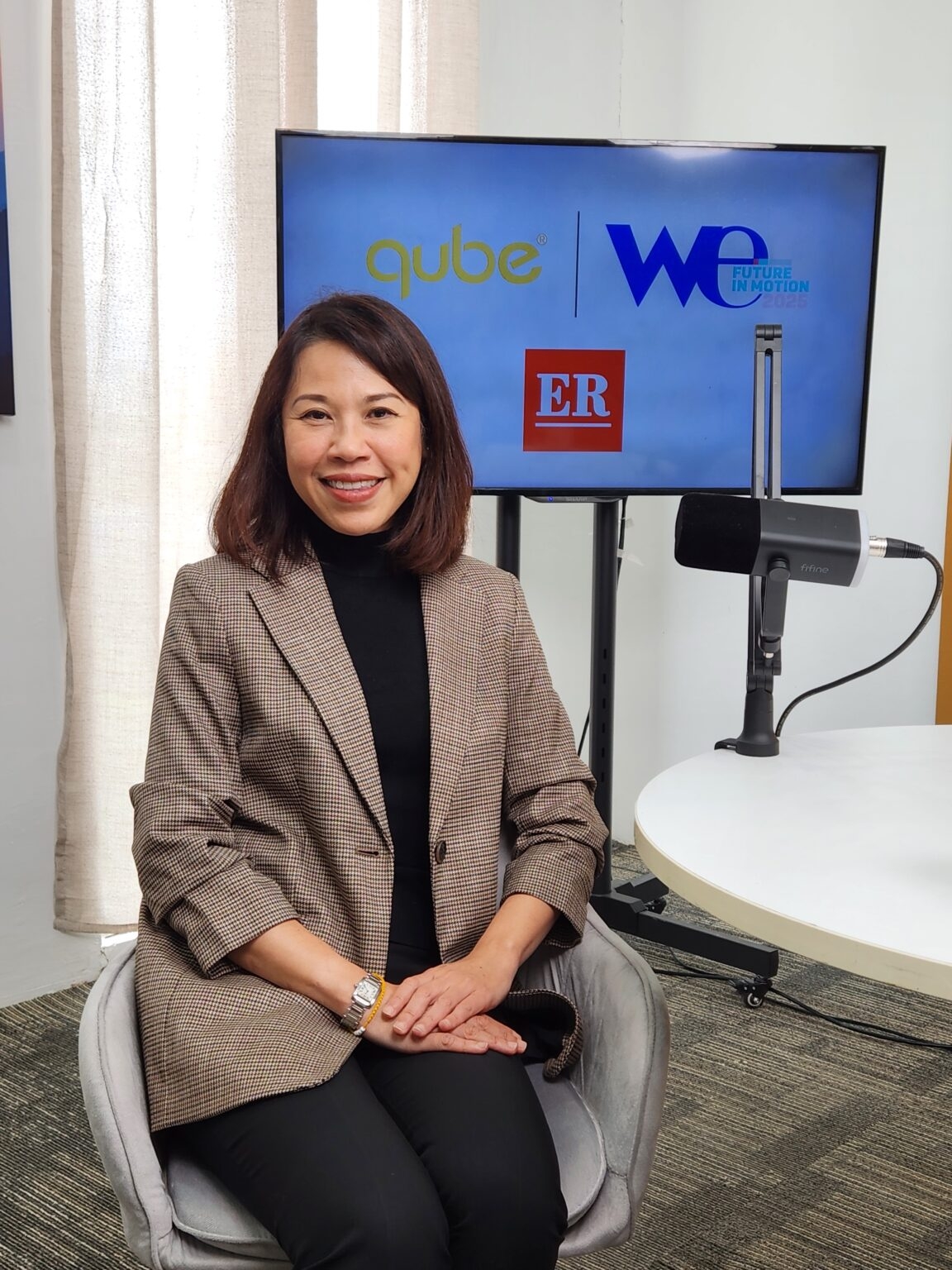
Sarawak Tribune spoke to Qube Integrated Malaysia Director of Strategic Partnerships Michelle Lau on the mechanics behind those outcomes and what the numbers represent.
SARAWAK TRIBUNE: Headline figures get attention, but what actually drives business matching outcomes?
LAU: Outcomes like these do not happen by chance or footfall alone. They are the result of deliberate platform design. At WE2025, Qube worked with partners such as MATRADE on structured initiatives like the International Sourcing Programme, which brought in local and international buyers aligned to specific demand sectors. The buyers were from markets including China, ASEAN countries, Canada, UAE, African countries and Pakistan.
The business matching sessions were offered to exhibitors and registered participants, allowing for pre-arranged, focused conversations rather than ad-hoc networking. What took place in the room were mostly early-stage commercial discussions— sourcing interest, procurement enquiries, partnership exploration and follow-up conversations. These are not instant deals but are credible signals of market interest. Qube’s role is to curate the environment for such conversations to happen effectively, not to execute or conclude the transactions.
Additionally, Qube International Business Matching (IBM) was also established to further add value to trade platforms. Over the years, Qube has created a network of businesses across broad sectors. Through its network and active corporate database, IBM was able to provide added value to sellers through curated business meetings between international sellers and local buyers and vice versa.
Which sectors and types of SMEs tend to gain the most traction, and what sets them apart?
The strongest traction was seen in sectors such as digital and ICT services, food and beverage, professional services, medical and wellness, and green technology. These sectors aligned closely with buyer interest and regional demand trends.
What differentiated the SMEs that benefitted most was not size but export readiness. Businesses that came prepared with clear pricing, complete company profiles, compliant documentation and a credible digital presence were able to engage buyers more confidently and move conversations forward. This reinforces an important point— platforms can open doors, but it is the level of preparedness and export readiness that determines how far businesses can progress beyond initial conversations.
In addition to export readiness, SMEs need a clear understanding of the varying certification standards and regulatory compliance requirements imposed by different countries for product importation.
Participation from Sarawak and Sabah in national-level platforms remains relatively modest. What does this indicate, and why does it matter?
Participation from Sarawak and Sabah has been improving, but it remains relatively modest. This reflects structural challenges such as distance, cost considerations and varying levels of exposure to national and international business ecosystems, rather than a lack of potential.
At the same time, both the Sarawak and Sabah governments have made deliberate efforts in recent years to position their states as hosts for regional and international events, supported by improving convention and exhibition infrastructure in cities like Kuching and Kota Kinabalu. Qube is observing growing confidence in East Malaysia’s ability to host larger-scale business and industry events.
However, while it is important to grow strong platforms within East Malaysia, participation in national and international events remains critical. These platforms expose businesses to broader market expectations, competitive benchmarks and regional dynamics that cannot be fully replicated at the local level.
How does Qube ensure enterprises from Sarawak and Sabah are included in national and regional platforms?
Inclusion of Sabah and Sarawak enterprises has always been an important consideration for Qube. Across our platforms, we consistently reach out to businesses and organisations from East Malaysia through targeted invitations, regional networking sessions and curated participation opportunities, including during the Malaysia-China Summit in 2024.
This has included participation from Sarawak and Sabah enterprises across sectors such as food and beverage, tourism and hospitality services, creative and cultural products, professional services and selected sustainability-related industries. The intention is to ensure that enterprises from East Malaysia are exposed to national and regional platforms, regardless of size or stage of growth.
Beyond participation at national platforms, Qube has also supported and organised events and engagements in Sarawak and Sabah, such as BuildXpo (organised in conjunction with CIDB’s International Construction Week), recognising the importance of building familiarity and confidence over time. The objective is to ensure that geography does not become a barrier to participation in national and regional business conversations.
In addition, during WE2025, Qube worked closely with the Ministry of Women, Family and Community Development to identify women micro-entrepreneurs from Sabah and Sarawak, who were given the opportunity to participate in a curated marketplace to promote their products free of charge. This approach reflects Qube’s commitment to inclusive access, particularly for micro and early-stage enterprises.
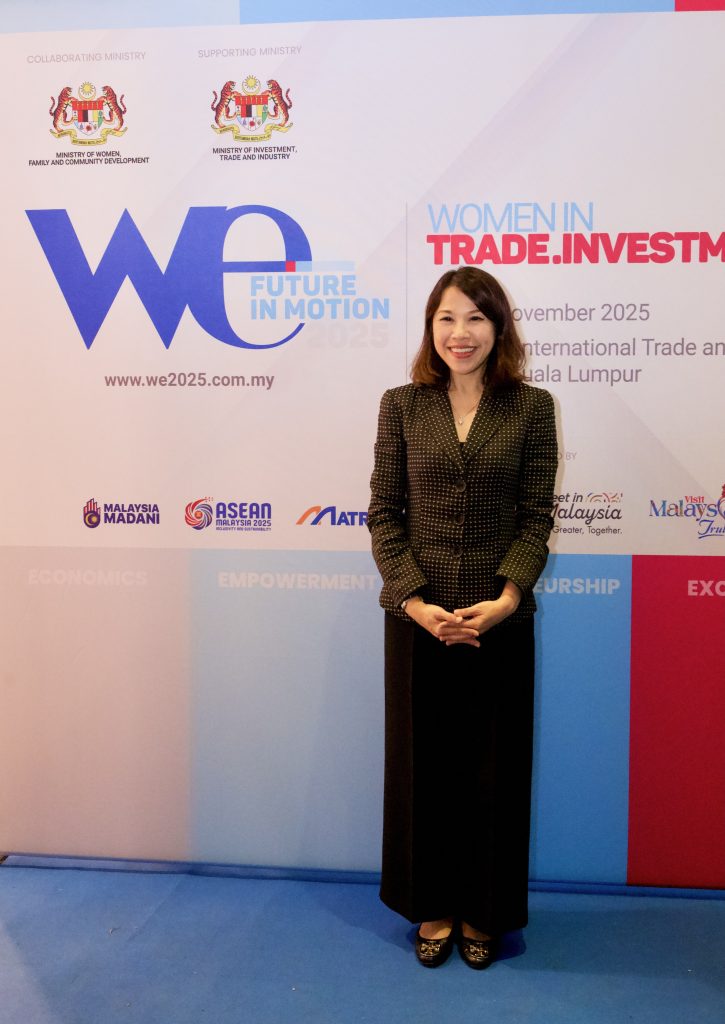
Qube Integrated Malaysia Director of Strategic Partnerships
What digital capabilities are now non-negotiable for SMEs engaging beyond their home markets?
At a minimum, SMEs must have accurate and accessible digital profiles, clear product or service information and the ability to respond promptly to follow-up enquiries. Increasingly, familiarity with virtual meeting tools, digital documentation and basic cross-border communication processes is also essential.
Businesses that were digitally prepared were better able to sustain conversations after the event, which is critical in today’s regional and international business environment.
Where do women-led SMEs most commonly get stuck after platforms like this, and why?
The real obstacles tend to appear after first meetings, as opportunities move from relationship-building to execution, requiring clarity on commercial terms, regulatory requirements and funding support.
In many cases, initial excitement is not matched by effective follow-up. This may stem from uncertainty about how to meet buyer expectations, fulfil order requirements, or move conversations forward commercially. A key constraint is financial readiness, as every confirmed order typically requires additional working capital and SMEs without a solid financial foundation may struggle to proceed.
Women entrepreneurs also tend to be more risk-averse and cautious about borrowing. However, where financing has been accessed, women-led businesses have demonstrated strong repayment performance and reliability.
These challenges do not reflect a lack of ambition or capability, but rather gaps in commercial and financial preparedness. This underscores why platforms like this must be complemented by capability-building, structured follow-up, and realistic expectations, ensuring participation forms part of a longer-term growth journey rather than a one-off opportunity.
Beyond headline figures, how does Qube measure whether a platform worked?
For Qube, success is not measured solely by headline figures. We look at the quality of engagement, the readiness of participating SMEs, repeat participation and whether businesses return better prepared for future opportunities.
If a platform helps enterprises understand market expectations, sharpen their positioning, network and build confidence to engage beyond their immediate markets, that is already a meaningful outcome.
Where are women entrepreneurs strongest today, and where are the biggest gaps?
Women entrepreneurs in Malaysia demonstrate strong resilience, adaptability and deep product and customer understanding. Many are highly hands-on and have built businesses grounded in market insight and practical experience.
The more significant gaps tend to emerge in commercial negotiation, financial structuring and long-term scaling strategies. While technology adoption has improved markedly, it must now evolve beyond basic digital presence toward integrated systems that enable cross-border operations, operational efficiency and business credibility.
From a policy perspective, women entrepreneurship should not be confined to traditional or micro-market segments. Women must be recognised and empowered as drivers of economic impact. This means providing high-potential women entrepreneurs with equal access to world-class education and exposure whether in AI, technology or innovation.
Unlocking the economic potential of nearly 50 per cent of the population requires coordinated policy support across multiple ministries. When women are empowered at scale, the nation stands to realise significant value creation and a more resilient, innovation-driven economy.
If you were advising a women-led SME from Sarawak preparing for her first national or regional platform, what are the three non-negotiables?
First, clarity: a well-defined offering, clear pricing, and a compelling value proposition that can be communicated confidently.
Second, readiness: proper documentation, a basic but sound understanding of financials, and the ability to follow up professionally and consistently after initial engagements.
Third, mindset: approaching participation as part of a longer growth journey, rather than expecting immediate deal closures.
Beyond business fundamentals, it is important to recognise that women can build successful businesses while fulfilling family roles. The key lies in designing systems that work, letting go of unnecessary guilt and viewing these responsibilities not as constraints but as motivations to create better outcomes for family, community, and nation-building.
Platforms may open doors, but sustainable growth is driven by preparation, continuous learning and consistent engagement over time.