Crisp on the outside, smoky within and paired with homemade kicap pedas, cucur suntong tutok is a Ramadan treat that appears for just 30 evenings each year. A humble fritter with a rich heritage, it is as much about patience and ritual as it is about flavour.
The golden comfort of a humble indulgence
It is never served at weddings. It does not appear on Hari Raya. And after 30 evenings, it slips quietly off the table.
Cucur suntong tutok — flattened grilled squid fritters — is a once-a-year indulgence, prepared only during Ramadan in this home.
While suntong tutok itself can now be found throughout the year in certain markets, this humble fritter belongs solely to the fasting month. It arrives with Ramadan and departs when the crescent moon gives way to Syawal.
In one lively kitchen, that ritual begins to unfold.
On the counter sits a small container of suntong tutok — smoky, lightly charred at the edges and pounded thin until tender. Its scent alone signals the season.
A snack that waits for Ramadan
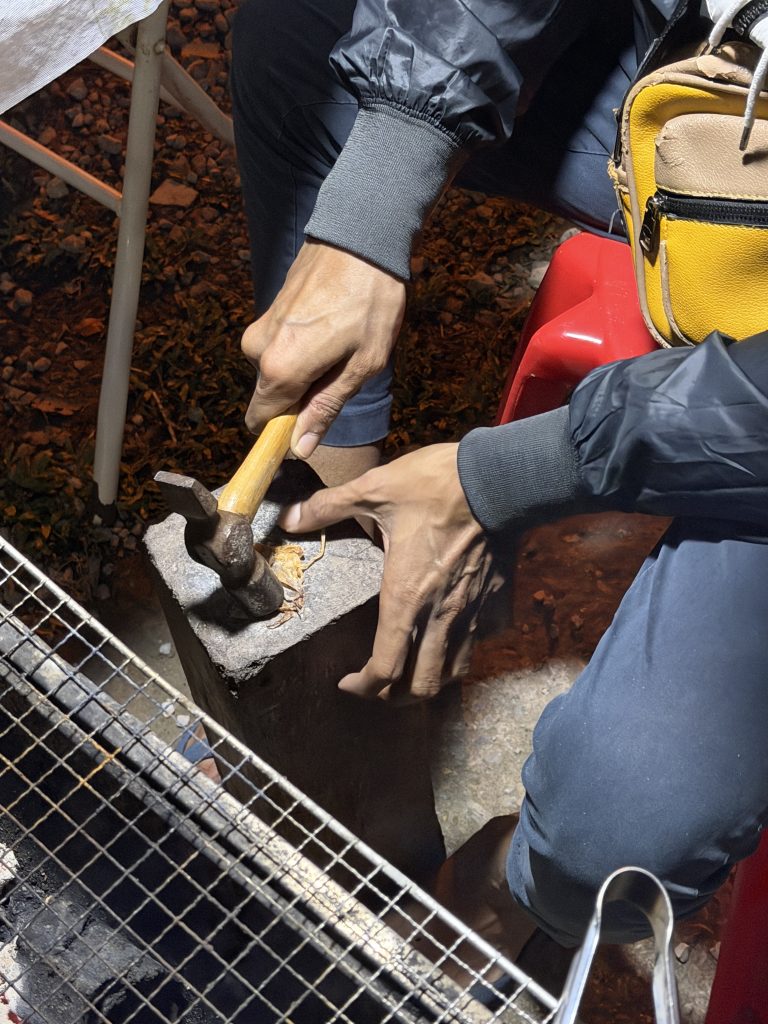
Most people recognise suntong tutok as a snack in its own right — grilled over charcoal, hammered flat and dipped into a fiery sauce.
In Sarawak, it is closely associated with Ramadan evenings. Yet in this household, throughout the fasting month, it takes on another form: cucur suntong tutok.
The preparation is deceptively simple. Flour, water and a pinch of salt form the base, sometimes lifted with sliced onions or spring onions for fragrance.
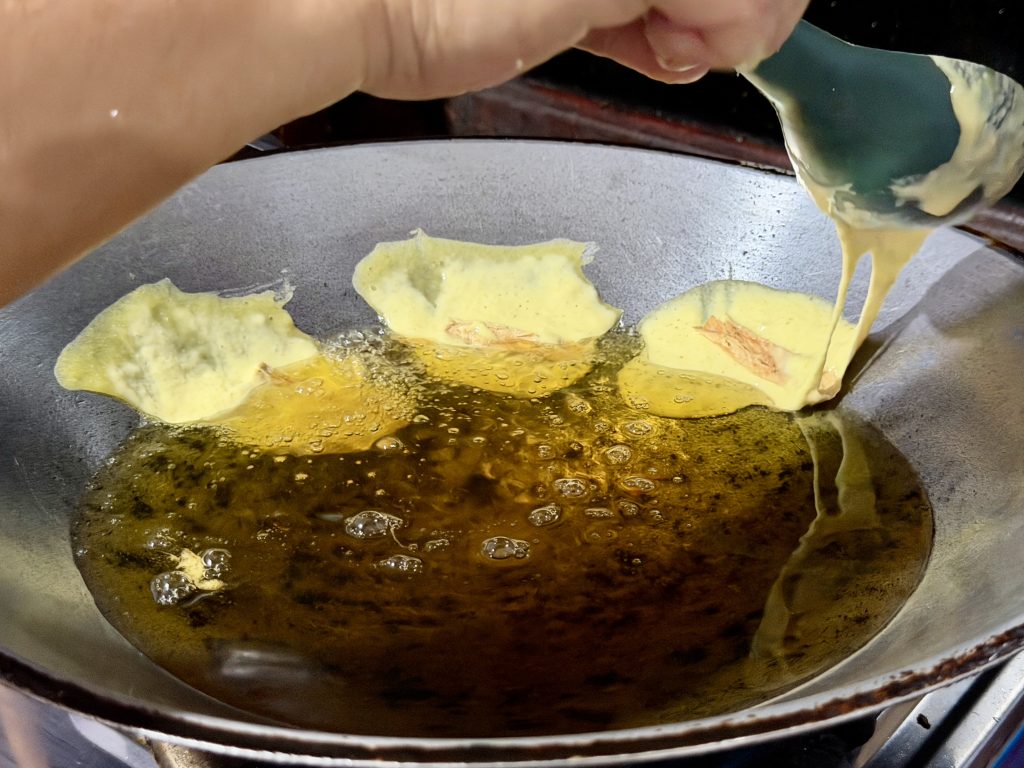
The batter is mixed by hand — thick, yet loose enough to fall in generous spoonfuls into hot oil. Then comes the defining ingredient: suntong tutok, sliced into thin strips and folded gently through the mixture.
There are no written recipes or measuring cups. Just agak-agak — instinct and experience.
“It’s like making any other cucur. But the suntong tutok makes it special. You cannot make this in any other month,” the house owner says with a soft laugh, wiping her hands on her apron.
That is the beauty of it. The dish is not about complexity, but about timing.
Though suntong tutok may now be sold year-round at roadside stalls, this particular ritual belongs strictly to Ramadan.
The taste of waiting
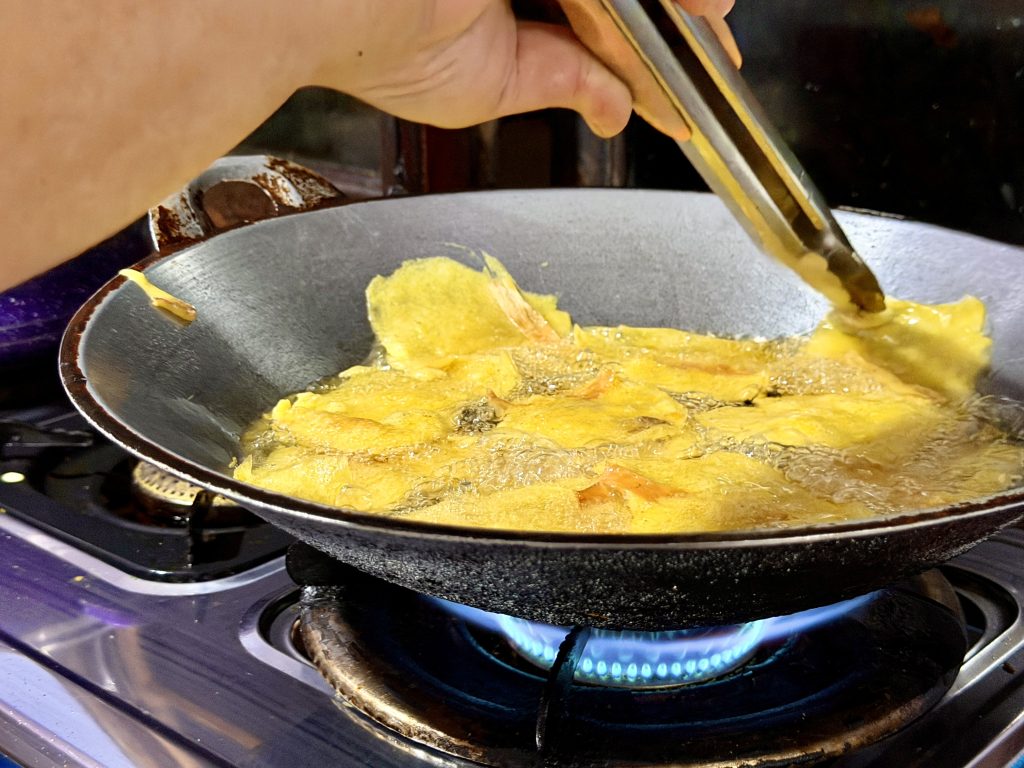
As the oil begins to shimmer, spoonfuls of batter slide into the wok, spreading into uneven golden rounds. Their edges crisp as the aroma of squid mingles with frying flour. The kitchen grows warmer.
Outside, the sky fades into a familiar blue-grey — the quiet signal that Maghrib is near.
By the second day of fasting, the rhythm begins to settle. The novelty of the first day gives way to routine. Waking before dawn becomes less dramatic, more deliberate. Hunger is no longer startling; it is expected.
Meaning reveals itself in these small, repeated rituals.
Cucur suntong tutok is not made for social media. It is modest — irregular in shape, occasionally darker on one side. Yet when lifted from the oil and laid on paper towels, it carries something beyond appearance. It carries memory.
The house owner learned the recipe from her mother-in-law, who prepared it only during Ramadan. The children would sit cross-legged on the kitchen floor, waiting patiently for the first batch.
The dipping sauce was always made first.
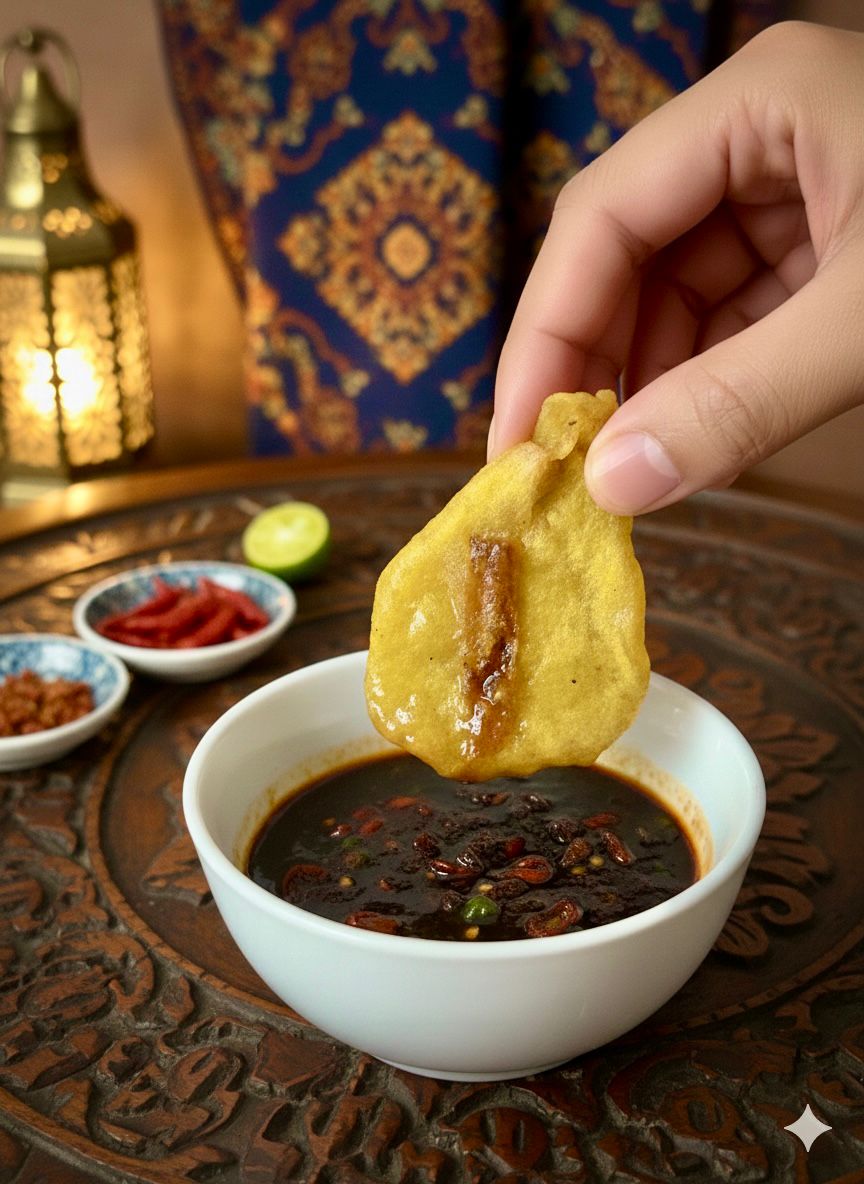
Kicap pedas — spicy soy sauce. Homemade. Never bottled.
Dark soy sauce stirred with pounded bird’s eye chillies, a squeeze of lime and sometimes a hint of sugar. Each household has its preferred balance: some sharp and fiery, others gently sweet. The bright flecks of chilli float against the glossy dark sauce.
The fritters are never eaten plain. They are torn open while still warm, steam escaping, then dipped generously into the kicap pedas.
The first bite rarely changes — crisp exterior giving way to soft batter, followed by chewy, smoky strands of squid. The saltiness meets the heat of chilli in quiet harmony. Simple, yet layered.
Perhaps that is what Ramadan cooking often embodies: layers.
It is about patience. About anticipation. About preparing a meal not for present hunger, but for the moment the fast is broken.
Fatigue may linger in the early days of fasting as the body adjusts. Still, in kitchens across the city, hands continue to stir, chop and fry — and here, cucur suntong tutok sizzles steadily in its pan.
Gone after thirty evenings
By the end of Ramadan, the fritters vanish from the kitchen, even if suntong tutok remains available elsewhere. This particular ritual belongs only to these 29 or 30 evenings.
Perhaps that is why it tastes different.
Hunger sharpens appreciation. Waiting deepens flavour. Knowing it will not last makes it precious.
As the call to Maghrib echoes from a nearby mosque, the family gathers. A tray of cucur suntong tutok sits beside plates of lempah ikan and udang masak cili. Someone reaches for a fritter, dips it into the kicap pedas and smiles.
“It’s not Ramadan without this,” says the house owner’s child.
And perhaps that is true — not because it is elaborate, but because it returns each year unchanged. A small, golden reminder that some traditions do not require reinvention. They simply need to be remembered, repeated and shared.
Each evening of the fasting month, this humble fritter — smoky with suntong tutok and dipped in homemade kicap pedas — anchors the table.
Tomorrow there will be other dishes. But for this month, that is enough.