KUCHING: The Court of Appeal here today upheld the death sentence imposed on a married couple convicted of murdering a 38-year-old woman in Sibu in 2020.
A three-member panel comprising Datuk Wong Jian Heong, Datuk Dr Alwi Abdul Wahab and Datin Paduka Evrol Mariette Peters delivered the unanimous decision after hearing the appeal by Seow Pei Chie of Subang Jaya, Selangor, and her husband Cheung Chai Ming of Kuala Lumpur. Both appellants are now 44.
Seow and Cheung were earlier convicted under Section 302 of the Penal Code, read together with Section 34 of the same Code.
Delivering the judgment, Evrol said the panel had carefully considered the mitigating factors but unanimously agreed that the death penalty was justified.
She said the sentence was imposed primarily as an act of retribution, reflecting the fundamental principle that punishment must be proportionate to the gravity of the offence.
Evrol noted that the High Court judge, Datuk Christopher Chin, had found that the victim was subjected to prolonged inhumane suffering, years of abuse, and ultimately a violent death involving blunt force trauma and strangulation.
“In his grounds of judgment, he posed the pertinent question: what about mercy for the victim, and what about justice for the victim’s daughter?” she said.
Evrol said this reasoning underscored the need for the ultimate penalty to achieve moral balance and provide justice commensurate with the immense harm inflicted on the deceased and her family.
She added that the sentence also carried a strong denunciatory function, expressing society’s collective condemnation of such crimes.
“The court explicitly stated that the interests of the public as a civil society must be taken into account. In this case, the facts of the offence would shock any member of civil society,” she said.
Evrol further said that by imposing the death penalty, the state signals its abhorrence of crimes involving exploitation, abuse and murder, thereby affirming the fundamental values of a civilised society governed by the rule of law.
She noted that the punishment also serves both a general and specific deterrent.
“By imposing the ultimate punishment, the court seeks to discourage others who might contemplate committing similar heinous acts.
“The learned High Court judge also emphasised that the court has a duty to society when exercising its sentencing discretion, noting that a lesser sentence would inadequately reflect the premeditated and cold-blooded nature of the killing,” she said.
Evrol added that the sentence ensures the permanent removal of the offenders from society, protecting the public from individuals who had demonstrated a sustained pattern of violence and a complete disregard for human life.
“The court noted that this was not a random or isolated physical assault, but part of a continuing course of conduct involving years of abuse, exploitation and ultimately murder.
“The careless disposal of the victim’s body further evidenced the danger posed by the appellants, justifying their permanent removal from society,” she said.
Evrol also said the death sentence was intended to provide a measure of closure and justice for the victim’s daughter, who had endured years of abuse at the hands of the appellants and the trauma of losing her mother in such a violent manner.
“The judge explicitly considered her suffering, questioning what justice would mean for her, and concluded that a custodial sentence would be wholly inadequate in light of the profound and enduring psychological abuse inflicted on her,” she said.
“We were therefore satisfied that the death sentence imposed by the learned High Court judge was the only sentence that properly reflects the circumstances of this case.”
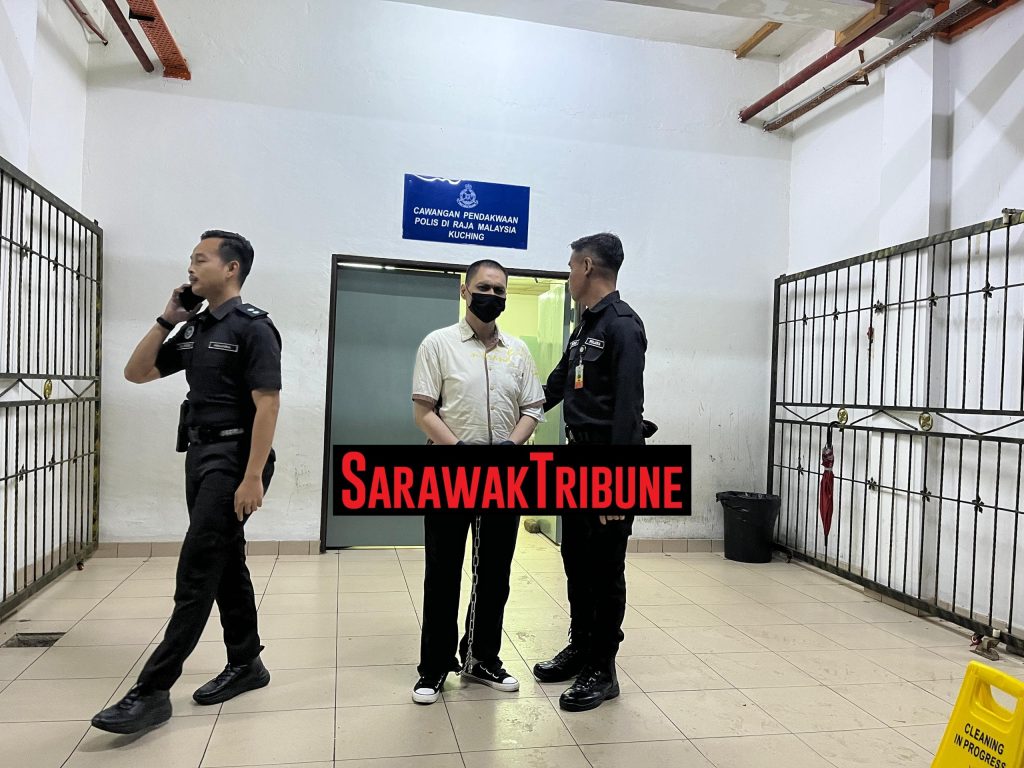
Both Seow and Cheung are expected to file an appeal to the Federal Court, although no hearing date has been set.
According to the charge sheet, the couple were accused of causing the death of Heng between Oct 4, 2020, at about 10pm and Oct 6, 2020, at about 6am at a house on Jalan Tong Sang here.
Case facts revealed that Heng and her then 16-year-old daughter moved from Perak to Sibu in March 2016 and lived with the couple.
Heng had borrowed money from Seow and Cheung and struggled to repay the debt. As a result, both she and her daughter were subjected to verbal and physical abuse.
Heng initially worked as a cook but later became a prostitute in an attempt to repay the debt. She eventually asked her daughter to do the same, and the girl agreed out of fear of the accused.
In June 2016, Seow and Cheung took Heng’s daughter to Kuala Lumpur, supposedly for her studies. Instead, she was forced to work as their maid.
The daughter was abused daily, including having hot water poured on her, being pulled by her hair and being slammed against walls.
The accused also threatened to sell the daughter’s organs to repay the deceased’s debt.
She managed to escape after 11 months and was later placed in a shelter home.
Investigations revealed that Seow and Cheung were known as “Along Harimau”. They had also pimped the deceased and collected her prostitution earnings.
At the time, another prostitute testified that the couple would regularly come to a hotel to collect money from the deceased.
When her earnings were low, they would beat her until she bled. The witness said such assaults were frequent.
The prosecution was led by Deputy Public Prosecutor Ng Siew Wee, while Seow was represented by assigned counsel Yap Hoi Liong and Cheung by assigned counsel Timothy Finlayson Joel.