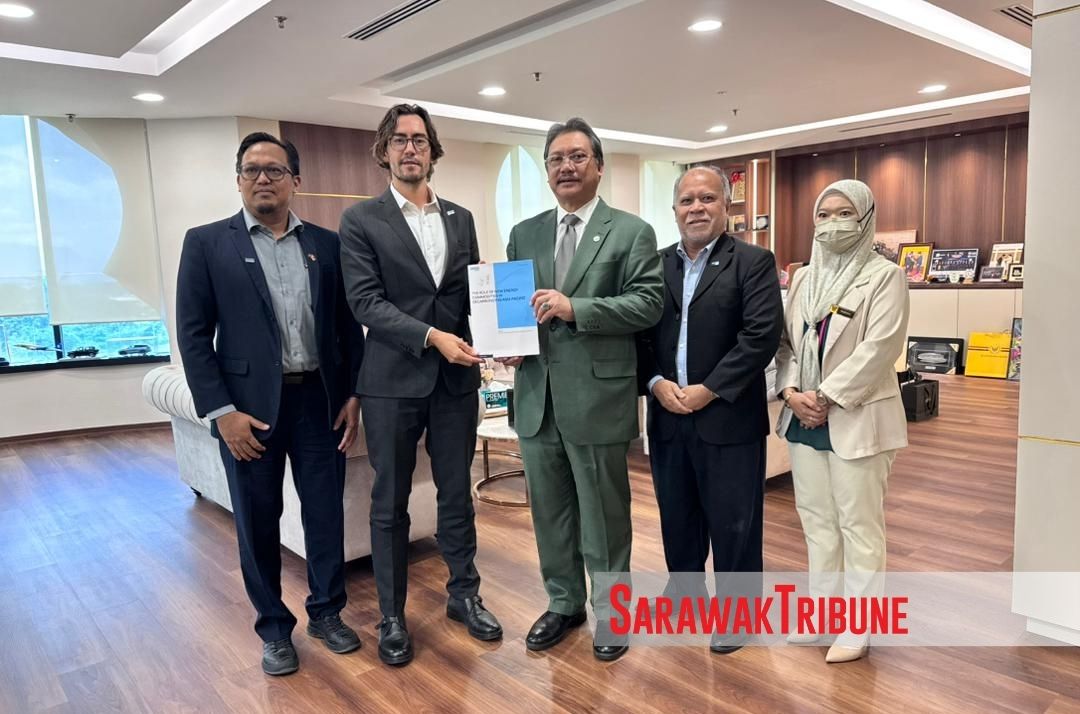
KUCHING: Sarawak is strengthening its position in regional clean energy transition following a strategic briefing with Norway-based verification body, Det Norske Veritas (DNV), today.

Deputy Minister for Energy and Environmental Sustainability, Datuk Dr Hazland Abang Hipni, said Sarawak is now well-positioned to lead the clean energy transition, having developed robust regulatory frameworks, infrastructure and skilled human capital over the past several years.
He emphasised that continued collaboration with DNV Norway, an international verification body, has offered deeper insight into the potential of clean energy commodities in Sarawak.
“We are ready, and Sarawak is now in the next phase. We are now in the delivery phase of all these new energy initiatives.
“From the start, Sarawak has proactively planned not only to ensure readiness against any disruptions in oil and gas supply but also to transition to new and green energy that is more environmentally friendly,” he said at a media conference following a briefing by DNV Norway at Baitulmakmur Building I here today.
The briefing also highlighted emerging energy sources, including hydrogen, ammonia, sustainable aviation fuel (SAF), methanol, and carbon capture, utilisation and storage (CCUS).
Pointing to Sarawak’s natural advantages, Dr Hazland added Sarawak has significant advantages in terms of natural resources and geography, including abundant rivers for hydropower and sufficient sunlight for solar energy development.
“And we are in the middle of Asia-Pacific, making it a strategic site as an energy exporter, in line with its role as the ‘battery’ of ASEAN,” he said.
He also stressed that the world cannot rely entirely on oil and gas and must strengthen cooperation, especially in the Asia-Pacific region, to develop a sustainable green energy framework.
Meanwhile, Asia-Pacific Regional Head for Energy Systems for Hydrogen and CCUS of DNV Norway, Dr Thomas Koller, highlighted Sarawak’s strong potential to lead the region’s decarbonisation efforts, citing its high share of renewable energy and early adoption of hydrogen technologies.
He said the next decade will be crucial for scaling up production to meet both domestic and international demand, adding that collaboration between governments will be key to overcoming challenges such as cost, infrastructure and standardisation.
“There is huge potential for Sarawak. It is very well placed to support not only its own decarbonisation, but that of the entire region,” he said.
For the records, DNV Norway is also expected to participate in the upcoming Asia-Pacific Green Hydrogen Conference, scheduled to take place in Kuching from June 9 to 11.