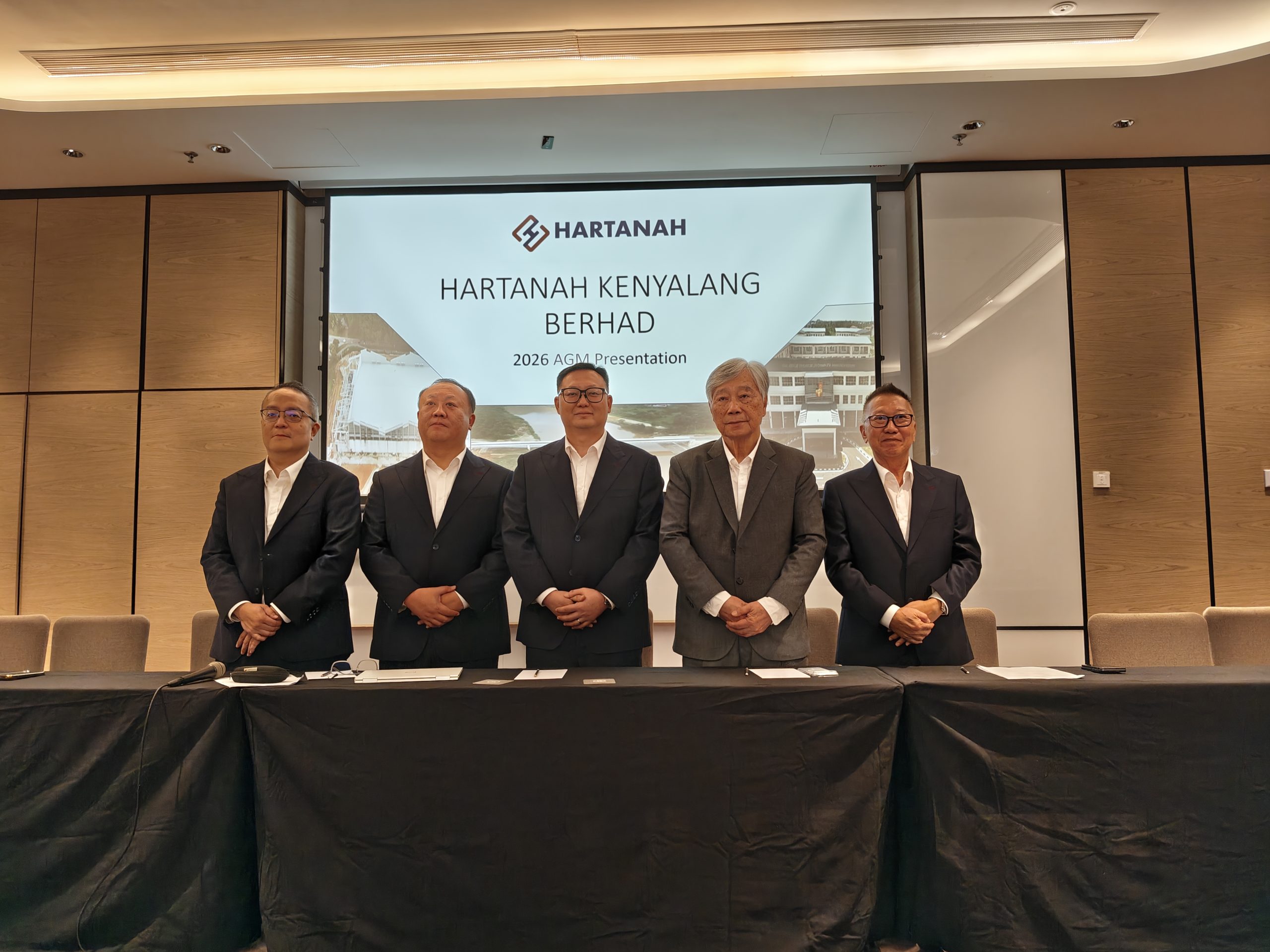
KUCHING: Hartanah Kenyalang Bhd is setting its sights on water infrastructure and substation projects as it charts its next phase of growth, with plans to expand into utility-linked construction over the next three to five years.
Chief financial officer Desmond Foo Jin Sen said the group is positioning itself to tap opportunities tied to renewable energy and essential infrastructure.
“This would focus on water infrastructure projects, substations linked to renewable energy development, and civil works for solar farms, dams and biomass-related projects,” he said during a media briefing held alongside the company’s post-annual general meeting at the Sheraton Hotel here yesterday.
The group currently has an outstanding order book of RM563.05 million as at Jan 31, 2026, providing earnings visibility. Its Sarawak tender book stands at RM3.94 billion across 10 projects, including RM1.08 billion worth of design-and-build jobs.
On the energy front, Foo said prospects are closely tied to Sarawak’s broader push to expand its renewable energy base.
He noted that the state has directed Sarawak Energy Bhd to review its structure by separating power generation from distribution — a move that could open the door for private-sector participation via the independent power producer (IPP) model, while the utility remains the single buyer of electricity.
This shift is expected to drive demand for substations, as electricity generated from renewable sources still needs to be transmitted to end users, he said.
Hartanah has already begun tendering for substation jobs and is also eyeing civil works linked to private-sector renewable energy developments.
“In such projects, we can undertake foundation works even if specialised installations are handled by others. These are among the areas we are targeting this year and next,” he added.
Water infrastructure is another key focus area. Foo said the group is targeting projects under the Sarawak Water Supply Master Plan and the Sarawak Water Grid System, including pipeline replacements, water treatment plants and rural connectivity.
He pointed out that Sarawak has 44 water and sewerage projects worth nearly RM6 billion under the 13th Malaysia Plan, alongside plans to replace and upgrade about 2,740km of ageing pipelines over the next five years.
“Many urban pipelines are more than 50 years old, some dating back to before the Second World War. The next phase will also focus on extending supply to rural areas,” he said.
Hartanah has previously built elevated water tanks, providing it with some track record as it looks to secure more water-related contracts.
Meanwhile, managing director Seah Boon Tiat said about 20 per cent of the group’s Sarawak tender book is already tied to water-related jobs, most of which are under the design-and-build model.
He acknowledged that breaking into new segments such as water infrastructure and substations will not be easy.
The biggest challenge is securing the first job, after which momentum is expected to build, he said.