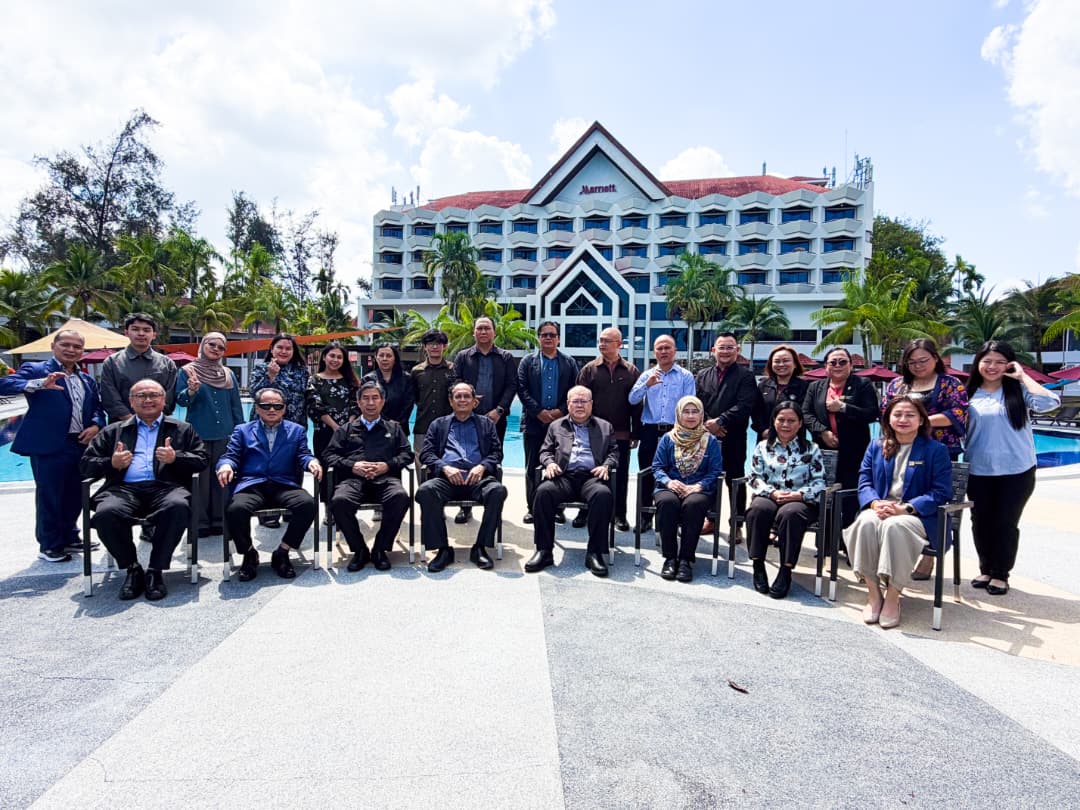
MIRI: A total of 25 participants from the Natural Resources and Environment Board (NREB) Sarawak attended a specialised workshop on flowmeter principles and greenhouse gases data validation.
Held from April 15 to 17 at the Miri Marriott Resort and facilitated by Dreamcatcher Consulting, the programme aimed to strengthen understanding of emissions data processes within operational oil and gas environments.
Deputy Controller (Management) of Environmental Quality, Kenny Poon, emphasised the importance of data integrity, that reliable emissions reporting depends on robust data recording supported by verified records and logs.
“Site inspections of actual facilities remain necessary where required to ensure reported emissions are accurate, transparent, and aligned with regulatory expectations under established environmental compliance frameworks,’’ he said.
The three-day workshop focused on how emissions data is generated, measured, reviewed, verified, and inspected, particularly in relation to real-world oil and gas operational settings and reporting requirements.
A key component highlighted flow measurement as a primary source of activity data for emissions calculation, including flaring volumes and fuel gas consumption across various industrial processes.
Participants were also exposed to the importance of flowmeter accuracy, proper usage, and timely calibration, alongside methods of calculating carbon dioxide equivalent emissions based on collected operational data.
The workshop included practical sessions on reviewing carbon emissions reports, enabling participants to identify discrepancies such as under-reporting or over-reporting while strengthening overall data reliability and integrity.
Technical exercises involved evaluating piping and instrument diagrams for systems including flaring, gas dehydration, gas compression, and separation, enhancing participants’ readiness for actual site inspections.
The programme was conducted in support of the Environment (Reduction of Greenhouse Gases Emission) Ordinance 2023, reinforcing requirements for accurate carbon emissions reporting and Sarawak’s commitment to achieving net-zero emissions by 2050.