WHEN we speak of fire and its place in our lives, we cannot deny its necessity. Fire is essential in homes, factories and businesses, particularly in manufacturing and food processing. It powers industry, prepares our meals and sustains modern living. Yet the same force that sustains us can devastate us when safety is neglected.
The latest Bomba Malaysia Annual Report 2025 paints a sobering picture. Fire fatalities and residential fires remain the deadliest category in the country. While industrial fires often result in significant financial losses, domestic fires continue to be the primary site of human tragedy. Between 2018 and 2024, 111 lives on average were lost each year in fires, with most deaths occurring in residential buildings.
Many of these cases were classified as accidental fires linked to the 3L Syndrome – LUPA, LALAI and LEKA. In simple terms, forgetfulness, negligence and complacency remain the greatest enemies of safety.
After each tragedy, communities ask familiar questions: “Why did it happen? Why my home, office or factory?” But fire safety is never the responsibility of one party alone. It is shared among five critical stakeholders: Authorities, Designers, Builders, Inspectors and Occupiers. When any one of these fails in diligence, the entire safety chain weakens.
A closer look at the statistics reveals 16,111 fire cases nationwide, with structural fires accounting for 76 per cent of incidents.
In 2025 alone, 98 fatalities were recorded, of which 55.4 per cent occurred in residential homes. Property losses reached RM2.09 billion – a staggering drain on household wealth and national resources. Sabah recorded the highest number of fatalities at 21 deaths, often associated with high-density settlements and limited access for emergency response.
Forensic investigations consistently show that most domestic fire deaths are not caused by flames, but by smoke inhalation and delayed detection. In older terrace houses that lack proper maintenance and basic smoke alarms, residents are often overcome before they even realise a fire has started. Globally, early warning systems such as smoke detectors have been proven to reduce fatalities significantly, yet adoption at household level remains inconsistent.
As frequently highlighted in the media and community programmes, the 3L Syndrome and Unsafe ABC – Unsafe Attitude, Unsafe Behaviour and Unsafe Condition – continue to invite tragedy. Human behaviour is at the centre of most preventable fires.
Communities therefore play a decisive role in upholding fire safety practices. Avoiding LUPA (forgetfulness), LALAI (negligence) and LEKA (complacency) must become a shared cultural norm rather than a periodic campaign slogan.
Encouragingly, Bomba Malaysia has introduced the Strategic Plan 2026–2030 alongside the National Fire Policy 2021–2030, laying the foundation for Total Fire Safety. In line with the 13th Malaysia Plan, the emphasis is shifting from reactive response to proactive prevention.
One important concept is Humanising Safety – moving beyond response time towards building community resilience. The objective is a whole-of-society approach in which citizens are not passive victims but informed first responders.
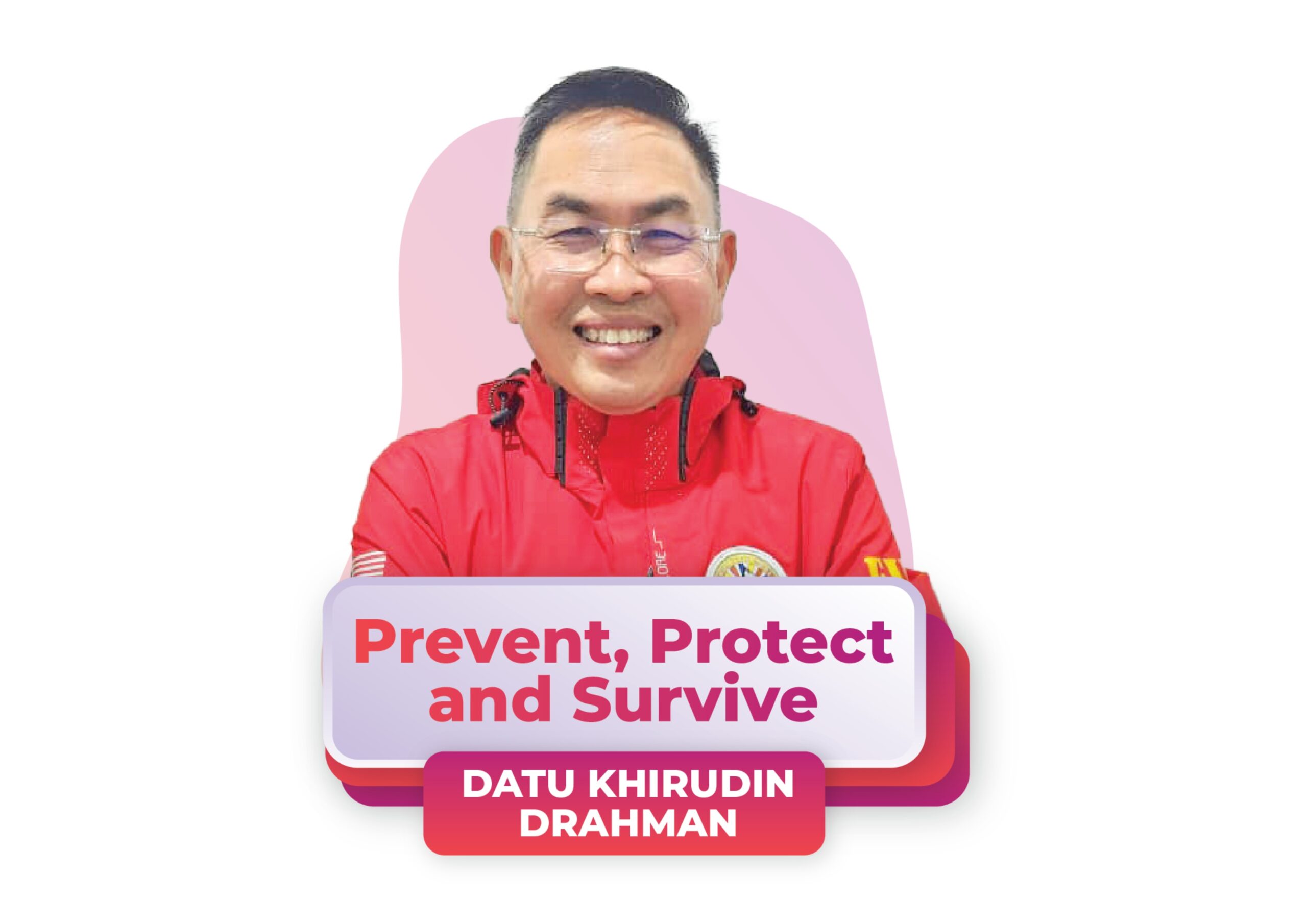
In Sarawak, Bomba Sarawak under its Director Datu Khirudin Drahman has introduced the Creating Local Champions Programme. If implemented effectively, it could serve as a model for a community-centric safety ecosystem. Selected individuals are trained as Safety Champions, taking ownership of safety within their homes and neighbourhoods.
This approach recognises a simple truth: the first five minutes of a fire are more critical than the next five hours. By the time sirens are heard, survival often depends on what occupants have already done.
Prevention begins at home. A practical 3P Culture — often described as the shield of safety — should be embedded in every household: Prevention, Preparedness and Protection.
Simple measures can make a profound difference. The “10-minute night walk” encourages families to conduct a nightly safety check before sleeping – switching off unused appliances, checking gas valves and ensuring escape routes are clear.
The “One Home, One Extinguisher” rule should become standard practice. We invest in televisions and furniture, yet many homes still lack a basic fire extinguisher – a device that can control a small fire before it becomes uncontrollable.
Families should also practise EDITH (Exit Drills in the Home). Can you escape in the dark? Can you locate your keys quickly? Can you unlock the grille within 30 seconds? These are not dramatic exercises; they are life-saving rehearsals.
A strict zero-obstruction policy must also be adopted. Escape routes should never be blocked by furniture, storage items or locked gates. Excessive clutter increases fire load and accelerates flame spread. Regular maintenance of electrical wiring and appliances is equally critical, as electrical faults remain a common ignition source.
Empowering communities is not optional – it is imperative. A paradigm shift towards Total Fire Safety demands collective effort. It requires families to accept personal responsibility, neighbourhoods to foster positive habits and institutions to reinforce behavioural change.
Recent Sarawak Chinese New Year and Hari Raya celebrations in 2026 offer a positive example. Although several fires were reported, no major tragedies occurred. Swift action and preventive awareness within communities played a decisive role.
The lesson is clear. The first five minutes remain the most critical in any fire incident. Do not panic. Act decisively. Keep a portable fire extinguisher within reach. It should be regarded as a household necessity, no less important than a refrigerator or a sofa.
Sarawak communities have shown encouraging commitment towards Total Fire Safety at home and in the workplace, with the 3P culture increasingly embedded in daily practice. This momentum must continue.
Fire will always remain part of our lives. Whether it becomes a tool of progress or a source of tragedy depends on us.
The views expressed here are those of the writer and do not necessarily represent the views of Sarawak Tribune. The writer can be reached at khirudin.drahman@bomba.gov.my.