PERCHED above the undulating landscapes of Bau in Sarawak, Bung Bratak is more than a destination.
It is a living archive — etched not in stone tablets, but in earth, memory, and the enduring spirit of the Bidayuh people.
Having been there twice before as a writer, I found that the journey up Bung Bratak is, in itself, a quiet initiation.
The path climbs through shaded forest, where birdsong punctuates the silence and roots twist like ancient veins beneath one’s feet.
Each step upward feels like retracing the footsteps of ancestors, a slow ascent into history.
For some, it is a trek, one that tests the lungs and legs while rewarding the soul.
For others, it begins with a steady drive along winding roads that snake through dense greenery and rural settlements.
To reach the Bung Bratak Heritage Centre at the summit, one can drive up through a steep road to the reception hall, parking is limited.
It is a modern convenience, shaped by efforts to make Bung Bratak accessible while preserving its natural charm.
At the summit, the world opens.
From this vantage point, the horizon stretches wide; rolling hills cloaked in green, distant rivers glinting under the tropical sun, and the quiet presence of villages scattered across the land.
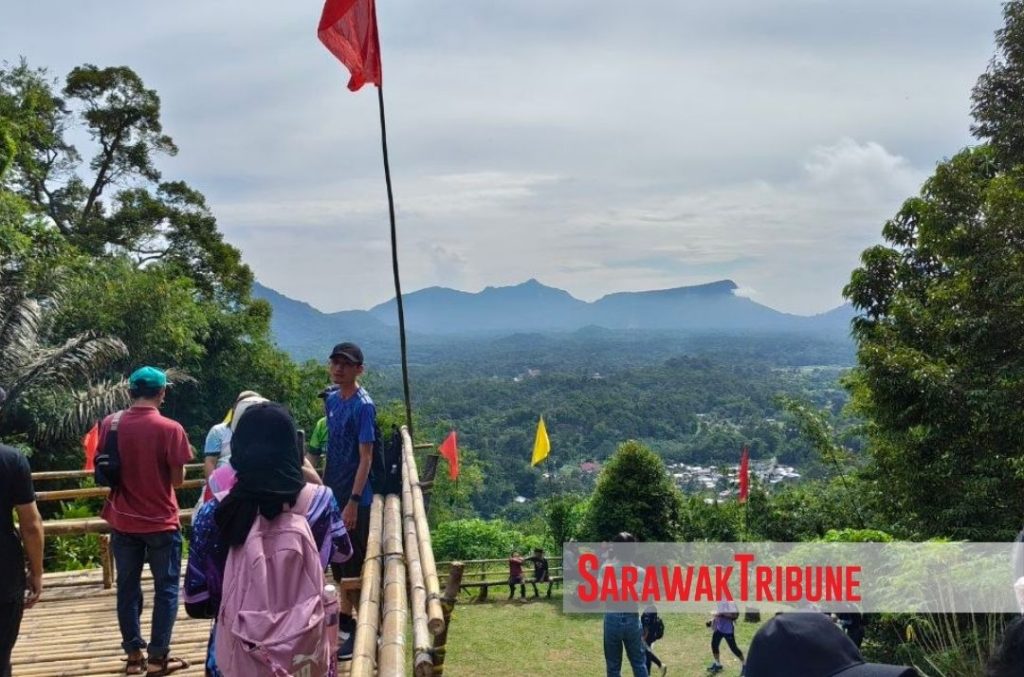
The air is cooler here, touched by a breeze that carries both freshness and memory. It is easy to see why this hilltop was once home.
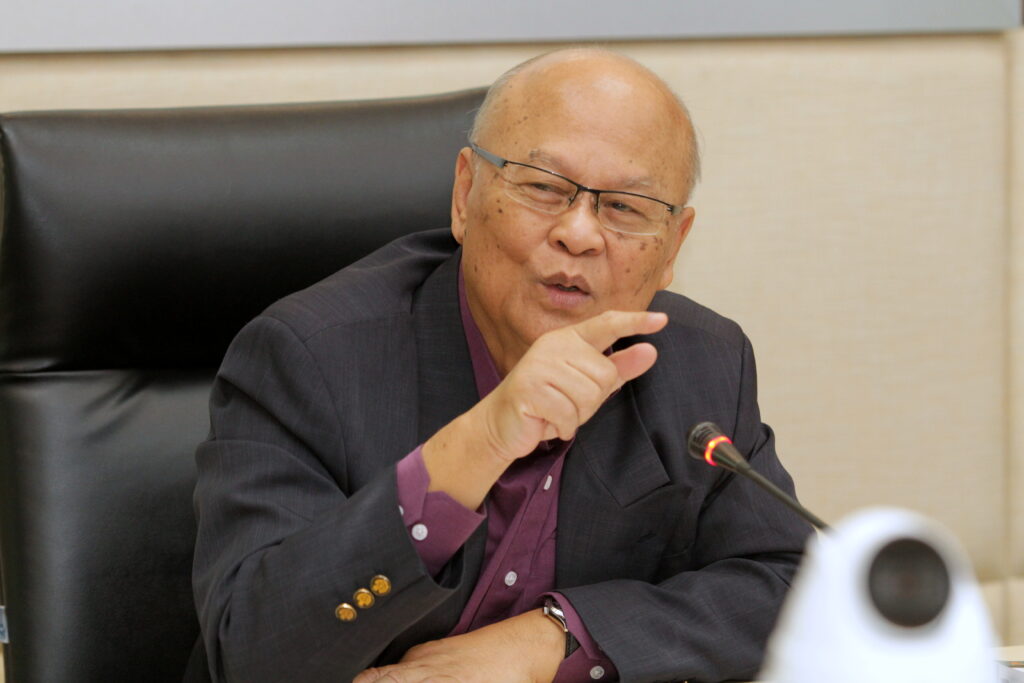
According to Bung Bratak Heritage Association (BBHA) adviser Datuk Peter Minos, Bung Bratak was once a thriving hilltop settlement, home to the Jagoi-Bratak sub-group of the Bidayuh community.
Generations lived here, cultivating padi at the foothills, hunting in nearby forests, and fishing in surrounding streams and swamps. Life was not merely sustained—it flourished.
“Early European accounts from the 19th century described Bung Bratak as prosperous. Its people were industrious, maintaining abundant reserves of padi, preserved fish, and meat.
“Cultural wealth, too, was evident—gongs and canangs resonated through the settlement, symbols of tradition and communal life. At its height, the hill was said to have supported at least 1,000 inhabitants,” Minos said.
But history is rarely gentle.
In May 1838, under the harsh glare of midday sun, tragedy struck without warning. A group of head-hunting warriors from Skrang descended upon Bung Bratak. The attack was swift and devastating.
The settlement was razed. Men, women, and children above the age of 15 were slaughtered. Homes were destroyed, valuables looted, and approximately 300 children were taken captive.
The hill fell silent.
Yet, even in the wake of unimaginable loss, life endured. A handful of survivors, those who had been working at the foothills, returned to a landscape of ashes.
Under the leadership of Panglima Kulow, they began the arduous task of rebuilding.
Hope, though fragile, found reinforcement from an unexpected ally.
Later that same year, Panglima Kulow led a delegation to seek help from Rajah James Brooke, the British ruler of Sarawak at the time. Their plea was simple yet profound: to bring back their stolen children.
Brooke responded.
With armed support, he mounted an expedition against the Skrang Ibans and successfully secured the return of the 300 children to Bung Bratak.
The reunion, as recounted by Minos, was one of overwhelming relief and gratitude — a rare moment of light in a dark chapter.
From 1839 onwards, Bung Bratak began to rise again. Under British rule, the era of head-hunting gradually subsided, ushering in a period of relative peace.
Like many settlements across Sarawak, Bung Bratak grew and stabilised, its people rebuilding not only homes, but their sense of community.
Time, however, brought change.
By the 1960s, many residents began moving downhill, seeking new opportunities and more accessible living conditions.
Over the decades, the descendants of Bung Bratak spread across the Bau and Lundu districts. By the year 2000, some 35 villages in these areas traced their origins back to this very hill.
Today, the Bung Bratak legacy lives on through its people, now numbering around 40,000, and through the physical site that continues to anchor their identity.
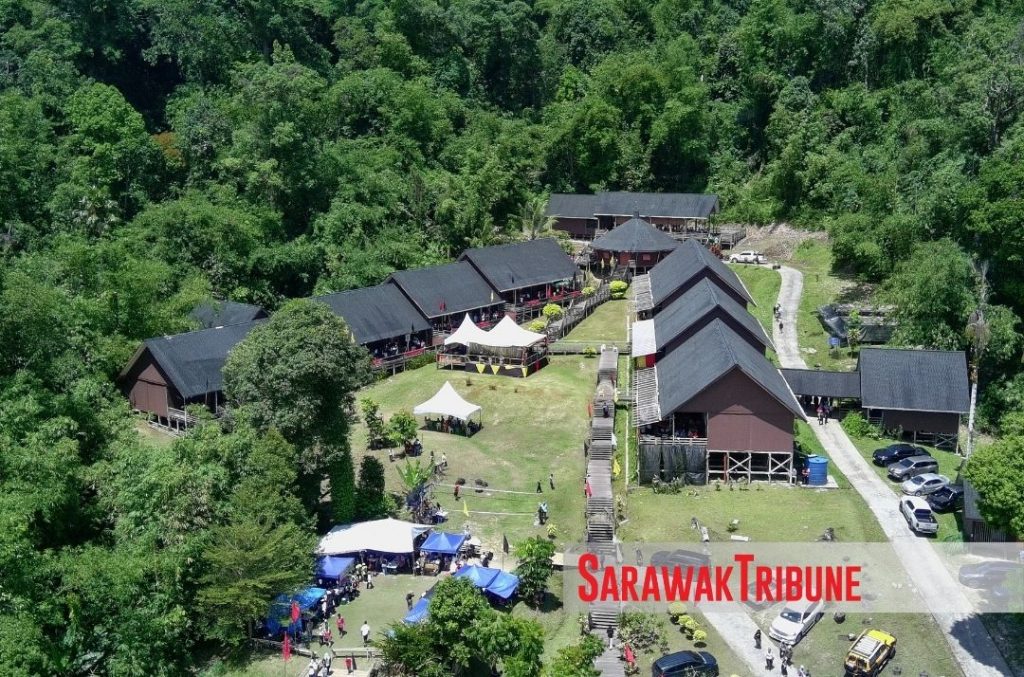
At the summit stands the Bung Bratak Heritage Centre (BBHC), a testament to preservation and pride. The BBHC was built between 2015 and early 2018 and was officially gazetted as a historical and heritage site in September 2022.
Developed under the leadership of Minos, who served as chairman of the BBHA from 1988 to 2025, the centre features traditional Bidayuh structures, including two longhouses and a Baruk — the iconic roundhouse used for gatherings and ceremonies.
There are also reception and dining halls, as well as a conference room, making the site both cultural and functional.
Walking through the heritage centre, visitors encounter more than architecture.
There is an atmosphere, quiet yet powerful on an ordinary day. The wooden structures, the open spaces, the surrounding forest; they all seem to hold stories, waiting to be felt rather than told.
Around the hill, nature continues its gentle embrace. Forests teem with life, streams weave through the land below, and the air carries a sense of calm that feels almost sacred.
It is not a place of noise or spectacle, but of reflection.
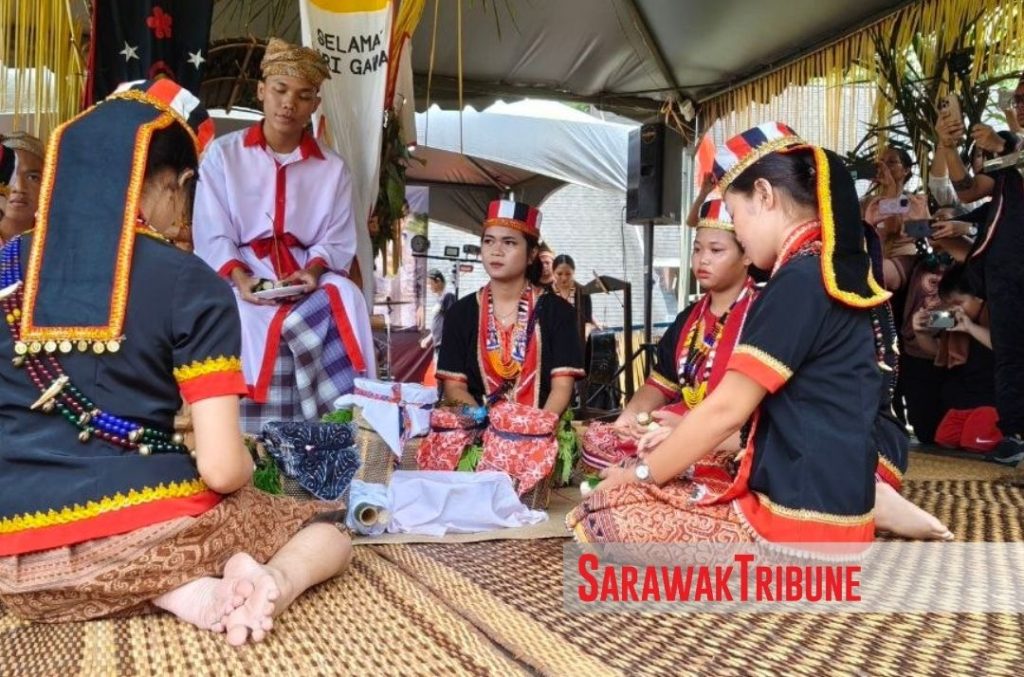
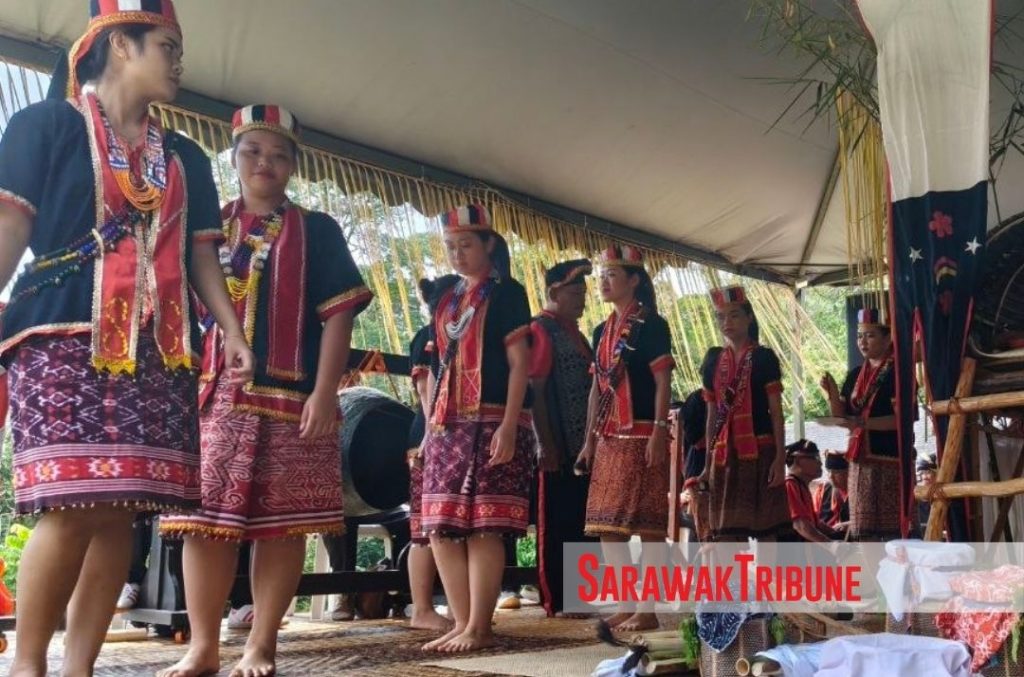
Since 1988, this reflection has taken on a celebratory form through Bung Bratak Day, held annually on May 1 – the day that makes the hill of Bung Bratak come alive.
Minos said it is a day of joy and remembrance, bringing together descendants and visitors alike to honour their shared heritage.
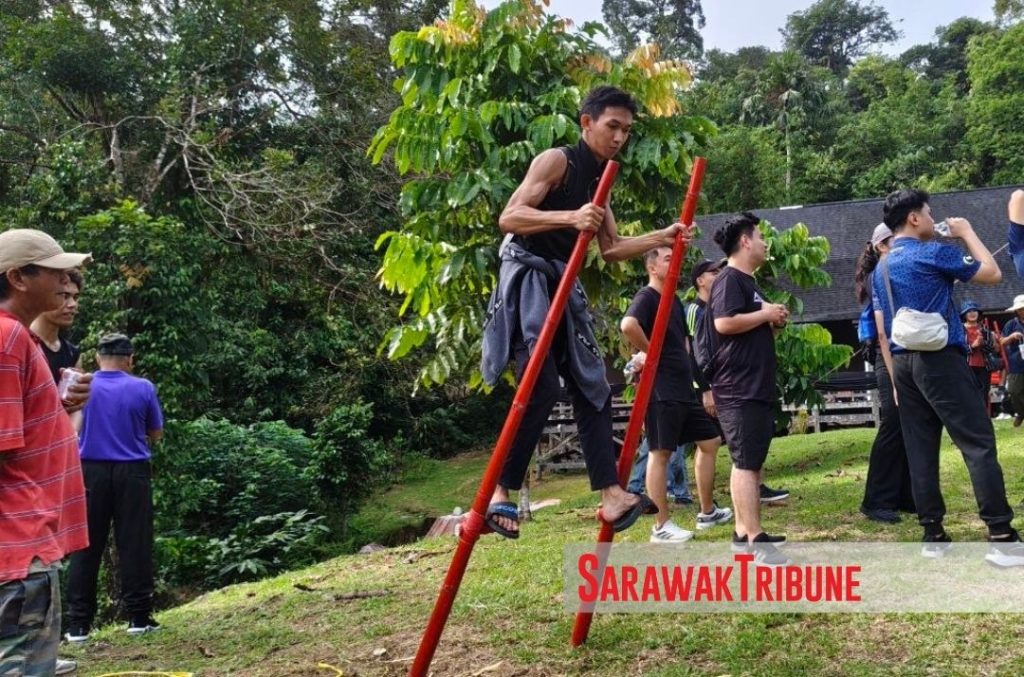
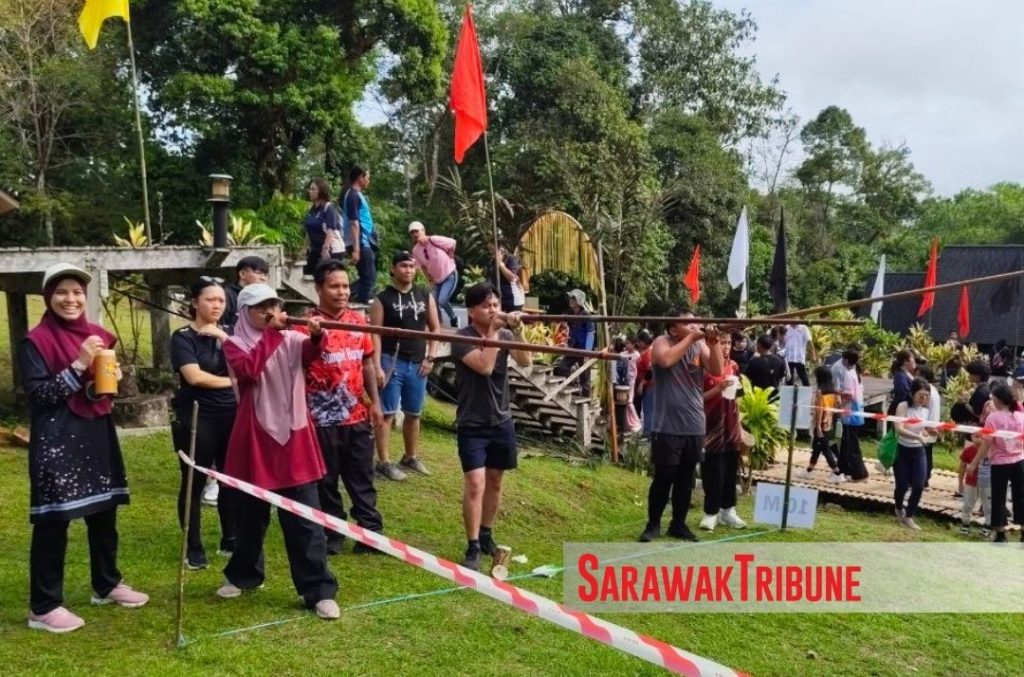
On the day itself, traditional performances, communal meal stalls, storytelling sessions and traditional games transform the hill into a vibrant gathering place; a reminder that history, while solemn, can also be a source of unity and pride.
For Minos, Bung Bratak is deeply personal.
“My parents originally came from there,” he shared. “From a young boy in the early 1960s, I already knew about Bung Bratak and its history.”
His decades-long involvement in developing the heritage centre reflects not just leadership, but devotion.
Even as he steps down due to age and health, his hopes remain firmly rooted in the future.
“I hope future Bidayuhs, especially the Jagoi-Bratak group, will always respect and honour Bung Bratak,” he said. “Always remember our roots. This is what I used to tell my children.”
That message resonates strongly at the summit.
Bung Bratak is not merely an archaeological or historical site. It is an immemorial place — one that tells a larger story about the Bidayuh people as among the ancient inhabitants of Sarawak and Borneo.
It stands as proof of resilience: a community that faced annihilation, yet chose to rebuild; a culture that endured displacement, yet continues to thrive.
As the sun begins to dip and shadows lengthen across the hill, the atmosphere shifts once more. The breeze carries a quiet solemnity, as if acknowledging the lives once lived here and the legacy that remains.
Visitors descending the hill often do so with more than photographs. They carry with them a deeper awareness — a sense of connection to something older, something enduring.
Bung Bratak does not demand attention. It earns it, slowly, through story and silence.
And in that silence, the hill continues to speak.