I hope to leave behind a legacy not only of personal achievement, but of service, inclusion, and impact. I want to be remembered as someone who helped strengthen parasitology and tropical medicine in Malaysia, while opening doors for the next generation of scientists, especially those from Sarawak, East Malaysia, and native backgrounds.
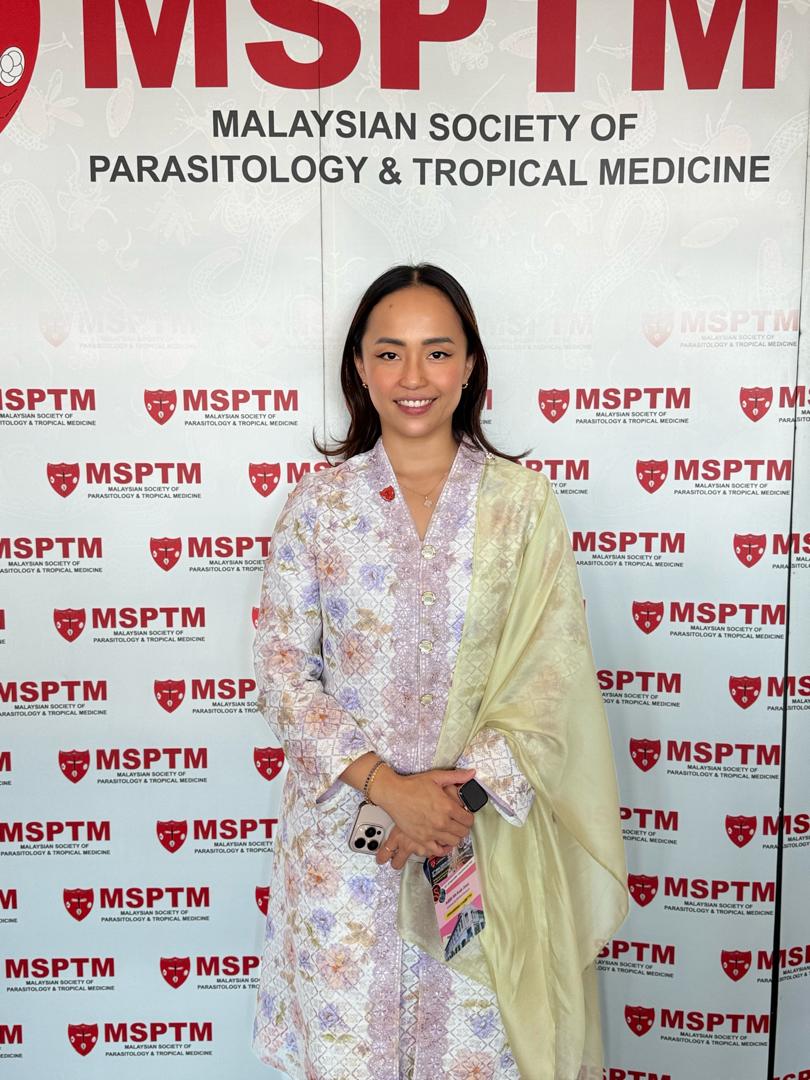
DEDICATED and passionate in her field, Adela Ida Jiram has built a strong reputation over nearly two decades of service and research. The 41-year-old is a Biomedical Science Officer at the Institute for Medical Research, the research arm of the Ministry of Health Malaysia. She is also pursuing her PhD at Universiti Sains Malaysia.
Most recently, Adela made history as the first Sarawakian and first Iban woman to be elected president of the Malaysian Society of Parasitology and Tropical Medicine (MSPTM). In this role, she hopes to mentor young scientists, strengthen collaboration among researchers and institutions, raise public awareness of the field, and further elevate MSPTM’s national profile.
Despite her many achievements, she remains firmly grounded in who she is. Born to an Iban father and Chinese mother, she grew up appreciating both cultures and their values. In a conversation with Sarawak Tribune, she reflects on the journey that brought her to where she is today.
ST: How did you come to this day?
ADELA: This moment is the result of many years of study, research, service and perseverance. I have always believed that science should not only generate knowledge but also serve people – especially communities that continue to face the burden of infectious and tropical diseases. That sense of purpose has guided me throughout my journey.
You’ve made history as the first Sarawakian and first Iban woman to lead MSPTM. What does this moment mean to you personally and professionally?
Personally, it is deeply meaningful and very humbling. As someone from Sarawak, this recognition feels close to my heart because it shows that where we come from should never limit what we can achieve.
Professionally, I see it not simply as a personal milestone but as a responsibility – to lead well, to contribute meaningfully to the field, and to open doors for others who may one day follow.
Looking back, what were the defining moments that shaped your path into parasitology and tropical medicine?
One key realisation was that infectious and tropical diseases are not just scientific topics. They are real issues affecting families and communities, especially in rural and underserved areas.
Through research opportunities, mentorship and public health work, I began to see that this was a field where science could make a direct and practical difference in people’s lives.
Was there ever a point where you doubted this journey or nearly chose a different path?
Like many people in science, I have had moments of doubt, especially when the journey felt long and demanding. But whenever I reflected on the purpose behind the work, I always found my way back to it.
The challenges did not weaken my commitment. If anything, they strengthened it.
As an Iban woman in science, what barriers have you had to navigate?
Representation is still limited, especially in leadership spaces. Sometimes you move forward without seeing many people who share your background in the same rooms.
There can also be assumptions about what someone from Sarawak, or from a native background, can achieve. Navigating that has required resilience, consistency, and confidence in my own path.
Do you feel a sense of responsibility to represent Sarawak and native communities in this role?
Yes, very much so. I am proud to carry Sarawak with me wherever I go. I do feel a responsibility to represent not only my home state, but also the wider native community with dignity and integrity.
I hope this appointment shows that talent exists everywhere and that with opportunity and support, people from all backgrounds can thrive and lead.
What message does your appointment send to young scientists, especially girls from East Malaysia?
I hope it tells them that they belong – in science, in leadership, and in spaces where decisions are made. They should never feel that being from East Malaysia, a smaller town, or a minority background limits their future.
Their dreams are valid, and their voices matter.
What are your top priorities as president of MSPTM moving forward?
My priorities are to strengthen research collaboration, support the next generation of scientists, and ensure our work remains relevant to real public health needs.
I would also like to see MSPTM continue as a strong platform for scientific exchange, mentorship and engagement with policymakers and the wider community.
How do you plan to strengthen Malaysia’s position in parasitology and tropical medicine on the global stage?
We need stronger collaborations, continued investment in talent development, and high-quality research that addresses both local and global challenges.
Malaysia has valuable expertise and experience in this area. I believe we can play a stronger international role through meaningful partnerships, scientific leadership and consistent contributions to the global research community.
What are the most pressing parasitology or tropical disease challenges Malaysia is facing today?
Major challenges include neglected tropical diseases, zoonotic and vector-borne infections, gaps in early diagnosis, and the unequal disease burden faced by rural and underserved communities.
We must also pay attention to how environmental changes, mobility and human activity contribute to the emergence or re-emergence of infections.
Many people don’t fully understand parasitology. What’s one misconception you wish you could correct?
A common misconception is that parasitology is narrow or outdated. In reality, it remains highly relevant. Parasites are closely linked to public health, poverty, nutrition, sanitation, environmental change, and health equity.
It is a field that continues to matter greatly in modern medicine and public health.
How can research better translate into real-world public health outcomes, especially in rural or underserved communities?
Research becomes meaningful when it is connected to the realities of the communities it aims to serve. That means working closely with healthcare providers, public health agencies, and communities themselves.
When research findings are translated into practical diagnostics, prevention strategies and accessible interventions, that is when real impact happens on the ground.
If you had unlimited funding for one research area, what would you prioritise, and why?
I would prioritise integrated research on tropical and neglected diseases in underserved communities – work that connects surveillance, diagnostics, prevention, and implementation.
The greatest impact comes when research does not stop at discovery, but leads to earlier detection, better intervention, and improved health outcomes for those most at risk.
In your view, how prepared is Malaysia to tackle emerging or re-emerging infectious diseases?
Malaysia has important strengths, including scientific expertise and established institutions. However, preparedness must continue to be strengthened.
Sustained investment in surveillance, laboratory capacity, data sharing, field response, and cross-sector collaboration will be essential if we want to respond effectively to future health threats.
With such a demanding role, what keeps you grounded and what continues to drive your passion for this field?
What keeps me grounded is remembering that science is ultimately about people. Behind every study, every sample, and every publication is the hope of improving lives.
What drives me is the belief that through research, service and leadership, we can help build healthier communities and inspire others to believe they, too, can make a difference.
What legacy do you wish to leave behind?
I hope to leave behind a legacy not only of personal achievement, but of service, inclusion, and impact. I want to be remembered as someone who helped strengthen parasitology and tropical medicine in Malaysia, while opening doors for the next generation of scientists, especially those from Sarawak, East Malaysia, and native backgrounds.
At the same time, I hope to further elevate MSPTM as an important platform for scientific exchange, collaboration, mentorship, and public health advocacy. As a society, we have contributed through research, professional engagement, capacity building, and by bringing together experts committed to addressing parasitic and tropical diseases that continue to affect our communities.
If I can help build on that foundation and leave the field stronger, more inclusive, and more relevant to society’s needs, that would be the legacy I would be proud of.