GENEVA, Switzerland: The World Health Organisation (WHO) warned on Tuesday that a “deeply concerning” Ebola outbreak is spreading in the Democratic Republic of the Congo under “highly complex conditions”, as the agency was preparing to decide which vaccine candidates should be prioritised for clinical trials.
The WHO declared on Sunday that the Ebola outbreak in Congo and Uganda constitutes a public health emergency of international concern, with at least 80 suspected deaths reported as of Saturday, Anadolu Ajansi reported.
Anne Ancia, WHO representative in Congo, told reporters in Geneva that the outbreak caused by the Bundibugyo strain of Ebola was officially declared on May 15 after initial cases were confirmed in Ituri province.
“It is occurring in a highly complex epidemiological, operational and humanitarian context,” she said, citing insecurity, population displacement and challenges in both densely populated and remote areas.
As of May 19, more than 500 suspected cases, including 130 suspected deaths, had been reported by the Congolese Health Ministry, while 30 cases have so far been confirmed in the DRC.
Uganda has also confirmed two imported cases.
Ancia said the outbreak was detected about four weeks late because it began in an area with weak surveillance systems.
Local laboratories initially tested only for the better-known Zaire strain of Ebola and repeatedly obtained negative results, while clinicians attributed the illness to malaria and salmonella.
Only after WHO teams arrived, reviewed the clinical picture and case definition, and sent samples to the National Institute of Biomedical Research in Kinshasa was the Bundibugyo strain confirmed through genomic sequencing, she said.
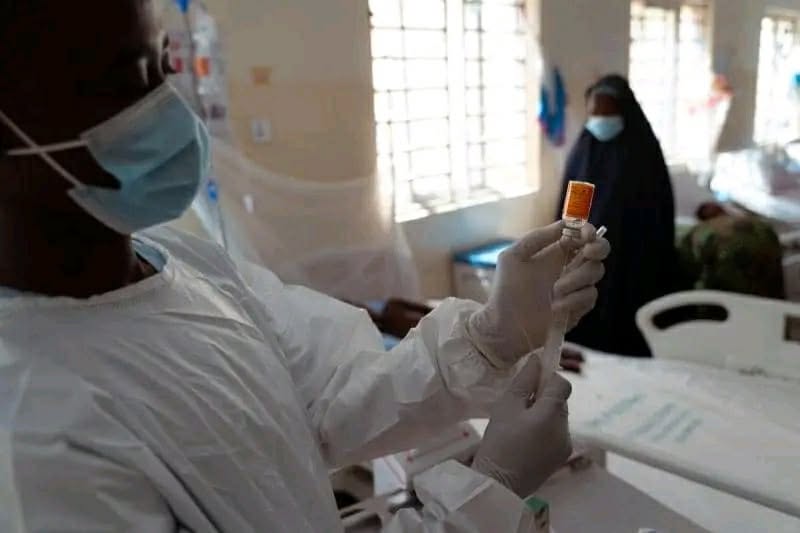
“There is still no licensed vaccine for this species of Ebola,” Ancia stressed.
She said a WHO technical advisory group was meeting Tuesday to assess scientific data and recommend which vaccine candidates should be prioritised for clinical trials, while the DRC Health Ministry would ultimately decide whether to proceed.
Ancia said one candidate vaccine, Erbevo, could become available in roughly two months, adding the outbreak was unlikely to be over by then.
Ervebo is a single-dose vaccine proven highly effective against the Zaire strain of Ebola.
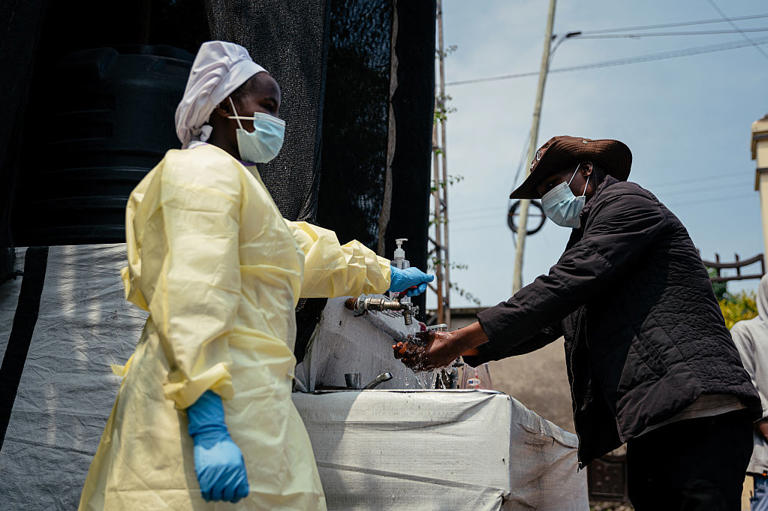
WHO said it is supporting surveillance, contact tracing, testing and clinical care efforts, while deploying experts and sending 12 tonnes of medical supplies, including protective equipment for frontline health workers.
The International Federation of Red Cross and Red Crescent Societies (IFRC) also warned that the outbreak could escalate rapidly if communities are not fully engaged in the response.
“The current Ebola outbreak in the Democratic Republic of Congo is a rapidly evolving public health emergency,” Laura Archer, Red Cross lead on clinical care and public health in emergencies, told reporters.
“Early detection, community engagement, and local public health actors and actions are critical to contain this outbreak,” she added.
The agency said it had activated its “highest level of emergency” response and was scaling up operations, including deploying specialised public health teams and emergency experts to affected areas in the coming days.
Coordination mechanisms have also been activated between teams in Kinshasa, Kampala, Nairobi and Geneva, while safe and dignified burial kits are being dispatched from Kinshasa and Dubai.
Archer warned that Ebola outbreaks can spread quickly when cases are not identified early, communities lack reliable information and health systems become overwhelmed.
“Unfortunately, we are seeing all of these come together in this outbreak,” she said.
Red Cross volunteers in Congo were supporting affected communities through safe burials, disease prevention campaigns and public health awareness efforts.
“Our message today is clear: this outbreak can be contained if communities are at the centre of the response,” Archer said. – BERNAMA-ANADOLU