Sarawak is moving closer towards greater environmental autonomy under the Malaysia Agreement 1963 (MA63) following the passing of the Environmental Quality (Amendment) Act 2026 by Parliament and the Senate in February this year.
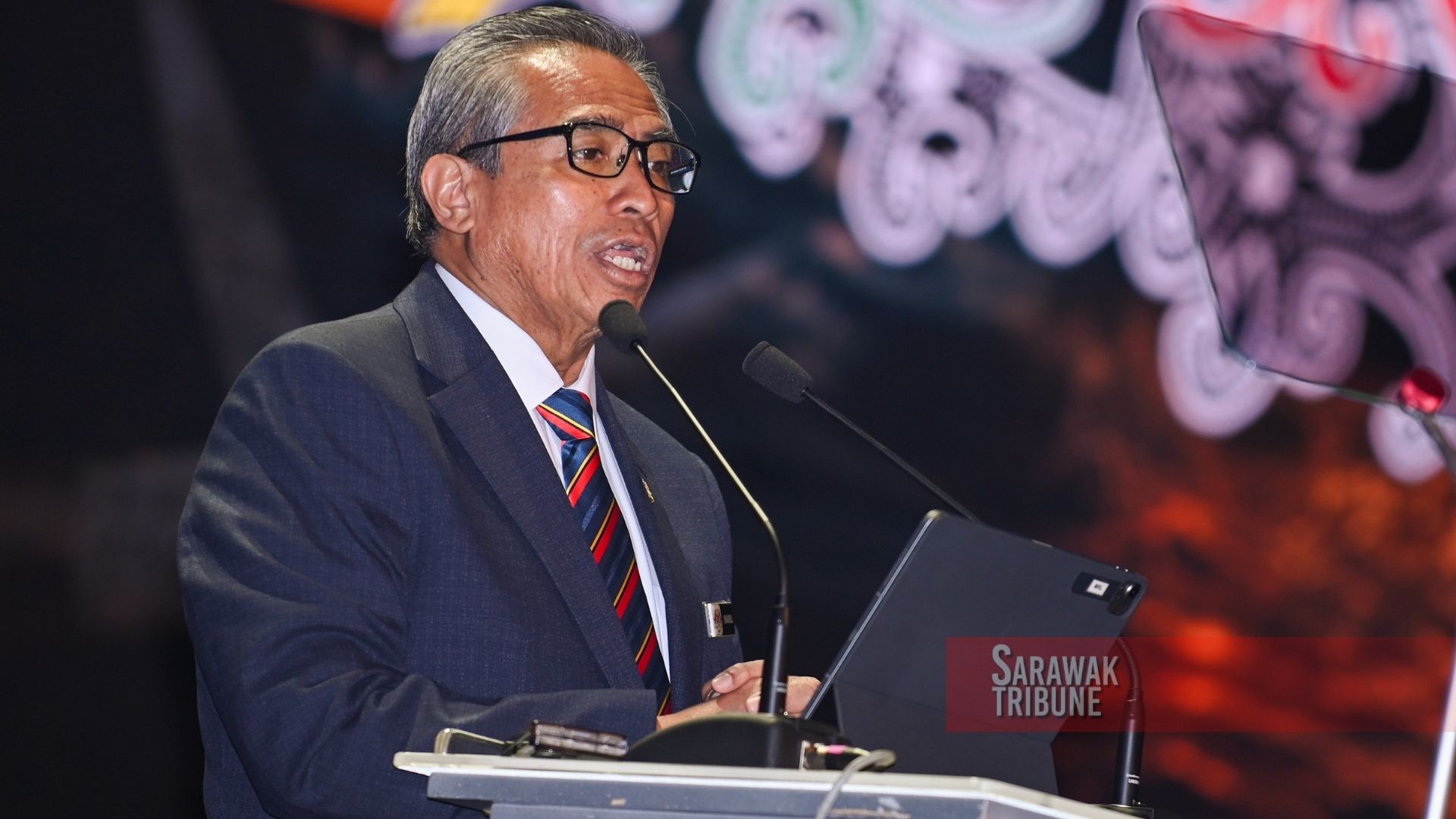
Deputy Premier and Second Minister for Natural Resources and Urban Development Datuk Amar Awang Tengah Ali Hasan said the amendment would enable the Minister of Natural Resources and Environmental Sustainability to suspend the enforcement of all or part of Act 127 in Sarawak.
He said the amendment is aimed at enabling the Sarawak government to take over provisions related to scheduled waste management in the state.
“In this regard, the Sarawak government through the Natural Resources and Environment Board (NREB) has undertaken preparations to ensure the smooth implementation of this autonomy once powers under Article 95C of the Federal Constitution are delegated,” he said in his ministerial winding-up speech today.
Meanwhile, Awang Tengah said NREB continued implementing the River Water Quality Monitoring Programme (RWQMP), which covers 66 rivers throughout Sarawak to monitor ambient river water quality and detect pollution trends.
“Based on monitoring results for 2025 using the Water Quality Index (WQI), 18 rivers were categorised as ‘Clean’, 43 as ‘Slightly Polluted’, while five rivers were classified as ‘Polluted’,” he said.
He said the river monitoring programme serves as a basis for more effective environmental management planning and implementation.
On environmental awareness, Awang Tengah said the state government continued strengthening sustainable practices among students through the Kelab Pencinta Alam Sekitar (PALS) initiative.
To date, 754 PALS clubs have been established in schools throughout Sarawak in collaboration with the State Education Department (JPNS).
He added that NREB introduced the digital e-PALS platform in 2025 as a one-stop centre integrating registration, grant applications, reporting and information dissemination to strengthen programme implementation.
Awang Tengah also said NREB continued carrying out environmental education programmes involving communities, students, teachers and industry players through engagement sessions, training and field activities.
“From January to April 2026, a total of 20 programmes involving more than 2,800 participants were implemented,” he said.