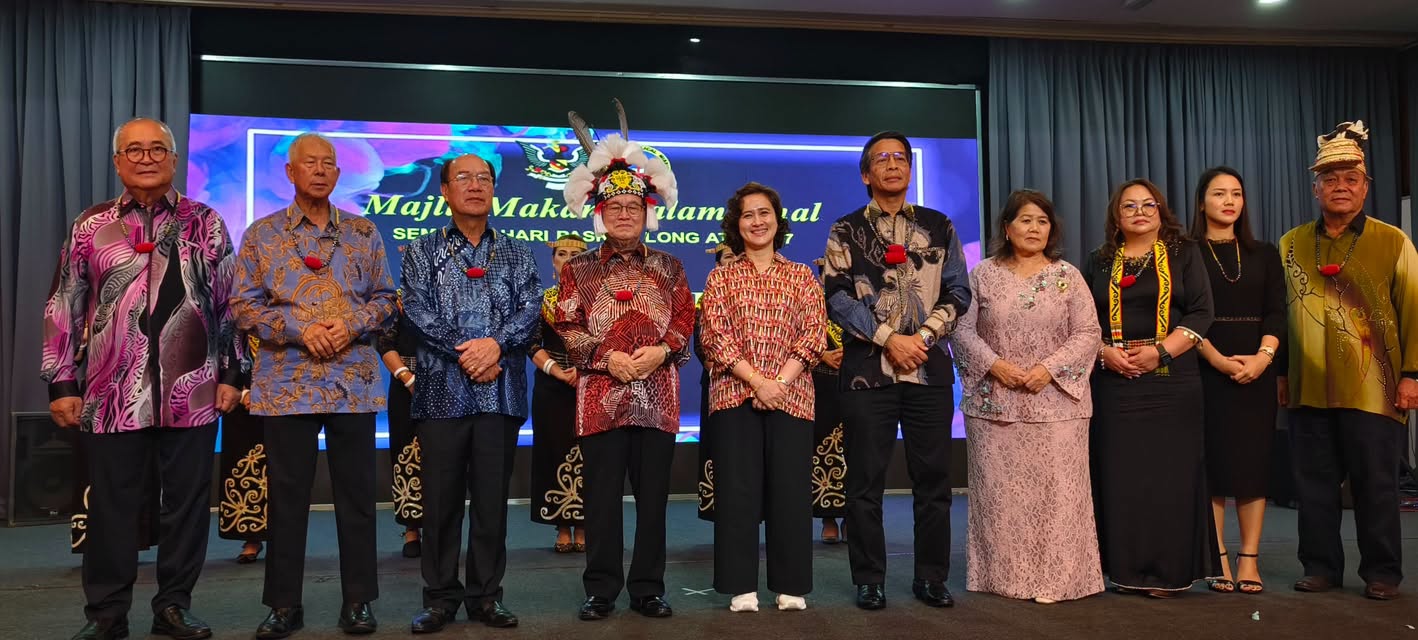
KUCHING: Sarawak’s separate state elections remain vital to preserving the state’s constitutional autonomy, political stability and long-term strategic interests.
Practising lawyer Wejok Tomik said Sarawak should continue maintaining separate state elections (PRN) from the parliamentary general election (PRU) as part of safeguarding the state’s unique constitutional position within the Federation of Malaysia.
According to him, Sarawak’s constitutional standing is rooted in the Malaysia Agreement 1963 (MA63), the Inter-Governmental Committee (IGC) Report, the Federal Constitution and the Constitution of the State of Sarawak.
He stressed that Parliament and the Sarawak State Legislative Assembly (DUN) are separate constitutional institutions with distinct powers of dissolution and electoral processes.
“There is no constitutional provision requiring Sarawak to hold its state Election simultaneously with the parliamentary general election,” he said.
Wejok noted that Sarawak has historically exercised its constitutional prerogative to conduct separate state elections, reflecting the State’s distinct political identity and autonomy within Malaysia.
He explained that separate elections allow Sarawak voters to focus on issues directly affecting the state, including the implementation of MA63, oil and gas rights, infrastructure and rural development, native customary rights (NCR) land matters, economic growth, energy transition and the state’s Vision 2030 agenda.
“If the state and parliamentary elections are held simultaneously, these important state issues risk being overshadowed by peninsula-centric political narratives, federal political conflicts and national sentiments originating from Kuala Lumpur,” he said.
Wejok also argued that separate elections shield Sarawak from being unnecessarily influenced by federal political turbulence, such as leadership struggles, coalition instability, racial and religious polemics, as well as national political waves that may not reflect Sarawak’s realities or priorities.
Importantly, he said separate state elections reinforce the principle of “Sarawak First” by strengthening public perception that Sarawak’s leadership governs independently based on the state’s own interests, aspirations and development priorities.
From an operational perspective, Wejok pointed out that separate elections offer strategic advantages to the governing coalition and political parties contesting in Sarawak.
These include allowing leaders and party machinery to fully concentrate on state-level achievements and policies, while enabling more focused grassroots mobilisation, efficient campaign coordination and better management of Sarawak’s vast geographical and rural logistical challenges.
He added that separate elections have historically contributed to Sarawak’s political stability because voters are able to assess the state government based on governance performance, economic management and development delivery rather than temporary national political sentiments.
“A strong and independent state mandate also strengthens Sarawak’s bargaining position with the federal government,” he said.
Wejok explained that this is particularly important in negotiations involving MA63 implementation, fiscal rights, petroleum resources, territorial rights, infrastructure allocations and further devolution of powers to Sarawak.
Ultimately, he emphasised that separate state elections are not merely about electoral scheduling but symbolise Sarawak’s constitutional dignity, political maturity and the right of Sarawakians to determine their leadership based on the State’s own priorities and future direction.
“Sarawak’s future must continue to be shaped through a Sarawak-centric mandate for the stability, autonomy and long-term interests of the State and its people,” he said.