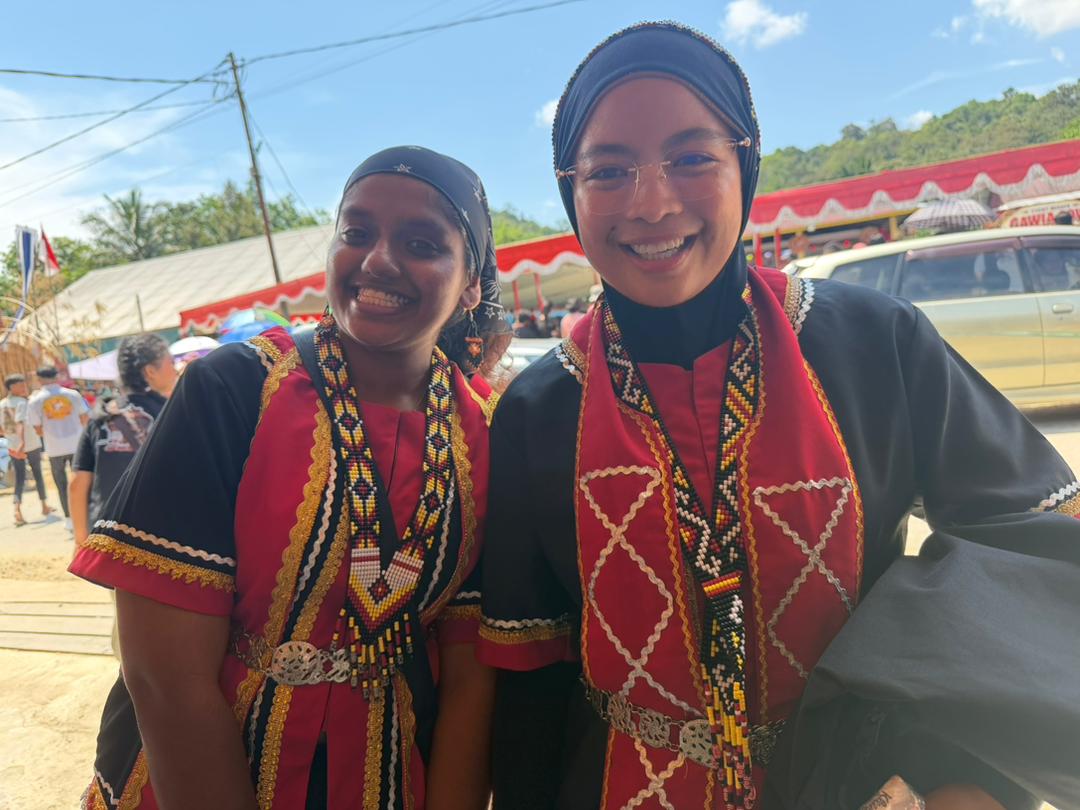
JAGOI BABANG, INDONESIA: For many West Malaysians, Gawai is often associated with colourful traditional attire, cultural performances and social media posts showcasing festive gatherings.
But after spending several days celebrating Gawai in Sarawak and ending their journey with a visit to Jagoi Babang across the border in Indonesia, Hanis Mohd Nor and Presha Nithiya Sagaya Seelan discovered there was much more to the harvest festival than what they had previously known.
What began as a short trip soon became an eye-opening cultural experience for the two young women, who were attending Gawai celebrations for the very first time.
By the time they arrived in Jagoi Babang on what would be their final day in Sarawak, they had already spent several days immersing themselves in Dayak culture, meeting local communities and experiencing the festive atmosphere that comes with one of Sarawak’s most important celebrations.
For Hanis, the experience exceeded expectations.
“It has been a wonderful experience. The people here are very welcoming and the food is absolutely scrumptious,” she said.
Having never visited Sarawak before, Hanis admitted she did not expect to be so captivated by the people and culture.
“I have really fallen in love with both the food and the people. I hope to learn more about the culture because the time I have spent here is not enough. I wish I could stay longer,” she said.
Although she noticed differences in language and cultural expressions, Hanis said she was struck by how naturally people from different backgrounds interacted with one another.
“There are some differences, especially in terms of language and the style of traditional dancing. However, despite those differences, everything comes together harmoniously.
“The connection between the communities is very strong,” she said.
One of Hanis’ fondest memories involved the community ensuring she had something to enjoy while others indulged in traditional festive drinks.
“They simply offered me chrysanthemum tea instead. In fact, they kept encouraging me to drink more, and I think I ended up having four boxes of chrysanthemum tea,” she said.
The visit also left Hanis wanting to explore more of Sarawak.
Asked whether she would return, her answer was immediate.
“Of course. I would love to visit Kuching and other parts of Sarawak. I didn’t get the chance to try mee kolok, gula apong and several other local foods,” she said.
For Presha, the experience challenged many of the perceptions she had previously held about Gawai.
Having grown up celebrating Deepavali, she found herself fascinated by the way entire communities came together through music, dancing and food.
“Honestly, I was quite surprised—in a good way. When I celebrate Deepavali, it is a very different experience.
“To see an entire community coming together through music, dancing and food was amazing,” she said.
What impressed Presha the most was the warmth shown by the people she encountered throughout the celebrations.
“The people here are so welcoming and lively. I never imagined it would be this vibrant.
It exceeded my expectations and I genuinely wish I could have stayed longer,” she said.
Despite being unfamiliar with Dayak customs and traditions, Presha said she never once felt like an outsider.
“Hanis and I never felt excluded. Everyone was very considerate and accommodating,” she said.
Beyond the festivities, however, Presha believes many people in Peninsular Malaysia do not fully understand what Gawai is truly about.
“Many people only know the basics about Gawai. They do not really know the history, culture and stories behind the celebration.
“I feel that if people truly want to understand Gawai and the Dayak culture, they need to come here and experience it for themselves,” she said.
Their observations are perhaps best reflected in Jagoi Babang itself.
Separated by an international border but united by shared ancestry, language and traditions, the Dayak communities in Jagoi Babang and nearby Bau continue to celebrate Gawai together, demonstrating that culture often transcends geographical boundaries.
As Hanis and Presha return home, they carried with them more than just photographs and souvenirs.
They left with a deeper appreciation of Sarawak, a better understanding of Dayak culture and a newfound respect for a celebration that, in their eyes, is about far more than food and festivities.
Sometimes, the best way to understand a culture is not by reading about it or watching it online, but by experiencing it firsthand.
For two young West Malaysians attending their first Gawai celebration, that experience proved to be both memorable and enlightening.