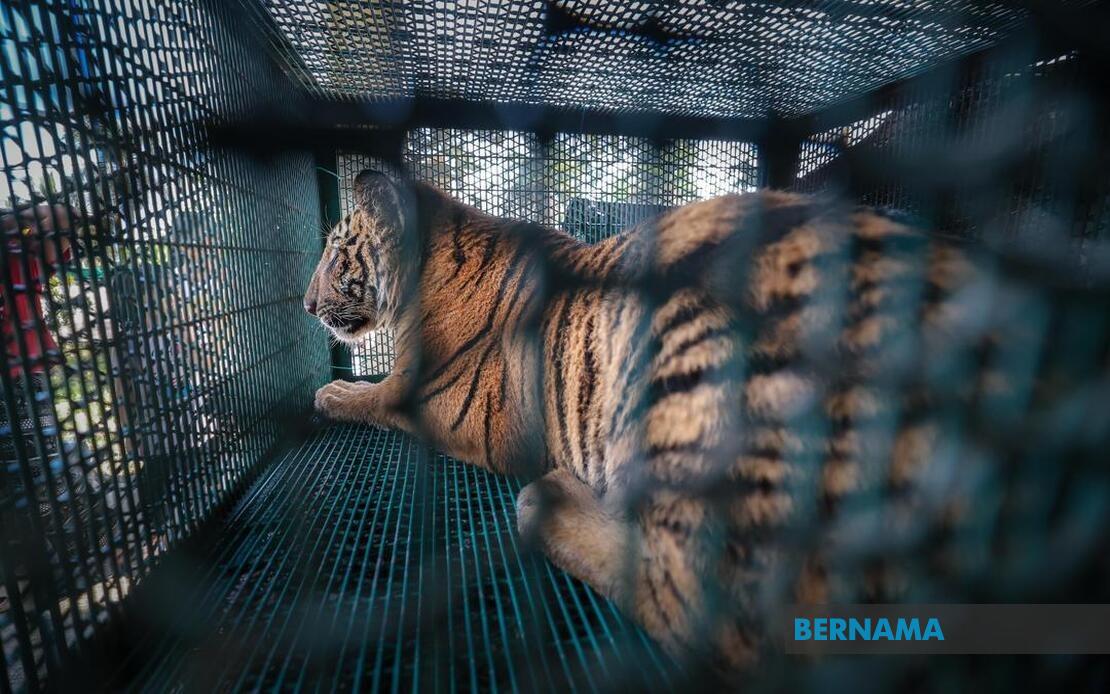
KUALA LUMPUR: When wildlife is rescued from illegal captivity, the path forward is rarely straightforward. Returning an animal to the wild is not simply a matter of opening a cage door. Instead, careful, science-based assessments are essential to determine the best outcome for each creature.
Speaking on the subject, animal expert Dr Arie Dwi Andika stressed that rescued wildlife must first undergo comprehensive health and behavioural evaluations before it is decided where to place them.
The chairman of the Malaysia Law Enforcement, Investigation and Security Association said such assessments are crucial in ensuring animals rescued or seized from illegal captivity are placed in environments that best support their welfare and long-term survival.
In an exclusive interview with Bernama, Arie explained that every animal rescued by the Department of Wildlife (Perhilitan) undergoes a rigorous evaluation.
Based on the findings, authorities then decide whether to return the animal to its natural habitat or place it in a zoo, wildlife sanctuary, or rehabilitation centre.
He said the assessment includes physical examinations, behavioural observations and veterinary screenings to determine the animal’s overall health and suitability for release.
“Factors such as injuries, diseases and nutritional status are also taken into consideration. Healthy animals that still possess their natural instincts may be suitable candidates for release into the wild,” said Arie, who is also president of the Malaysia Animal Association.
However, he highlighted that animals held in captivity for extended periods often struggle to readjust to the wild, especially those that have grown dependent on humans for food or shelter.
That is why, he added, behavioural assessments are just as critical as health checks when determining whether an animal is truly ready to be released.
“Zoologists need to assess whether an animal can forage for food, avoid predators and interact naturally with others of its species. These are essential skills for survival in the wild,” he added.
Arie, an Associate Professor of Animal Law, Enforcement, Investigation and Security at the International University College of Management and Sports (ICMS), noted that animals deemed unsuitable for release may instead be placed in zoos, sanctuaries, or conservation facilities.
There, he explained, they can continue receiving proper care while playing a meaningful role in education, research and broader conservation efforts.
He added that authorities typically maintain detailed records and assessment reports on rescued wildlife, tracking not only those released back into their natural habitats but also those placed in protected facilities.
Such documentation, he said, is important for supporting the long-term monitoring of animal welfare and conservation outcomes.
“The ultimate goal is to prioritise animal welfare and conservation. Each case must be assessed individually based on scientific evidence and the animal’s long-term prospects for survival,” he emphasised. – BERNAMA