ROLLING FORWARD —
A Special Sports Series | PART TWO OF THREE
There is a question buried inside Can Roll that nobody has asked out loud until now.
Not what it is. Not how big it was. Not which countries sent athletes, or how many people came through the gates, or whether the skate park — welded from scratch, assembled on-site, dismantled after — impressed the ministers who walked around it with their phones raised.
The question is simpler and harder than any of that.
If Can Roll is the answer — what is the question?
Nik did not hesitate when it was put to him directly, days after the second edition had wrapped in Kuching.
“Can Roll,” he said, “is opening doors. Doors people never thought of.”
The Ministers Didn’t Just Show Up
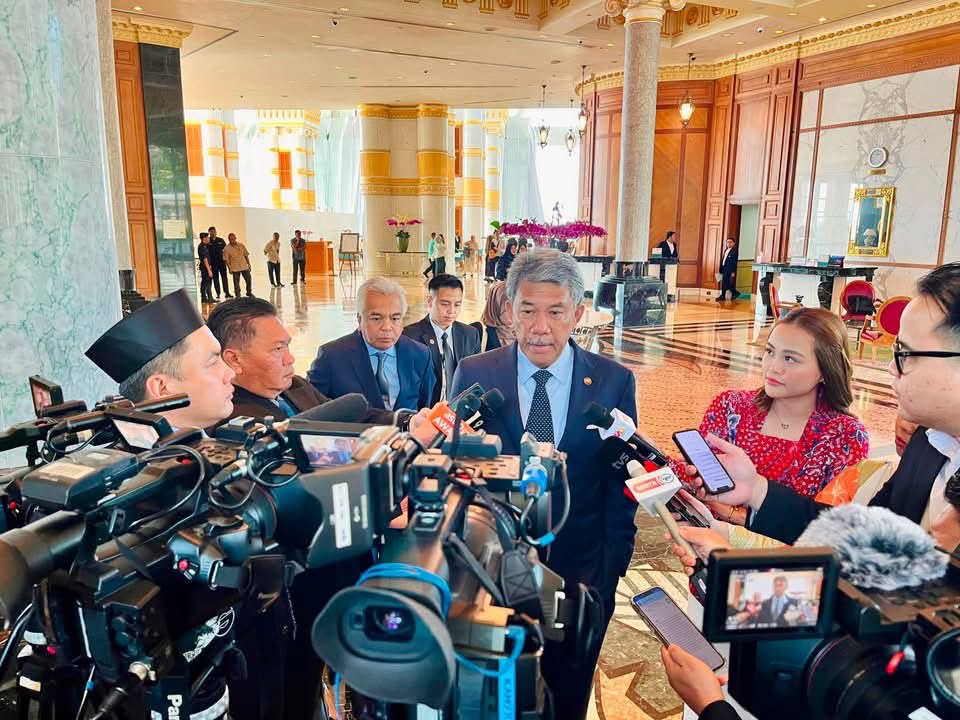
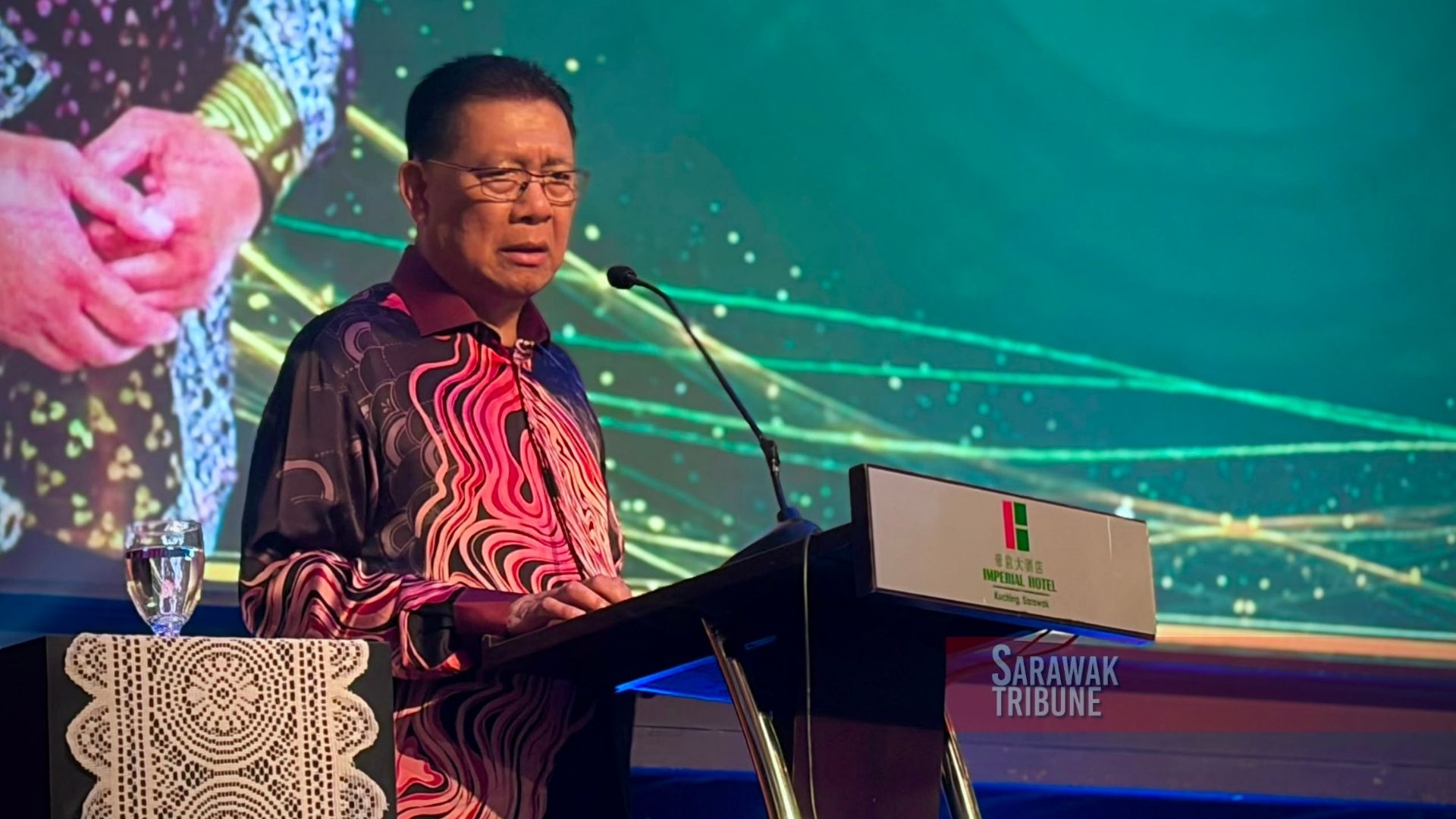
When Dato Sri Haji Abdul Karim bin Rahman Hamzah — Sarawak’s Minister for Tourism, Creative Industry and Performing Arts, and Minister for Youth, Sports and Entrepreneur — officiated Can Roll 2, when YB Tuan Mordi anak Bimol, Minister of Education, arrived, when Mayor Dato Haji Hilmy bin Haji Othman walked the floor — that was not fortune. That was architecture.
Nik invited all of them. Deliberately. Strategically. With a specific purpose in mind that had nothing to do with optics and everything to do with perception.
“I want them to see that this sport is not how they perceived it back then,” he said. “This has evolved. And the perception of it is not as well as it should be — because the era they saw it in was not the best era. But now things have changed.”
The era he refers to is the one where skateboarding meant trouble. Where inline skating meant loitering. Where BMX meant damage to public property and a headache for local authorities. That era — in the minds of a certain generation of Malaysian policymakers — has never fully ended. The sport moved on. The perception stayed.
Can Roll 2 was, in part, a live demonstration designed to correct that. Every ramp welded. Every athlete coached. Every safety pad worn without irony. Every girl on a BMX pushing as hard as any man on the course.
“They were very impressed about the skate park,” Nik said. “They kept asking — how did you build this? Where did this come from? That’s why our launch gimmick was showing the whole process, from welding to completion. They were shocked. Like — you really did this.”
He pauses. Then: “I needed that impact from them.”
What Changed, and When
To understand why those ministers in the room mattered, you have to understand what the room used to look like.
Malaysia was, by Nik’s own account, genuinely ready for action sport in 2002 and 2003. The then-minister of sport was aggressive in promoting it. Competitions ran almost every week. Athletes were surviving — not just competing — off the circuit. Skaters were popping up everywhere, the scene growing with a momentum that felt, briefly, like it might become something permanent.
Then the minister changed. The momentum depleted. The infrastructure that had briefly existed quietly dissolved.
“We really need the support of the government to bring in big brands,” Nik said. “It depends on the minister who handles it. That’s the reality.”
It is a reality he has made peace with — not by complaining about the system, but by learning to work within it. When asked what single structural change he would make to Malaysian sports governance, his answer was pointed in its diplomacy.
“I think they’re doing what they can,” he said. “There are grants. There are clubs. There is support — really. It’s just about how you figure out how to get it. If you’re hungry enough to get it done, you get it done.”
And then the sharper edge: “If the government gives you a certain amount — can you accept it? Do you have the experience to execute? It’s not as easy as one, two, three. You really need to know what you’re doing. You need the network. You need the connection.”
He is not criticising any system. He is describing the gap between what the system offers and what operators are ready to receive. And he is, quietly, positioning Can Roll as proof that the gap can be closed — by people who have done the work.
From Instagram to Barcelona
The international dimension of Can Roll 2 — ten countries, Urban World Series, the formal Barcelona-Malaysia collaboration — began with a direct message on Instagram.
Before Can Roll 1 had even concluded, Nik found Victor, the founder of Urban World Series, and messaged him cold. They exchanged messages. The first Can Roll happened. UWS observed from a distance.
Then came the invitation to Barcelona.
“I went in September,” Nik said. “Five days. Victor showed me around, showed me how they operate, gave me the whole concept. And I came back already thinking about what this year’s Can Roll would become.”
What it became was a fundamental pivot. Can Roll rebranded from an action sport festival to an urban sports platform — deliberately wider, deliberately more inclusive, deliberately modelled on what Nik had absorbed in Europe but rooted entirely in Kuching soil.
The Barcelona city government subsequently issued a formal endorsement describing the Malaysia-Spain collaboration as a fruitful engagement in urban and action sport — the first of its kind between the two countries in this discipline.
There was no confirmed funding when all of it was committed to.
“We had no confirmation of financial aid — basically this whole time,” Nik said. He committed anyway. “I believe in this product so much that I know it’s going to go somewhere.”
It did. Two UWS athletes — skateboard and BMX — flew to Kuching. A UWS team representative came with them. Nik brought them to meet the mayor. Brought them to meet the ministers. Showed them what had been built in a city most of them had never previously visited.
“They see a very good opportunity for both parties,” he said. “Next year we’re going to have more sanction and more international athletes. Next year will be even bigger.”
Forging a Generation
Strip away the partnerships and the government attendance and the ten-country roster, and what remains at the centre of Can Roll is something more personal and more lasting than any of it.
It is a platform for a generation of young Sarawakians who have never had one.
“A lot of KL people are killing to get this festival there,” Nik said. “And we are connected to many channels now. A lot of big players in the world recognise us. So don’t get stage fright competing on this platform. Train yourself. This will be something positive if you want to focus in this industry.”
He is speaking to the kid in the crowd who watched the pro from Spain land a trick and felt something shift inside. He is speaking to the 14-year-old who doesn’t know yet that what he loves could become a life. He is speaking, in a sense, to the version of himself that stood at the X Games with no plan beyond the next run and a feeling — just a feeling — that there was more to all of this than anyone around him could see.
“I always saw myself thinking — there’s more to this than just skating,” he said. “Once skating was done in my life, I went to business. But my circle has always been in the ecosystem of extreme sport. One thing leads to another.”
One thing leads to another.
It is the least dramatic summary imaginable of what Can Roll has become. And it is, characteristically, exactly how Nik would say it.
What This Story Means
There is a generation of young Malaysians — in Kuching, in Sarawak, across the country — who grew up watching action sport on screens, who skated in car parks and basketball courts and back lanes, who were told in a hundred small ways that what they loved was not serious, not sustainable, not the kind of thing that built careers or earned respect or deserved a stage.
Can Roll is the stage.
Not just a platform for competition. A platform for legitimacy. A signal — sent through welded ramps and ministerial attendance and Barcelona endorsements and 20,000 people at a riverside festival in Borneo — that this culture has always mattered, and that the people who built it from nothing were right to believe in it all along.
“Opening doors,”* Nik said. “Doors people never thought of.”
He is not speaking about a festival.
He is speaking about a future.
Next: He chased it from Kuching to Barcelona to Paris. Now the world is watching — and Can Roll is just getting started. The final chapter of Rolling Forward.