KUCHING: Sarawak’s state-owned enterprises (SOEs) are projected to reduce their reliance on government operating grants by approximately RM403 million annually by 2030, freeing up funds for critical development projects across the state, says Premier Datuk Patinggi Tan Sri Abang Johari Tun Openg.
Describing the projected savings as a significant outcome of the State’s SOE transformation agenda, he said the funds could instead be channelled towards upgrading rural roads, repairing schools and expanding infrastructure to stimulate economic opportunities throughout Sarawak.
“RM403 million. That is money that can be redirected to rural roads upgrading, to schools repairs, and to infrastructure development that opens up economic opportunities in every corner of Sarawak,” Abang Johari said.
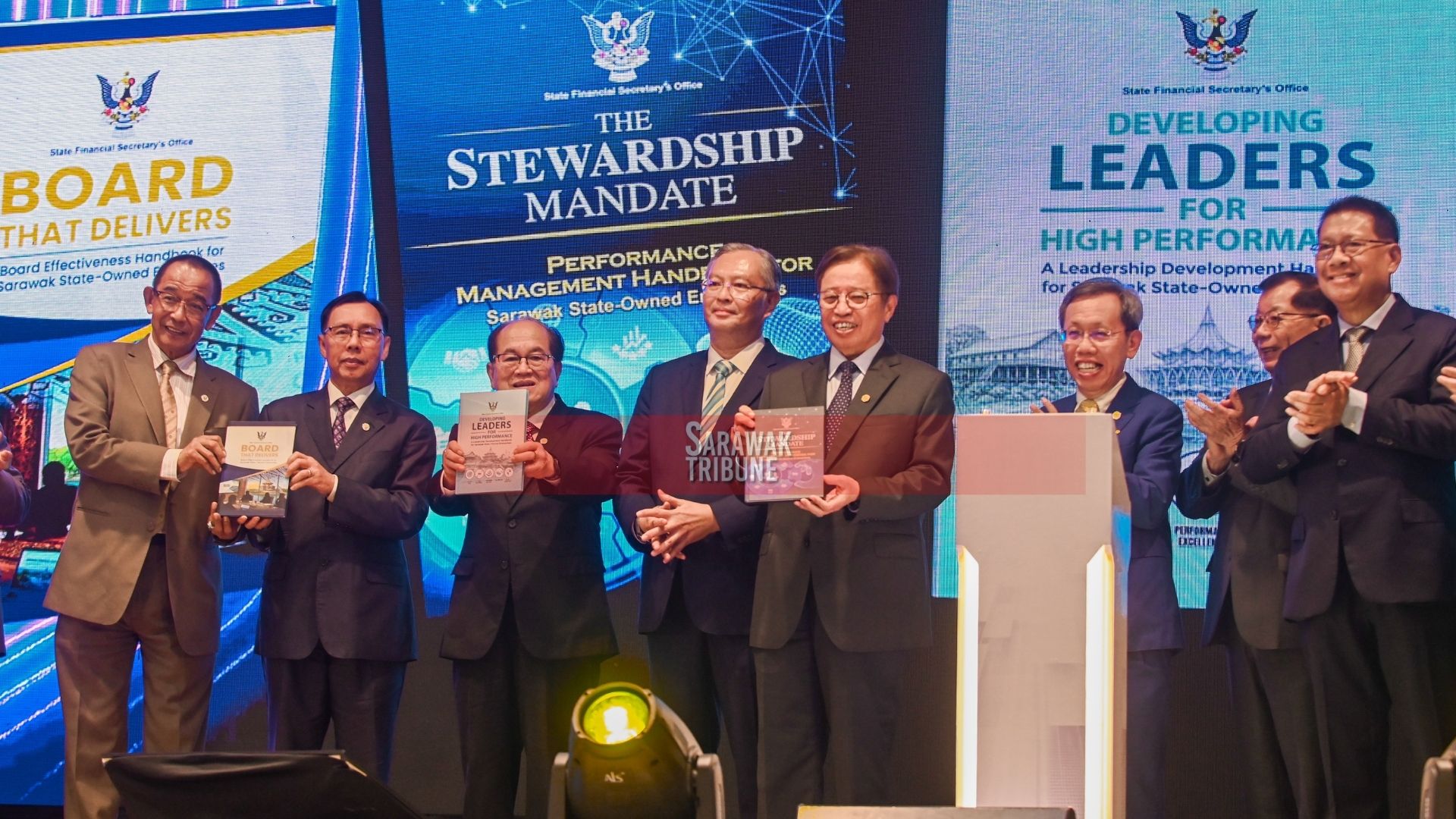
He said this during the ‘Sarawak SOEs Transformation Programme: A Pledge for Good Governance, High Performance and Value Creation’ at Riverside Majestic Hotel here today (June 11).
On the findings of the Financial Self-Reliance Study, he said the challenges faced by Sarawak’s statutory bodies and government-linked companies (GLCs) are manageable and can be addressed through disciplined execution, stronger financial management and a willingness to adopt a “business unusual” approach.
He said the study showed that SOEs could become significantly stronger, more sustainable and less dependent on public funding if the recommended transformation measures are implemented effectively.
Apart from reducing operating grant requirements, existing government loan balances owed by SOEs are projected to fall substantially to about RM1.7 billion by 2030 through improved financial performance and loan restructuring initiatives.
At the same time, dividend contributions from commercial GLCs are expected to more than double as profitability improves, further strengthening the State’s fiscal position and its capacity to invest in future development priorities.
According to the SOE Blueprint Study, 21 out of 36 entities assessed are expected to achieve full financial self-reliance by 2030 and beyond, while another 10 entities are projected to significantly reduce their dependence on operating grants and require only partial government support.
He expressed confidence that the targets are achievable but stressed that success would depend on the commitment of boards of directors, chief executive officers, management teams and employees to implement their respective transformation playbooks.
“Our SOEs, comprising our Statutory Bodies and Government-Linked Companies, are among the most important instruments through which the state’s development agenda reaches the ground. They connect policy to people, investment to opportunities, and public resources to tangible outcomes that improve the lives of Sarawakians.
“I therefore want to see our SOEs become strong anchor entities, SOEs that are financially sound, professionally managed, well governed, and capable of creating long-term value for the people of Sarawak,” Abang Johari reiterated.
“If these SOEs are strong, Sarawak can move faster. If they are weak, our development agenda slows. That is why the transformation of our SOEs is not optional. It is essential.”