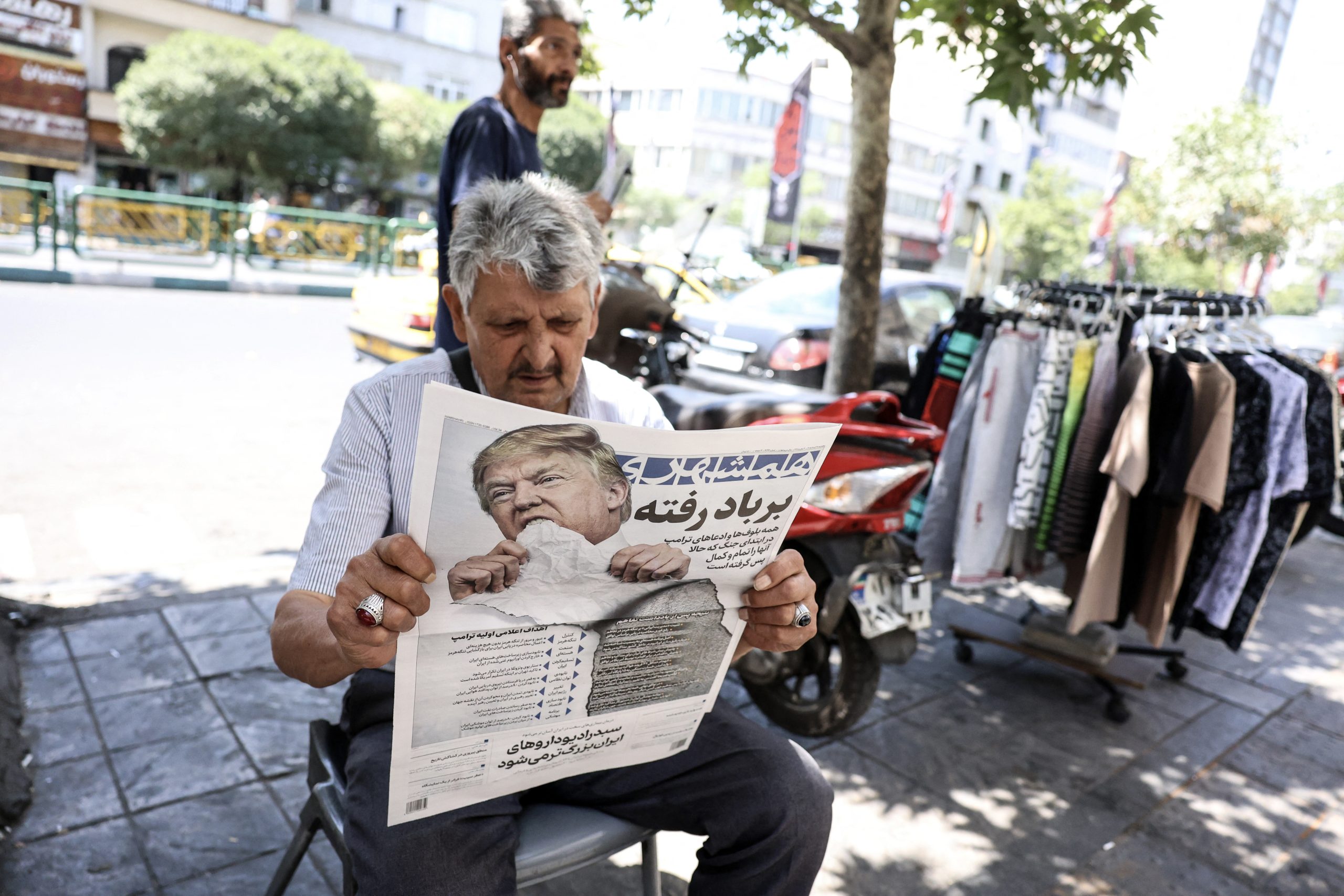
WASHINGTON: US President Donald Trump and Iran’s president have signed a US-brokered agreement aimed at ending the Middle East war and laying the groundwork for broader negotiations over Iran’s nuclear programme, according to officials from both sides.
The memorandum of understanding was signed on Wednesday during a dinner between Trump and French President Emmanuel Macron at the Palace of Versailles following the G7 summit.
Iranian Foreign Ministry spokesman Esmaeil Baqaei, quoted by state media, said the document had been “finalised with the signatures of the presidents” and marked the beginning of an implementation phase.
Under the agreement, Iran has committed to diluting its stockpile of enriched uranium under supervision by the International Atomic Energy Agency (IAEA), while the United States will immediately lift oil sanctions that have severely constrained Iran’s economy.
The deal also outlines plans for a $300 billion reconstruction fund supported by regional partners once a comprehensive final agreement on Iran’s nuclear programme is reached. A US official said Washington would not be required to contribute financially to the fund.
The agreement is intended as a temporary framework to enable detailed negotiations on long-term limits to Iran’s nuclear activities, which Western governments have long suspected could be linked to weapons development.
Iranian officials described the deal as a diplomatic breakthrough achieved under pressure.
Tehran said it no longer required a formal signing ceremony involving senior negotiators, while emphasising that the agreement would now be judged on implementation.
China welcomed the accord and urged all parties to honour their commitments.
The deal follows months of conflict that began on February 28, when the United States and Israel launched military operations against Iran, triggering Iranian missile and drone retaliation across the region.
The escalation disrupted shipping through the Strait of Hormuz, a key global energy route.
US President Trump said earlier that he remained prepared to use military force if Iran failed to comply, while also signalling that the agreement represented a path toward de-escalation.
Reactions to the deal were mixed. Hezbollah leader Naim Qassem called it a “great victory” for Iran, while Israeli forces reported continued hostilities in southern Lebanon, including rocket fire and drone strikes that left several soldiers wounded.
A two-month negotiating period is now expected to follow, with the reopening of the Strait of Hormuz identified as an early benchmark for progress. – AFP