SMALL and medium enterprises (SMEs) in Malaysia, particularly in Sarawak, are facing mounting pressures from global economic uncertainties, rising operating costs and structural challenges that are not fully reflected in national economic indicators.
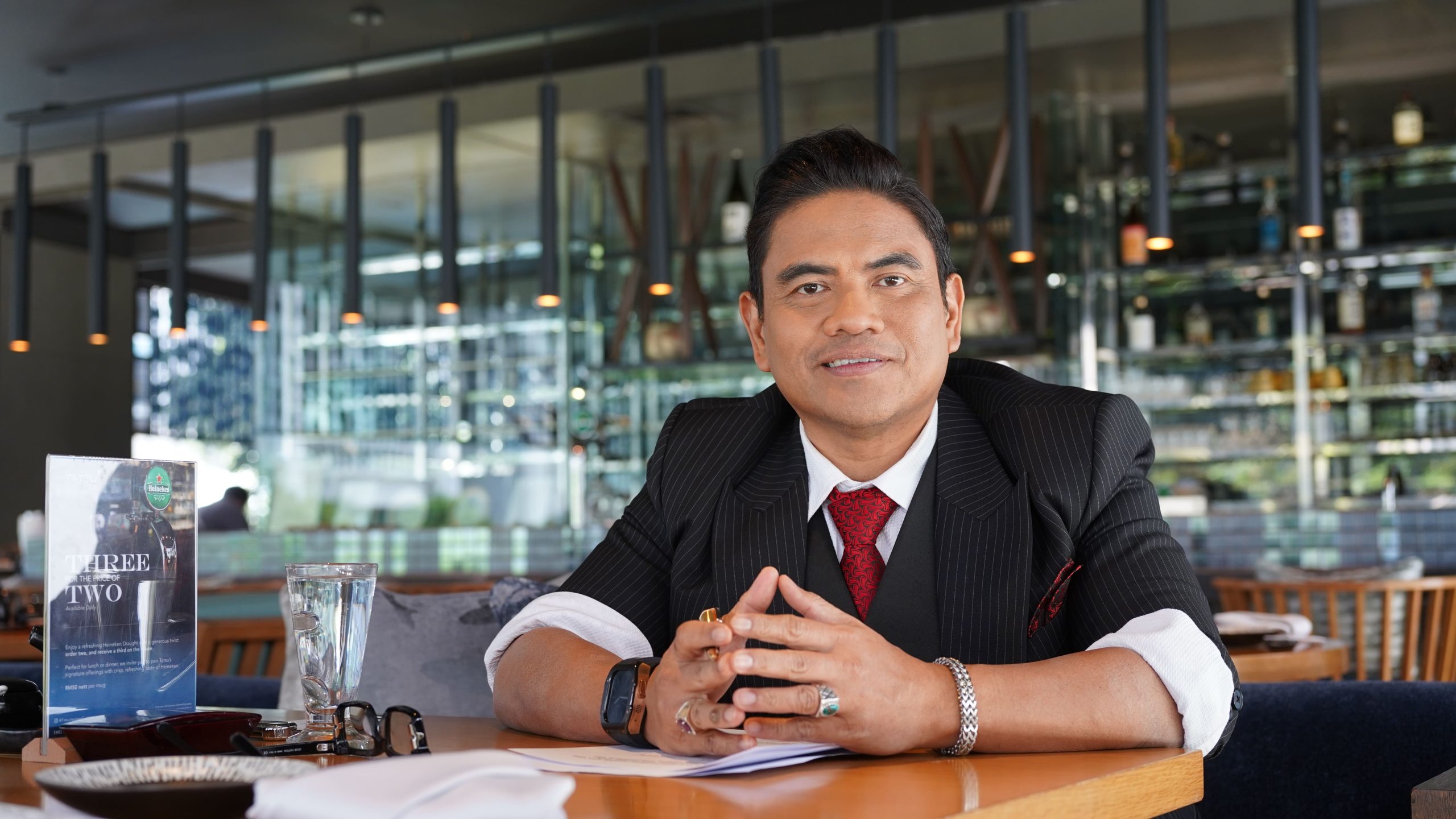
Founder of RichWorks X, Professor Datuk Wira Dr Azizan Osman, cautioned that while macroeconomic data continues to show resilience, many SMEs are quietly struggling with shrinking margins, tightening cashflow and rising cost pressures intensified by global geopolitical tensions, especially in the Middle East.
He said the current environment demands a fundamental shift in how entrepreneurs manage their businesses, moving away from costcutting survival tactics towards strategic restructuring, branding strength and disciplined financial management.
Global shocks hitting local businesses at the ground level
Azizan said global tensions are no longer distant geopolitical events but direct economic triggers affecting small businesses in Malaysia.
“When conflict affects energy routes, oil prices, shipping costs, insurance costs and raw material prices, the impact eventually reaches the MSME owner,” he told Sarawak Tribune in an interview.
He said that international projections have already signalled rising energy costs in 2026, with oil price volatility driven by supply disruption concerns.
For Malaysian SMEs, he said, the impact is immediate: higher input costs, more expensive logistics, and shrinking margins.
This burden is even heavier in Sarawak, where geography itself creates additional cost layers. “Sarawak is Malaysia’s largest state and its distance from Peninsular Malaysia naturally increases transportation, inventory and distribution costs,” he explained.
Although subsidised diesel pricing remains in place, he said businesses are still affected by rising logistics, labour, utilities and raw material costs.
“The reality is SMEs cannot rely only on cost-cutting.
They must redesign pricing, strengthen supply chains, protect margins and improve how they sell,” he said.
Strong GDP growth, but pressure beneath the surface
While Malaysia’s economy continues to expand, Azizan warned that national figures often mask the realities faced by entrepreneurs.
“Official indicators are important, but they do not always show what is happening inside the SME’s bank account,” he said.
Malaysia’s GDP growth in early 2026 reflects resilience, but SMElevel realities paint a more complex picture where revenue may rise, but profitability declines.
He pointed to findings showing that most SMEs expect costs to continue rising, driven by raw materials, labour, utilities and logistics.
A significant portion also face cashflow constraints of less than six months.
“So the economy can grow, but SMEs can still feel squeezed.
Revenue looks healthy, but cashflow is weak,” he said.
Azizan stressed that policymakers and entrepreneurs must look beyond GDP and focus on SME-specific indicators such as liquidity, margins, debt exposure and payment cycles.
Warning signs SMEs should not ignore
Azizan outlined several early warning signals that indicate a business is under pressure even if it appears stable on the surface.
“The first warning sign is always cashflow.
If you are using tomorrow’s sales to pay yesterday’s commitments, the business is already under pressure,” he said.
He added that shrinking margins are another silent threat, especially when entrepreneurs fail to calculate real profitability after accounting for operational costs.
Overdependence is also a major risk, whether on a single product, supplier, platform or customer base.
However, one of the most overlooked issues is what he calls “founder fatigue”.
“Many SMEs are still too dependent on the owner.
If the owner stops, the business stops,” he said.
Azizan urged entrepreneurs to regularly review financial and operational indicators such as gross margin, net margin, stock movement, acquisition cost and repeat purchase rates.
“What is not measured cannot be managed,” he stressed.
Digital economy: Opportunity or hidden trap?
Sarawak has been actively pushing digital transformation, but Azizan warned that digitalisation without strategy can become a financial burden rather than a growth engine.
He said many SMEs enter e-commerce platforms expecting growth, only to be caught in intense price competition and high platform-related costs.
“Digitalisation is a must, but digitalisation without strategy can become a trap,” he said.
He said that while Malaysia’s e-commerce market has reached over RM1 trillion in value, SMEs must not rely solely on platforms.
“They should use platforms for reach and discovery, but build their own brand, database, content and customer loyalty system,” he explained.
For Sarawak entrepreneurs, he said, the opportunity lies in elevating local products, from food and crafts to tourism and cultural goods beyond commodity pricing.
“Do not compete to be the cheapest.
Compete to be the most trusted and most valuable,” he said.
Fair competition and platform dominance concerns
Azizan also acknowledged the growing concern over marketplace dominance and fair competition in the digital economy.
He said with a few major platforms controlling the majority of Malaysia’s e-commerce ecosystem, SMEs face challenges in fees, visibility and data access.
“There is a need for stronger policy attention because local MSMEs are not only competing with local sellers, but also foreign and factory-direct sellers,” he said.
However, he stressed that policy alone is not enough.
“Government intervention can create fairness, but entrepreneurs must also strengthen themselves with pricing strategy, branding and financial discipline,” he added.
Competing beyond price wars
On competition from foreign sellers, Azizan said Malaysian SMEs, especially in Sarawak, must avoid the trap of competing solely on price.
“If SMEs compete directly with factorydirect sellers on price, they will usually lose,” he said.
Instead, he urged businesses to build value through trust, storytelling, packaging, quality and customer experience.
He also highlighted Sarawak’s strategic position within the BIMP-EAGA region, which opens opportunities beyond domestic markets.
“Entrepreneurs should think beyond Kuching, Sibu or Miri.
They should look at Brunei, Kalimantan, Sabah and the wider ASEAN region,” he said.
Grants are not enough without capability
While acknowledging government support through grants and financing schemes, Azizan said funding alone cannot fix structural business weaknesses.
“Money alone does not solve business problems,” he said.
He said that many SMEs still require financing for working capital, indicating ongoing financial strain.
He proposed a more integrated ecosystem combining capital, capability and accountability — including mentoring, financial diagnostics and continuous business coaching.
“Many businesses do not fail because they lack money.
They fail because they lack clarity, systems and leadership,” he said.
Common SME mistakes during uncertainty
Azizan also highlighted that many entrepreneurs react to uncertainty by becoming overly conservative such as cutting marketing, delaying investment and freezing growth plans.
“In uncertain times, SMEs must be prudent, but not passive,” he said.
He warned that reducing investment in growth areas can shrink future potential rather than protect the business.
For Sarawak entrepreneurs, he noted that geography and market dispersion present challenges, but should not limit ambition.
“Do not think only about survival.
Think scale,” he said.
From survival to strategic growth
Looking ahead, Azizan said Malaysia’s SME sector must shift from an “operator mindset” to a “builder mindset”.
“An operator does everything personally.
A builder builds systems, people, brand and leadership,” he explained.
He outlined five priorities for long-term resilience: mastering financial data, building strong brands, using technology strategically, developing leadership teams and expanding into larger markets.
He added that mentorship remains crucial in guiding this transformation, particularly for entrepreneurs navigating complex economic conditions.
“My final message is simple,” he said.
“SMEs do not need sympathy.
They need structure, strategy, discipline and execution.”
“When entrepreneurs have clarity and courage, they will not just survive uncertainty — they will grow stronger because of it.”