KUCHING: An exhibition here is bringing together artists from Malaysia and the Philippines to explore how agriculture, community labour and connections to land continue to shape cultural identity, memory and contemporary life.
Titled Sugar & Rice, the exhibition features large-scale video installations and land art works by Manila-based artist Vien Valencia and East Malaysia-based artists Gindung Mc Feddy Simon and Catriona Maddocks.
Presented by Sarawak-based social enterprise Catama at the newly launched HAUS KCH Gallery, the exhibition runs from June 24 to July 24, marking the gallery’s inaugural exhibition.
The showcase examines the contrasting histories and contemporary realities surrounding rice and sugar cultivation across Southeast Asia.
While rice has long been associated with food security, cultural traditions and community life, sugar plantations became closely linked to colonial economies, transforming landscapes and labour systems that continue to influence societies today.
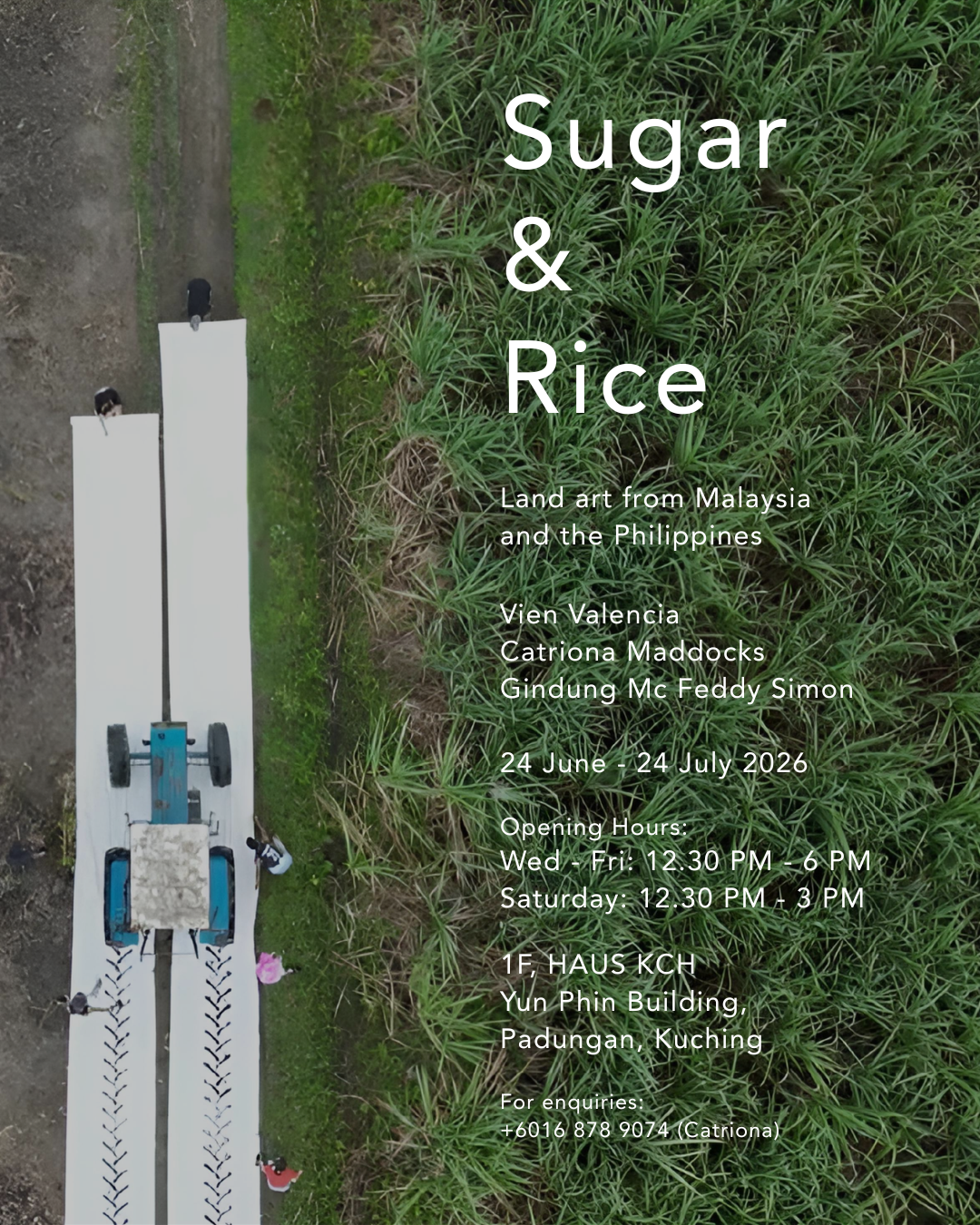
One of the featured works, Field Drawings (2024) by Valencia, was created in collaboration with sugarcane farmers in Talisay City, Negros Occidental, the Philippines.
Using tractors and large pieces of cloth as drawing tools, Valencia and the farming community transformed a commercial sugar plantation into a canvas, creating large-scale land drawings documented through video.
For the Kuching exhibition, the video works are presented within a specially constructed installation inspired by the Filipino kubo farm hut where the artist originally screened the work for the local community involved in the project.
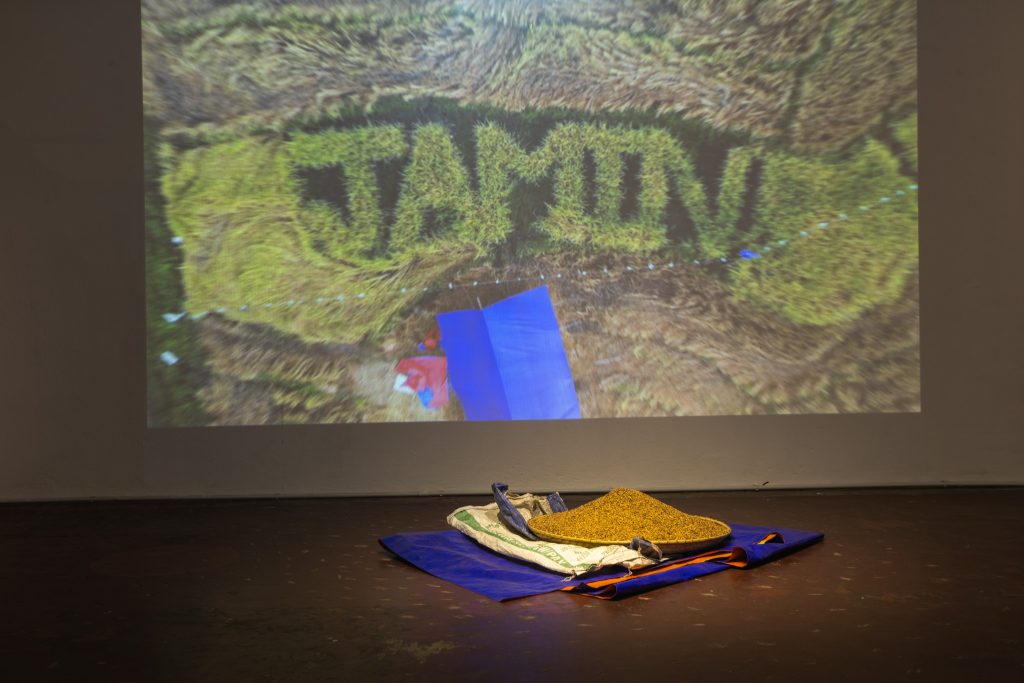
Meanwhile, Pagar dan Padi (2022–2025) by Simon and Maddocks reflects three years of rice cultivation with farming communities in Ranau, Sabah.
A central element of the work involved the artists and community members planting the word “JAMIN” — meaning “guarantee” in Malay — into a rice field.
Visible from above through drone imagery, the living land artwork references promises made to Indigenous communities in Sabah during the formation of Malaysia in 1963, while raising questions surrounding autonomy, stewardship, land rights and the continuing relationship between people and place.
Maddocks, who is also the exhibition curator, said the works shared a common exploration of how communities understand, care for and relate to land despite emerging from different agricultural traditions.
“The works in the Sugar and Rice exhibition are from different regions and agricultural traditions, though they share a similar story; how communities understand and care for land.
“The artists use video, drone photography and installation to explore ideas about the past, present and future, and human relationships with land. Both works engaged local farming communities to produce the artwork, blurring the lines between artist and farmer, and labour and performance.”
She said the exhibition aimed to encourage audiences to view farming beyond food production, highlighting it as a cultural practice shaped by memory, community and changing relationships with the environment.
“The exhibition invites audiences to think differently about farming — not simply as food production, but as a cultural practice shaped by memory, community and our evolving relationship with the land.”
Since opening, the exhibition has attracted interest through programmes including sharing sessions with curators from National Gallery Singapore, exhibition tours and a counter-mapping workshop.
HAUS KCH Gallery programme curator Sonia Luhong Wan said the gallery was pleased to launch its new space with an exhibition addressing issues that remain highly relevant amid climate change and changing land use.
“We’re delighted to launch our gallery with such a significant and meaningful exhibition. The issues addressed are very pertinent in an era of climate change and changing land use, and we’re excited to be able to present such rich artworks in this space.”
Maddocks added that the exhibition was made possible through a collective community effort, with support from artists, volunteers and HAUS KCH.
“The exhibition is entirely self-funded, and it really was a community effort to present it to the public.
“Led by my social enterprise Catama, with the generous support of HAUS KCH, we couldn’t have done it without the help of our artist friends who helped us build, install and present the works, and share these stories with the community of Kuching.”
She encouraged local audiences to visit the exhibition, engage in discussions and support efforts to continue providing platforms for community-based artistic and environmental conversations.