After the Siren Ends: Part Three
MOST people assume firefighters simply go home and get on with life like normal when an emergency ends, the fire engine returns to the station and the reports have been completed.
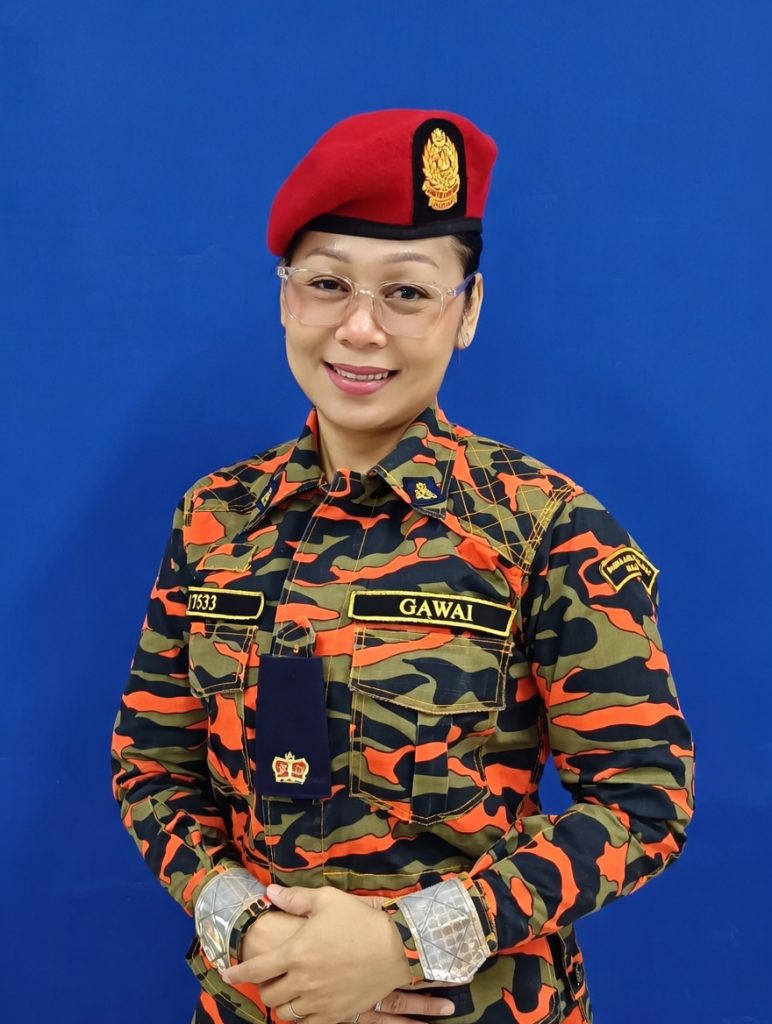
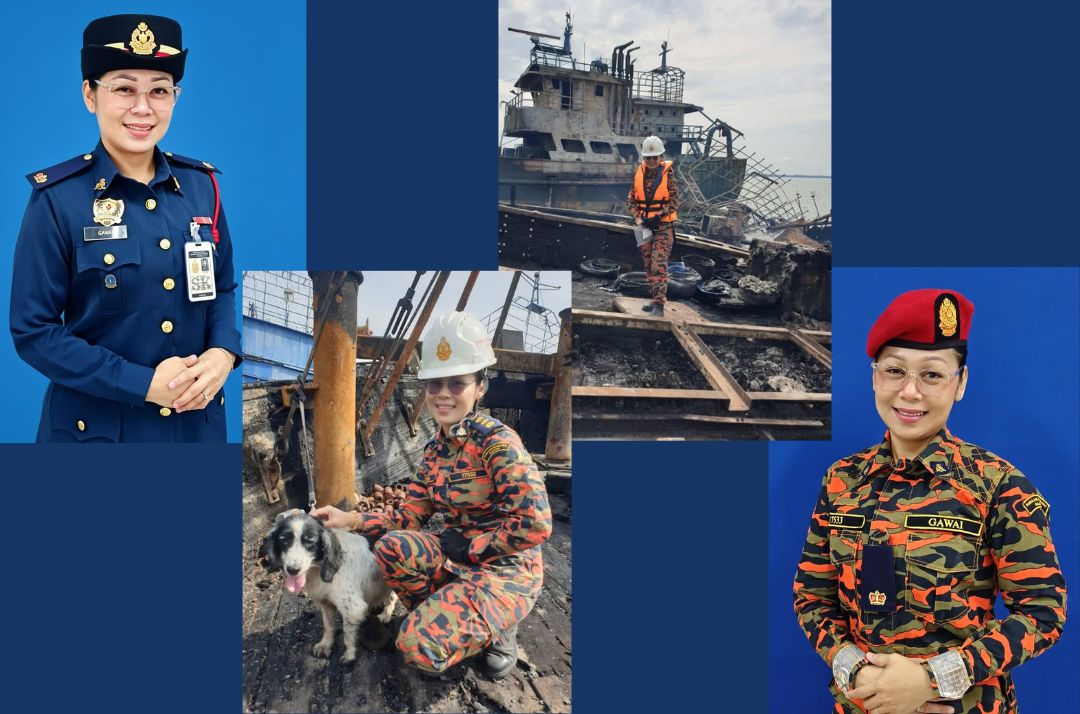
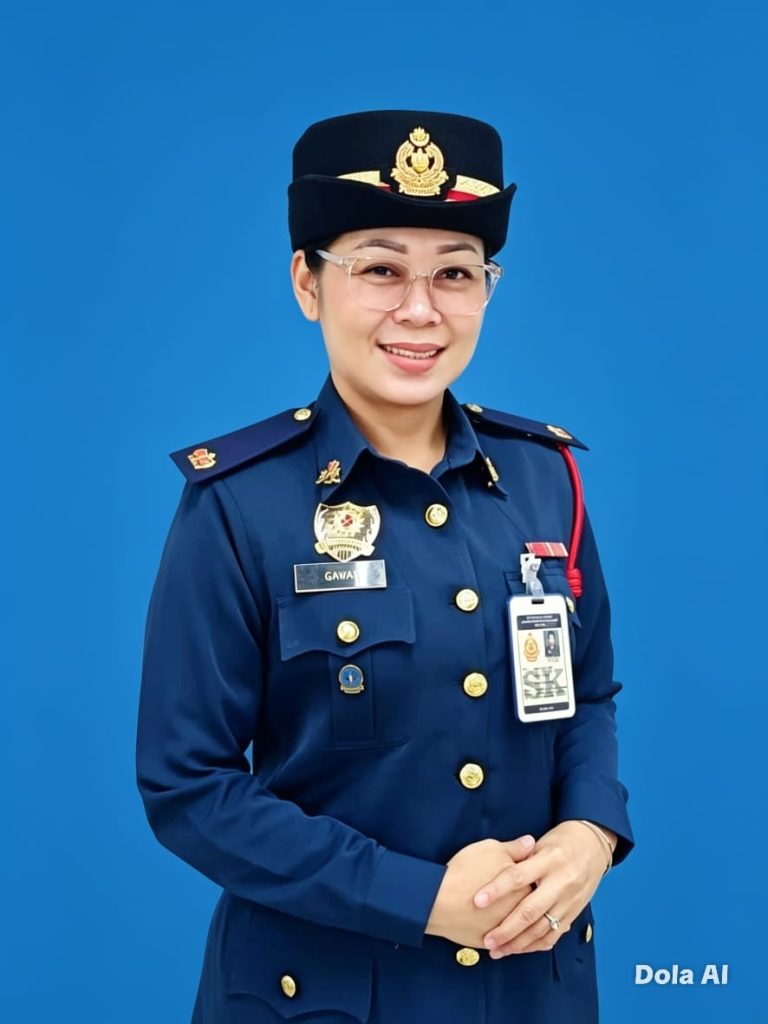
As Fire and Rescue Department (BOMBA) Samarahan Zone Chief Gawai John puts it, going home is not the end of her responsibilities. Instead, it heralds the beginning of another role entirely.
The woman who spends her working hours leading firefighters, making operational decisions and responding whenever emergencies strike must somehow leave that version of herself behind before walking through her front door, where another team is waiting—not one dressed in fire-resistant uniforms, but a husband and daughter who simply know her as wife and mother.
The transition sounds simple. In reality, it is anything but.
“At work, I am used to giving instructions because everything is structured. People know their roles and follow orders.
“But when I go home, I become a mother, a wife and a homemaker. Everything depends on me,” she said.
Gawai said her husband and daughter often joke that she remains “the officer” even after taking off her uniform.
“They always tell me I’m quite strict at home too. Working in such a structured environment has made me particular about things being organised, so when the house is messy, it can frustrate me,” she admitted.
Ironically, the profession that now defines much of Gawai’s life was never part of her original plan.
More than a decade ago, becoming a firefighter had never crossed her mind until a neighbour serving with the department shared about her duties.
“BOMBA was actually my third choice when I applied through SPA8. I never imagined it would become my career,” she said.
When Gawai was accepted for recruit training in 2015, excitement quickly gave way to heartbreak as her daughter was only five years old then.
Rather than saying goodbye while she was awake, Gawai quietly waited until she had fallen asleep before slipping out of the house at around one o’clock in the morning to begin the journey that would eventually change her life.
For the next nine months, while she underwent recruit training hundreds of kilometres away, her husband Andrew Johnson and her mother-in-law cared for their young daughter.
When training ended in 2016, another challenge awaited. She was posted to Bintulu, while Andrew remained in Miri because of his own work commitments.
Their daughter moved to Bintulu with her, while Andrew began making regular journeys between the two divisions whenever work allowed.
“Most of the time, it was just my daughter and I. My husband came to visit whenever he could,” she said.
The arrangement required their daughter to become independent much earlier than many children her age.
During her early years in service, there were occasions when emergency calls came and no family members were available to help.
“If my mother or mother-in-law was around, they helped but there were also times when my daughter had to stay alone. Those first few years were very difficult but I am grateful that I could rely on my officers to go help keep an eye on her,” she said.
Over time, school transport was arranged, family members stepped in whenever they could and their daughter gradually adapted to a childhood shaped by emergency calls, unpredictable schedules and a mother whose phone could ring at any hour of the day.
While balancing work and family became easier with experience, Gawai soon realised that the greatest challenge of firefighting was never simply responding to emergencies.
Instead, it was learning how to move between two entirely different worlds.
As a senior officer, she is expected to remain calm, decisive and confident, even during situations where lives may depend on the decisions she makes.
“Sometimes you have to appear strong even when deep inside you are unsure because you are the leader, people are looking at you,” she said.
Despite years of experience, Gawai admitted there are some parts of the job that cannot simply be left behind at the station.
For her, the operations that linger the longest are rarely the largest fires or the most technically challenging rescues.
Instead, they are those involving fathers or mothers whose deaths leave families suddenly facing an uncertain future.
“Usually, road accident cases affect me the most especially when the victim is the head of the family. When I go home, I don’t only think about the victim.
“I think about the family they have left behind and how they will continue their lives,” she said
Unlike the victims whose journeys end that day, it is the families left behind who continue occupying her thoughts long after the operation has concluded. Those thoughts often follow her home.
Although she is still able to sleep after returning from duty, there are nights when the images from an operation continue replaying in her mind just as she is about to drift off.
“My husband always tells me not to think about work after coming home but it isn’t easy. Sometimes, my mind is still running and I keep thinking about what happened and about the people affected,” she said.
Gawai believes this experience is one shared by many firefighters, even if few openly admit it.
Over the years, she has made it a habit to quietly check on her team members after particularly difficult operations, recognising that everyone processes tragedy differently.
“Sometimes after an operation, I ask my team members how they are feeling. When we talk about it, I realise some of them are thinking about exactly the same things I am,” she said.
Most of the firefighters under Gawai’s command are men and many rarely speak openly about their emotions during an operation.
However, she has learned that the silence often says more than words as firefighters cannot afford to become overwhelmed while carrying out their duties.
“Some people keep everything inside but when you sit down with them privately, they eventually open up. When we are at the scene, we have to stay strong and we have to calm the victims and their families.
“If we also become emotional, how can they depend on us? So during the operation, we hide what we are feeling,” she said.
Gawai admitted that her duties at work rarely ends when office hours do.
As Samarahan Zone Chief, she remains on call round the clock, meaning weekends, public holidays and even approved leave can be interrupted without warning.
“There are times when we have already planned to go somewhere as a family, then suddenly I receive a phone call. If it’s a major incident, I have to go,” she said.
Over the years, Andrew has become accustomed to those unexpected interruptions.
When Gawai first decided to join the department, he admitted he struggled with the idea of his wife entering a profession largely dominated by men.
Instead of asking her to reconsider, he chose to trust the woman he married.
“I have to admit I felt a little jealous at first and I wondered whether it was really the right environment for her. However, I didn’t want to dwell on negative thoughts because I knew this was her future.
“If we are meant to be together, nothing will change that. I placed my full trust in my wife,” he said.
That trust has since been tested by years of living apart because of work, interrupted weekends and the understanding that family plans may have to change without notice whenever duty calls.
More than anything, Andrew has learned to recognise the quiet days.
When Gawai has attended a particularly difficult operation, she rarely speaks about it immediately.
“We know something is wrong because she is normally very talkative. When she becomes quiet, we know she had a difficult day,” he said.
Andrew has also learned not to fill those moments of silence with questions.
Instead, he gives her the space she needs before gently reminding her to care for herself as much as she cares for others.
“I always tell her to carry out her responsibilities to the best of her ability, but not to force herself if something becomes too overwhelmed. Her health and well-being are important too,” he said.
Living alongside a firefighter has also shown Andrew that many of the profession’s greatest sacrifices remain invisible to those outside the service.
“The public only sees the uniform. They don’t always see the emotional and physical demands that come with the job,” he said.
Although years have passed since Gawai first left home in the middle of the night for recruit training, the uncertainty that comes with life as a firefighter has never disappeared.
Birthdays, weekends and public holidays are planned with the understanding that they may never unfold as intended.
It is a reality her family has gradually learned to accept, although acceptance has never made the sacrifices any smaller.
Her daughter has grown up understanding that emergency calls do not wait for family dinners, school holidays or carefully planned weekends.
“Sometimes I wonder whether my daughter also keeps those feelings inside. Whenever we have time together, especially on weekends, we try our best to focus completely on her.
“Sometimes, our plans still get interrupted. When that happens, we simply try to make up for the lost time afterwards,” she said.
For Andrew, those interrupted moments are simply part of the commitment both of them made when Gawai chose a career in public service.
“I am proud that she is able to stand shoulder to shoulder with her male colleagues and carry out the same responsibilities. She has shown that women are just as capable of serving as firefighters and performing under pressure,” he said.
Andrew pointed out that the public often underestimates what uniformed service demands.
“Many people assume civil servants simply collect a salary, but the reality is very different. Every department has expectations, responsibilities and pressures that the public rarely sees.
“If you choose public service, then serve with commitment. Be prepared for the difficult moments because those hardships are what make the journey meaningful in the end,” he said.
Gawai said the profession she once accepted almost by chance has gradually become something far greater than simply a career.
“What motivates me is seeing the relief on people’s faces when BOMBA arrives. When someone is in trouble, everything can feel dark, but our arrival gives them hope.
“I never planned to become a firefighter, but over time, the interest and passion simply grew,” she said.
Today, that passion continues carrying her through emergency calls, difficult operations and interrupted family plans. It also follows her home, where the responsibilities simply take on a different form.
Perhaps that is the side of firefighting the public rarely sees. The challenge is not only entering burning buildings, responding to fatal accidents or making critical decisions under pressure.
It is also learning to leave those experiences at the doorstep before becoming a wife, a mother and the anchor of a family, even when some memories refuse to stay behind.
In Part Four of this series, the perspective shifts from firefighters to the spouses and families who stand quietly behind every emergency call, revealing the unseen sacrifices, resilience and unwavering support that make it possible for those in uniform to continue answering whenever others need help most.