SERIAN: The bullet marks still visible on the walls of the longhouse in Kampung Mujat bear silent witnesses to the terrifying moments its villagers endured during the Malaysia-Indonesia Confrontation.
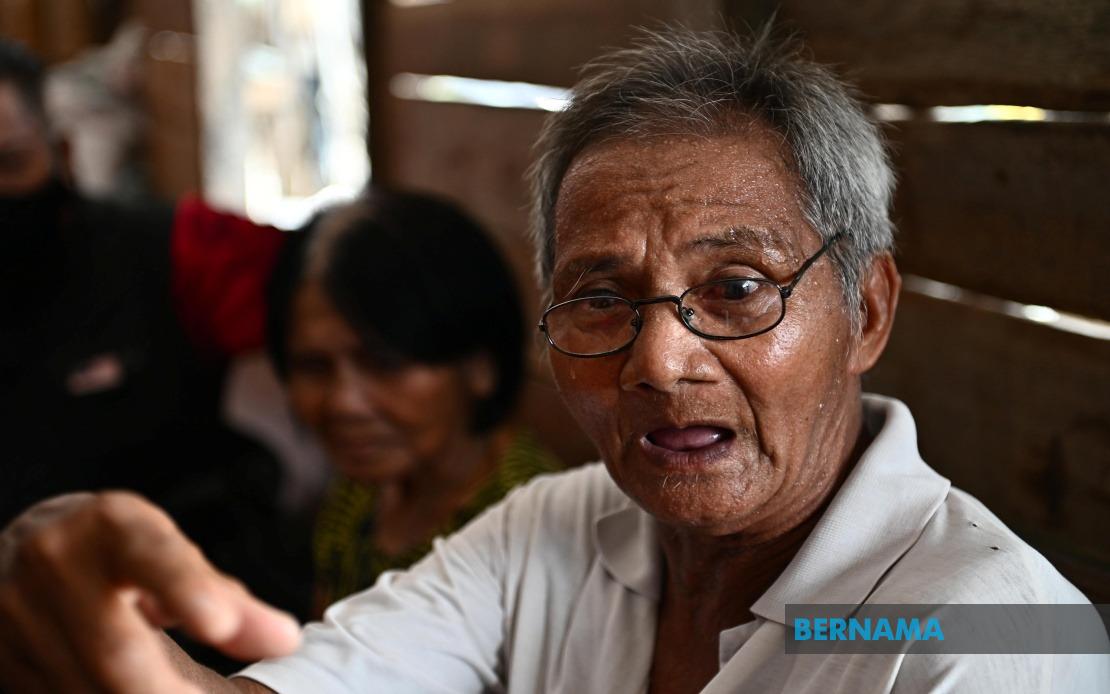
More than six decades have passed since the conflict erupted following Indonesia’s opposition to the formation of Malaysia in 1963, but the bitter memories for villagers in the Sarawak-West Kalimantan border region remain painfully vivid for Biat Tajap, 74, who was just 10 years old at the time.
“Before the confrontation, life was normal. Then suddenly, Indonesian soldiers came and fired from behind the village.
“I was still in school back then, and I was so frightened whenever I heard gunshots at night,” the father of five told reporters recently in Kampung Mujat.
The village, whose residents are mostly Bidayuh Bukar-Sadong, sits close to the Malaysia-Indonesia border and has been a settlement since around the 1930s, making it one of the areas deeply affected during the Confrontation.
Biat shared a memory he can never shake, of a village woman fleeing with her baby when she was hit by gunfire, but miraculously survived.
“For safety, nearly the entire village abandoned the longhouse and built makeshift shelters in the nearby jungle. We stayed in tiny little huts. The longhouse was practically empty. All us kids were terrified.
“None of us dared to play outside with our friends. We just hid in the jungle, keeping really quiet inside those huts,” he recalls.
Life in hiding, Biat says, was not just fraught with fear; it was a daily struggle for survival, with food and clean water painfully scarce.
“We took river water for cooking and drinking. As for food, we ate whatever we could find. Wild tubers, sago, bamboo shoots, whatever was in the jungle. The main thing was staying alive,” he said.
When the confrontation finally died down in 1965, Biat says the villagers slowly began making their way back home, in small groups.
The areas around Kampung Mujat and nearby villages like Kampung Mongkos also became staging grounds for Malaysian and British troops patrolling the border to hold back incursions.
Looking back, he says the experience taught the villagers just how precious the peace that Malaysians enjoy today truly is. Still, it took time for the wounds of that conflict to heal.
Six decades ago, the people of Kampung Mujat lived in dread of gunfire and the threat of enemy troops crossing over. Today, that same frontline of conflict now bears witness to the close kinship shared between the two nations.
Biat revealed that most residents on both sides of the border are actually bound by family ties and shared ethnic roots. And that, he says, has kept their bond strong, even after everything they went through.
“We’re all relatives, really. Back then, only the soldiers were the problem. The people here and across the border have always stayed on good terms. Even now, we still visit one another, especially during Gawai celebrations and family gatherings,” he said.
— BERNAMA