SIBU: Sarawak’s 63-year journey has been shaped by challenges, resilience and a continuous effort to build a stronger future, with the younger generation now carrying the responsibility of safeguarding and advancing the state’s progress, says Premier Datuk Patinggi Tan Sri Abang Johari Tun Openg/
Reflecting on Sarawak’s journey since July 22, 1963, he said the state had gone through various difficult phases, from geopolitical uncertainties and security threats to political transitions and economic transformation.
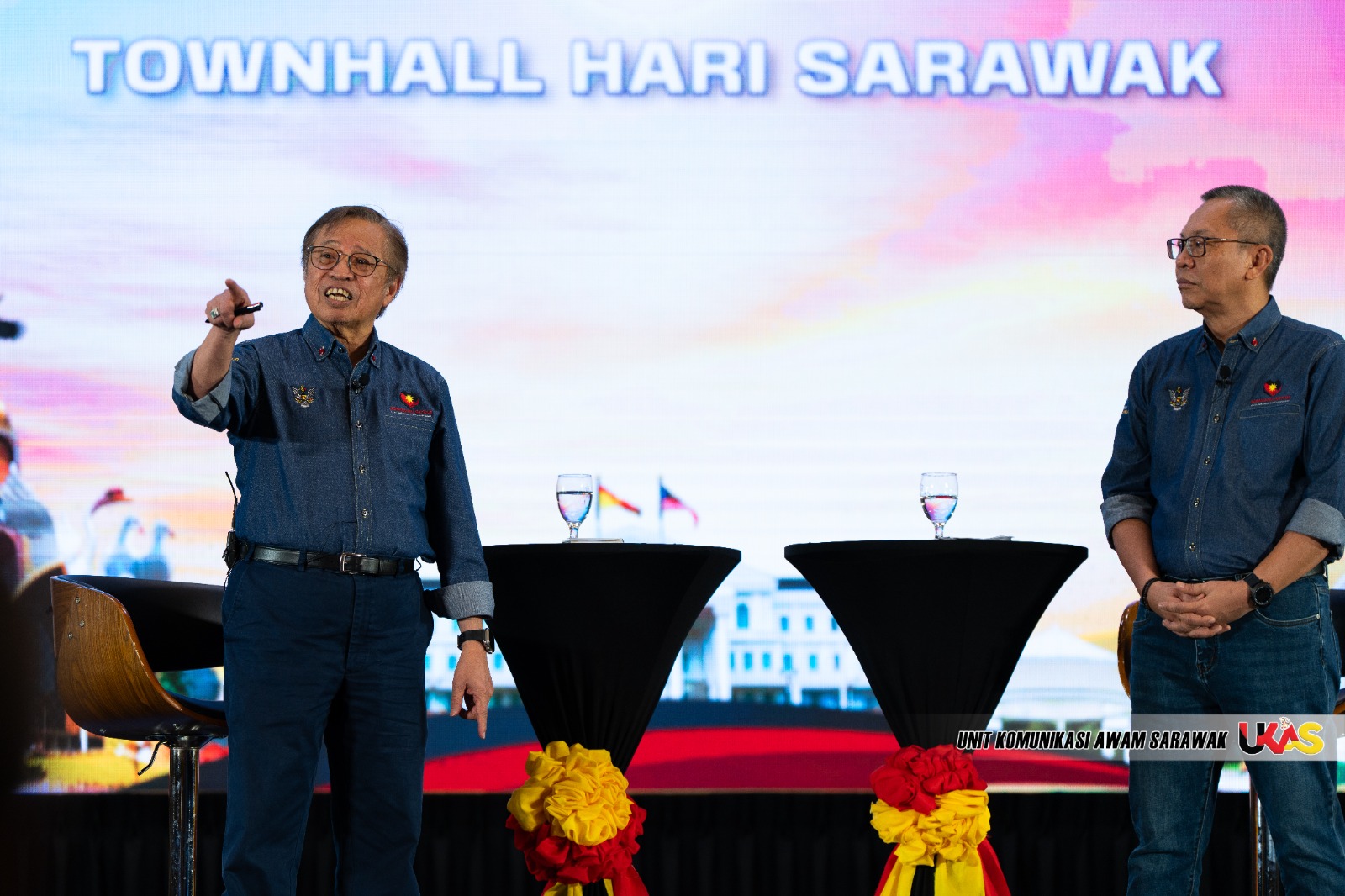
“The journey has been a long one. Since 1963, we have gone through many waves, challenges and difficult moments, but also moments of success and excellence,” he said during the Sarawak Day Townhall held here today.
He highlighted that July 22 marked the day Sarawak regained the authority to manage its own affairs under its own Chief Minister, the late Tan Sri Datuk Amar Stephen Kalong Ningkan.
He said the formation of Malaysia was not without challenges, noting that the original date for Malaysia’s establishment had been planned for Aug 31, 1963, but was later postponed to Sept 16, 1963 due to several obstacles.
Among the challenges were regional tensions, including the Indonesian Confrontation and security threats posed by communist movements, as well as the dispute involving Sabah’s claim by the Philippines.
“Because of these challenges, the United Nations had to send delegates to determine the views and decisions of the people of Sarawak and Sabah,” he said.
Abang Johari said the Malaysia Agreement 1963 and the Malaysia Act, which were deposited with the United Nations, represented binding agreements that must be respected in the governance of the country.
He said Sarawak also faced challenges during the early years of self-administration as local leaders had just begun assuming responsibility for governing the state.
During the transitional period, British colonial officers were still involved in advising the state administration, while the process of Borneonisation was being implemented to prepare Sarawakians to take over key administrative roles.
“At that time, we were very new. Our leaders had just been given the power to administer, and we had to go through a transition period,” he said.
He added that political stability was another challenge faced by Sarawak in its early years, with the state eventually moving towards a stronger development focus after 1970.
Abang Johari highlighted that a major turning point came under the leadership of the late Tun Abdul Rahman Ya’kub and later the late Tun Abdul Taib Mahmud, when greater emphasis was placed on development rather than political differences.
He said institutions such as Yayasan Sarawak and the Sarawak Economic Development Corporation (SEDC) played a crucial role in building human capital and strengthening the state’s future.
Through Yayasan Sarawak, he said many Sarawakian students were sent to study in Peninsular Malaysia with scholarships, allowing them to gain knowledge and later return to contribute towards the state’s development.
“Many of the leaders we have today are graduates of Yayasan Sarawak. This is one of the fruits of the independence journey we have gone through,” he said.
Abang Johari said the progress achieved today was also aligned with the vision of the Brooke administration’s Nine Cardinal Principles, which emphasised that Sarawak should have the ability to govern itself.
He urged Sarawakians, especially the younger generation, to understand the state’s history and remain committed to continuing the journey of development.