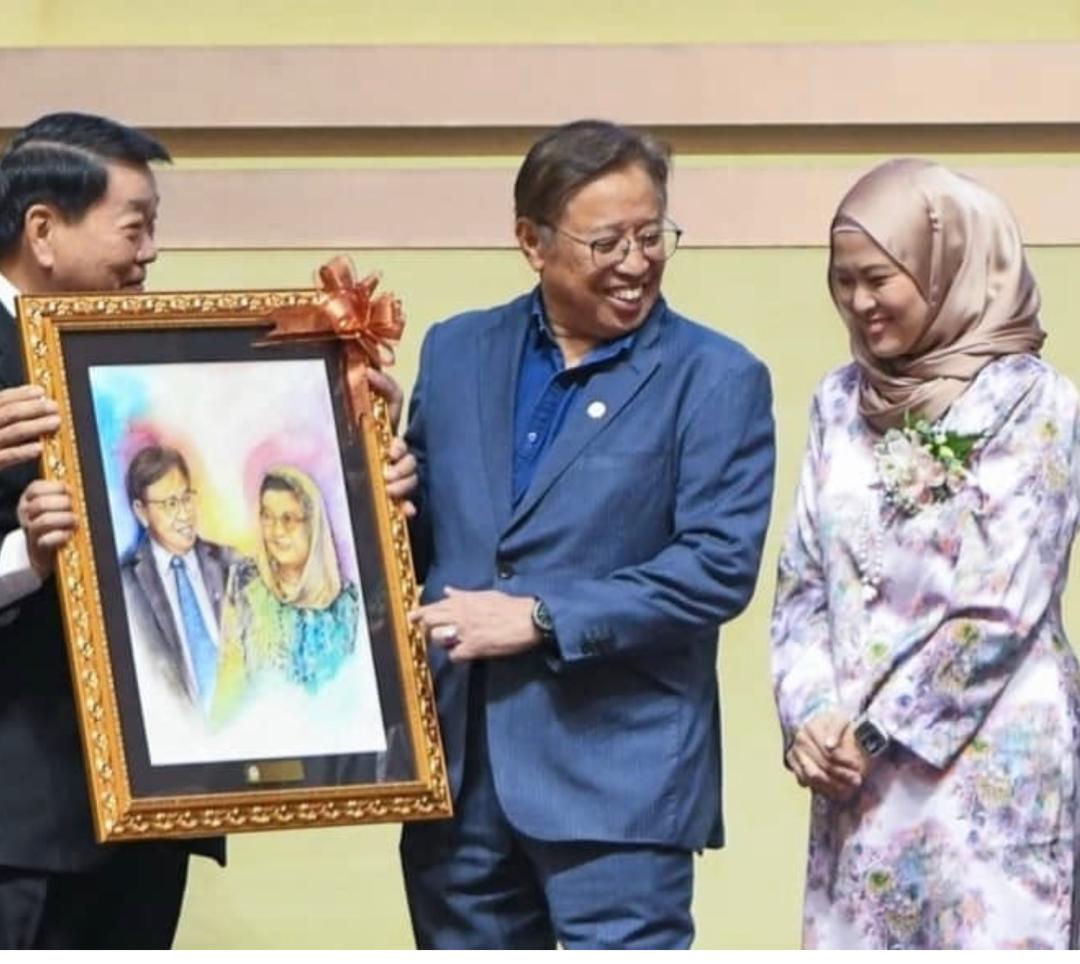
For most Sarawakians, Premier Datuk Patinggi Tan Sri Abang Johari Tun Openg is the face of Sarawak’s transformation, a leader whose vision has reshaped the state’s development through bold investments in education, innovation, renewable energy and the digital economy, inspiring many to imagine possibilities that once seemed beyond reach.
His speeches have become synonymous with ambition, his policies have changed lives, and his name has become closely intertwined with Sarawak’s aspirations.
To his daughter, Dayang Norjihan, however, he has never simply been the Premier — he has always been ‘Bapak’.
The father who rarely raised his voice, who almost never forgot to call home no matter where official duties took him, who returned from overseas carrying books, and who expressed love not through grand declarations but through the quiet consistency of everyday gestures that only became more meaningful with time.
Asked to describe her father in just a few words, Norjihan smiled before she answered simply: very kind-hearted, hardworking and loving in his own way.
A kind heart, tempered with firmness
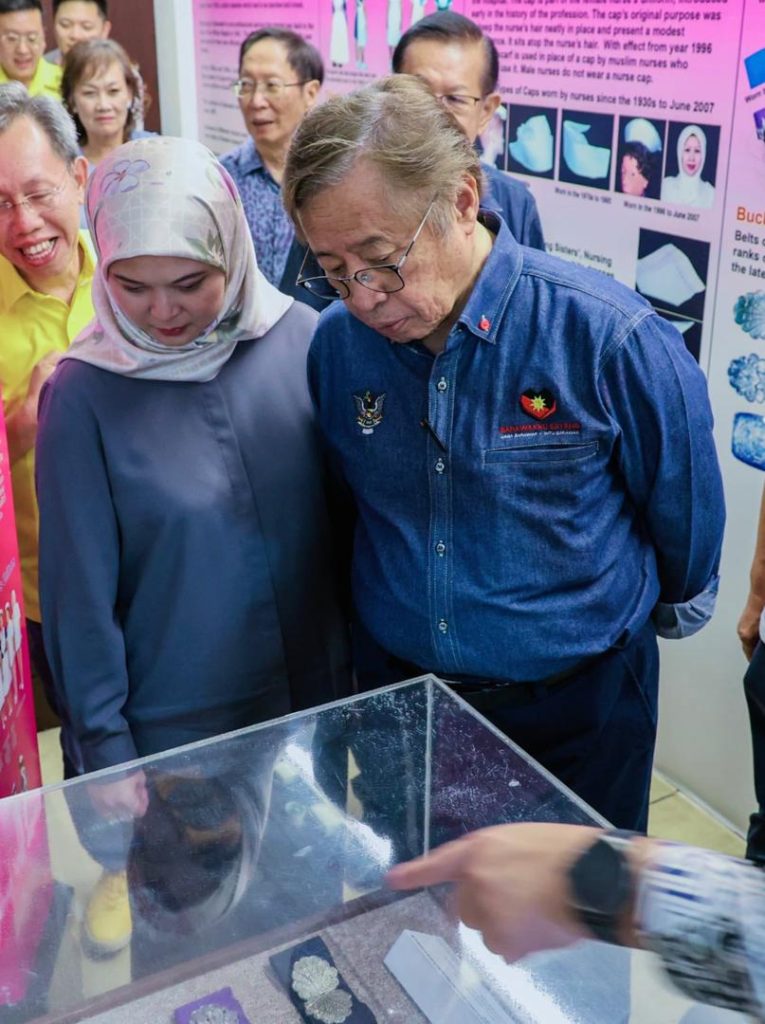
Kindness was the first word that came to Norjihan’s mind when she described her father, but it was not kindness in the superficial sense of simply being pleasant or approachable.
Rather, it was a quality rooted in genuine compassion, humility and respect for people, regardless of who they were.
“He is a very kind person, but at the same time, he is also firm,” she said.
Growing up, Norjihan never saw her father treat people differently because of their background or status.
Whether they were family members, close friends, colleagues or complete strangers, everyone was met with the same warmth and courtesy.
“He treats everyone well, whether they are family members or people outside the family. However, there are times when he is firm and strict,” she said.
Love hidden in the smallest gestures
For much of her childhood, Norjihan did not immediately recognise the many ways her father expressed his love.
Like many fathers of his generation, Abang Johari was never one to openly speak about his feelings or constantly tell his children that he loved them.
Affection was not expressed through grand words or dramatic gestures, but through quiet acts of consistency that became woven into everyday family life.
“No matter where official duties took him in Malaysia or overseas, there would always be a phone call home. The conversations were never long and the questions he would ask my late mother (Datuk Amar Puan Sri Juma’ani Tuanku Bujang) were always the same.
“‘Have you eaten? Who’s at home with you and the kids? Is everyone okay?'” she said.
Growing up, those conversations felt routine and there was nothing particularly remarkable about them.
As children, Norjihan admitted that she and her sibling never gave them much thought.
Only as she grew older did she begin to understand that those simple questions were, in fact, her father’s way of staying close to the family despite the distance created by public service.
“It was his way of showing he cared. He never failed to call my late mother every night when he was away,” she said.
Looking back, Norjihan realised that those nightly phone calls became an invisible thread connecting him to home — a quiet reassurance that although work often took him away physically, his thoughts never really left his family.
That same thoughtfulness was evident every time he returned from an official trip.
Unlike many parents who might come home carrying toys or souvenirs, Abang Johari almost always arrived with books.
Looking back, she believes those books quietly shaped the way she and her sibling viewed education because they grew up in a home where learning was never treated as something confined to classrooms or examinations, but as a lifelong pursuit.
“He would always buy books for us. There would be ranges of fictions and non-fictions, even comics and magazines.
“As long as it is something for us to read, he will never fail in buying them. I think that was his way of telling us that knowledge is important and he instilled a love of learning in us from a very young age,” she said.
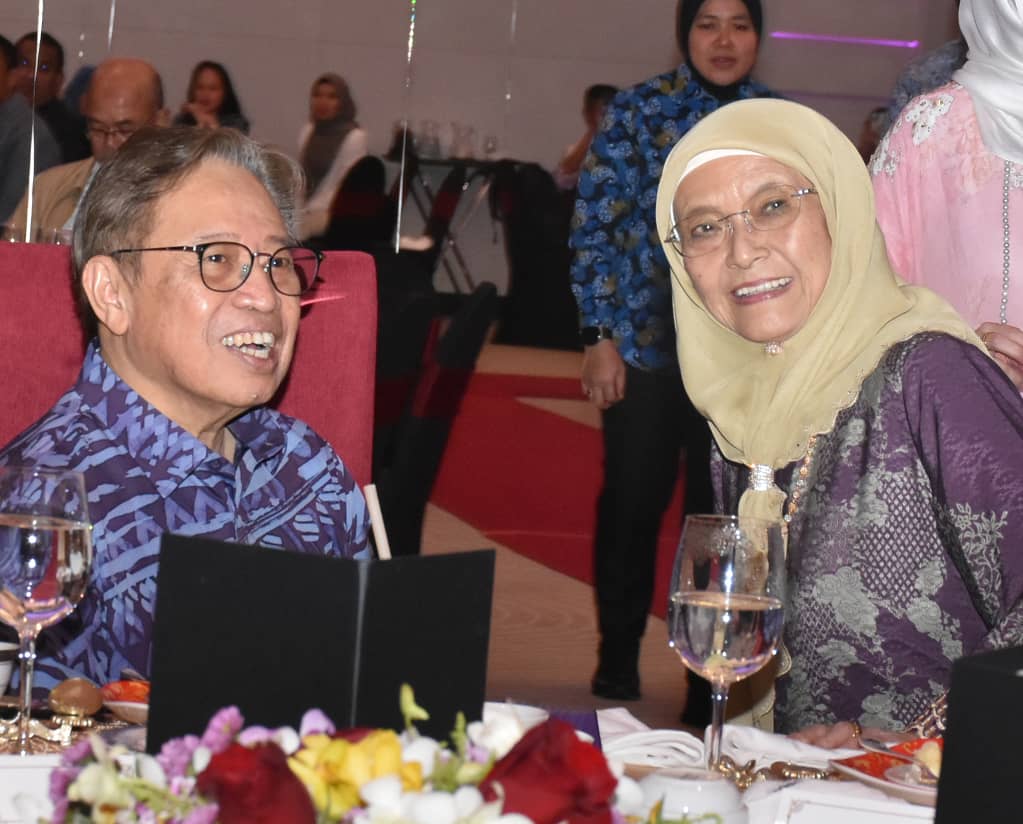
A life shaped by learning
Perhaps there is no better reflection of Abang Johari’s character than his lifelong pursuit of knowledge.
Long before smartphones, social media and instant access to information became part of everyday life, books already occupied almost every corner of the family home, becoming such a familiar sight that they eventually blended into the background of daily life.
Reading was never something her father encouraged through lectures or by telling his children what they should do.
Instead, he led by example. Books accompanied him everywhere in the house — on his bedside table, beside his favourite chair and wherever he chose to spend time.
“Wherever he spent time, there would always be a small stack of books within reach because he has always loved reading and learning new things. I think that’s one of the reasons my brother and I grew up loving books as well,” she said.
Norjihan shared that her father’s reading habits were unlike anyone else’s.
Rather than reading one book from beginning to end, he would pick up one title, read several pages, put it aside, move on to another, perhaps pause to watch the news, before returning to continue where he had left off.
“He never reads just one book at a time. He rotates between them, it has always been like that,” she said.
Looking back now, Norjihan believes this lifelong love of learning also explains why education has remained one of the causes closest to her father’s heart throughout his years in public service.
“When he introduced the Free Tertiary Education Scheme (FTES), I don’t think it was just another policy. I genuinely believe it was something he had wanted to achieve for a very long time because he truly believes education changes lives.
“He always says you have to keep yourself updated. Learning doesn’t stop once you obtain a degree,” she said.
It is a philosophy Abang Johari has quietly lived by throughout his life, one that continues to shape not only his own daily routine but also the values he has passed on to his children and grandchildren.
It is also a philosophy that drove the introduction of the FTES, as he wanted to ensure future generations of Sarawakians would have access to tertiary education regardless of their background.
Perhaps that is why, whenever someone asks Norjihan what gift they should buy for her father, her answer has never changed.
“I always tell them to buy him a book. I know he will genuinely appreciate it,” she said.
The grandfather who never breaks a promise
If Norjihan and her sibling grew up sharing their father with the people of Sarawak, it is his grandchildren who have come to know a different side of the man behind the title.
One particular memory that remains etched in her mind because it perfectly captures the grandfather Abang Johari has become.
He had promised his grandchildren that they would spend time together after work.
He had a meeting scheduled to last until 5.30 pm or, at the very latest, 6 pm.
It was a simple promise, but one made by a man whose daily schedule was anything but predictable.
As the afternoon wore on, the meeting continued longer than expected and his grandchildren began asking when he would be home.
“My late mother asked me to text his private secretary to remind him of his date with his grandchildren. We understood that his work was still going on, but his grandchildren kept asking for him and reminded how he had made a promise,” she said.
For a family that had spent decades watching public responsibilities dictate the rhythm of daily life, it was an understandable assumption.
However, it is something his grandchildren do not necessarily understand fully yet.
“Barely 10 to 15 minutes later, he walked through the front door and kept his promise to his grandchildren,” she said.
To many people, it might seem like a small incident, but for Norjihan it became one of the clearest reflections of the grandfather her father has become.
Growing up, she had watched him shoulder responsibilities that often demanded every minute of his day.
She understood better than most the pressures that came with public office, yet despite those demands, he chose to honour a promise he had made to his grandchildren.
“He is very attentive and very caring with his grandchildren. My brother and I sometimes like to tease him that he is a completely different person with his grandchildren,” she said.
To Norjihan, watching her father with his grandchildren is a quiet reminder that life has come full circle.
The demands of public service may have limited the time he could spend with his own children when they were growing up, but today, she sees him embracing every opportunity to create those same moments with his grandchildren.
“My brother and I always laugh because we tell him we never got this treatment when we were young. We understand why because he was busy working and serving the people.
“Now, with his grandchildren, perhaps he has the opportunity to enjoy the moments he didn’t really have with us. Watching them together makes all of us happy because we get to see a different side of him – he is a really loving grandfather,” she said.
A legacy built around family
Despite the demands of public office, there was one thing Abang Johari and his late wife never compromised on — ensuring that family remained at the centre of their lives.
Among Norjihan’s fondest memories are not grand celebrations or special occasions, but the simple tradition of gathering together throughout the month of Ramadan.
For as long as she could remember, almost every evening during the fasting month brought together relatives, close friends and extended family under one roof for congregational prayers, followed by meals and conversations that often stretched late into the night.
Coming from a large extended family, those gatherings became an important way of maintaining close relationships across generations.
Looking back, Norjihan believes those evenings taught her lessons that could never have been learned from books.
“They taught us faith, family and the importance of staying connected,” she said.
Even after the passing of her late mother, the tradition has continued.
Whenever possible, family members still gather on Friday nights, now accompanied by tahlil prayers in memory of loved ones who have passed away.
“My late mother used to keep a record of the dates when our family members passed away according to the Islamic calendar. Every year, we would remember them in our prayers, and we have continued doing that even after she was gone.
“I have always told my husband that this is something I want to continue because it’s such a beautiful family tradition,” she said.
To Norjihan, the greatest inheritance left by her parents is not measured in material things, but in values they quietly nurtured over decades — faith, kindness, humility and the importance of keeping family close, regardless of how busy life becomes.
A daughter’s birthday wish
Among all the questions she was asked, this was the one that made Norjihan pause the longest and left her feeling emotional.
As her father celebrates his 76th birthday, her wish is neither complicated nor extraordinary.
Like every daughter, regardless of age, she simply hopes for more time.
Norjihan said she is grateful that her father continues to enjoy good health and remains active in his work.
She pointed out that people often remark on how energetic her father remains despite the relentless pace of his daily schedule.
“People always tell us how healthy and active he is, I am grateful to Allah SWT for that. But at the back of my mind, I always remind myself that he is now 76.
“No matter how old we become, our parents will always be our parents. All we ever want is for them to continue to be blessed with good health and a long life,” she said.
Looking back over the decades, Norjihan knows some may dismiss her admiration as a daughter’s natural bias.
But she has also been the one who watched her father leave home before sunrise, waited through countless meetings as a child, gradually came to understand the sacrifices that accompanied public service, and realised that everything he had done was never for personal gain.
“He has always worked and continues to work for the people and Sarawak. He is always thinking about how to make Sarawak better and how to improve Sarawakians’ lives,” she said.
Today, as Norjihan watches many of those aspirations become reality, she believes they are the result not only of vision, but also of sincerity.
“Everything he has done has always come from genuine sincerity,” she said.
Norjihan hopes her father will continue to enjoy good health, remain protected in all that he does, and be granted many more years to spend with the family that has always shared him with the people of Sarawak.
Above all, she hopes he will still be there to witness the milestones that matter most.
“I always pray that he will be around to watch his grandchildren grow up, to see them graduate, get married and build families of their own,” she said.
For Sarawakians, Abang Johari will continue to be known as the leader whose vision helped shape the state’s future.
For Norjihan, the memories she treasures most are found far away from official ceremonies and public speeches.
They are found in the father who never forgot to call home simply to ask whether everyone had eaten, who believed books were the greatest gifts he could give his children, who quietly honoured a promise made to his grandchildren, and who showed that love did not always have to be spoken for it to be deeply felt.
Long before Sarawak knew him as Premier, he was simply Bapak.
And to his daughter, that will always be the title that matters most.