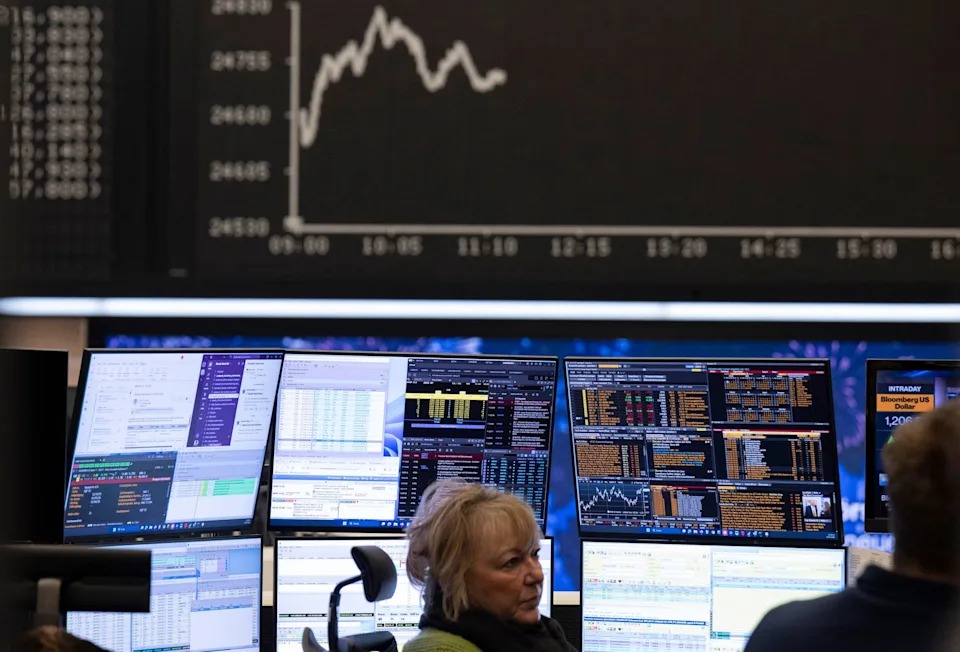
FRANKFURT, Germany: European stocks closed slightly lower on Wednesday (Aug. 19) as persisting concerns about West Asia tensions and elevated oil prices rendered the mood cautious, reported dpa-AFX.
In addition to digesting the regional inflation data, investors looked ahead to the minutes from the Federal Reserve’s latest monetary policy meeting for clues about the central bank’s future interest rate moves.
Oil prices moved higher after reports suggested that most shipowners are avoiding the Strait of Hormuz because of a lack of clear signals on its reopening.
Brent Crude futures jumped after a bulk carrier was struck by an unknown projectile while transiting the Strait of Hormuz, raising the prospect of ongoing disruptions to supply.
Iran maintained that the strategic waterway will not be opened until the United States (US) meets its demands.
Iran’s Chief of Staff, Major General Ali Abdollahi warned Gulf states on Wednesday that any assistance or facilitation provided to the aggressor US military will be considered participation alongside US forces.
The pan-European Stoxx 600 ended down 0.11 per cent. Germany’s DAX and France’s CAC 40 edged lower by 0.14 per cent and 0.09 per cent, respectively.
The United Kingdom (UK)’s FTSE 100 settled with a gain of 0.14 per cent, while Switzerland’s SMI climbed 0.46 per cent.
Among other markets in Europe, Austria, Belgium, the Czech Republic, Greece, Ireland, the Netherlands, Portugal and Spain ended higher.
Denmark, Finland, Iceland, Poland, Russia and Turkey closed weak, while Norway and Sweden ended flat.
In economic news, final data from Destatis showed eurozone inflation rose slightly in July, edging up to 2.9 per cent from 2.8 per cent a month earlier. The rate came in line with the estimate published on July 31.
Core inflation that excludes energy, food, alcohol and tobacco, rose to 2.5 per cent from 2.4 per cent in the previous month. The core rate also matched the preliminary estimate.
On a monthly basis, the harmonised index of consumer prices climbed 0.2 per cent in July, as initially estimated.
Data released by the Office for National Statistics showed the UK’s consumer price index posted an annual growth of 2.9 per cent in July, faster than the 2.6 per cent rise in June.
This was the highest in four months and matched economists’ expectations.
On a monthly basis, consumer prices moved up 0.3 per cent, following a 0.1 per cent gain a month earlier. Core inflation, which excludes prices of energy, food, alcohol and tobacco, remained unchanged at 2.6 per cent in July.
The CPI goods annual rate rose to 2.2 per cent from 1.7 per cent, and services inflation eased to 3.4 per cent from 3.6 per cent.
Another data point from ONS showed that factory gate inflation softened to 3.1 per cent in July from 3.5 per cent in June.
Likewise, input price inflation eased sharply to 4.9 per cent from 7.4 per cent in the previous month.
Further, data showed that monthly output prices rose 0.2 per cent in July, up from a revised fall of 0.1 per cent in June.
At the same time, input prices fell 1.7 per cent compared to a 1.9 per cent decline in the previous month. – BERNAMA-dpa-AFX