DALAT: Sarawak is targeting a monthly household income of at least RM15,000 by 2030 through the transformation of agriculture into a more productive and competitive commercial sector.
Minister for Food Industry, Commodity and Regional Development Datuk Seri Dr Stephen Rundi Utom said achieving the target would require greater adoption of technology and a shift from subsistence farming to commercial agriculture.
He said the move was also crucial as many existing farmers were ageing, making it necessary to attract more young people into the sector to ensure its long term sustainability.
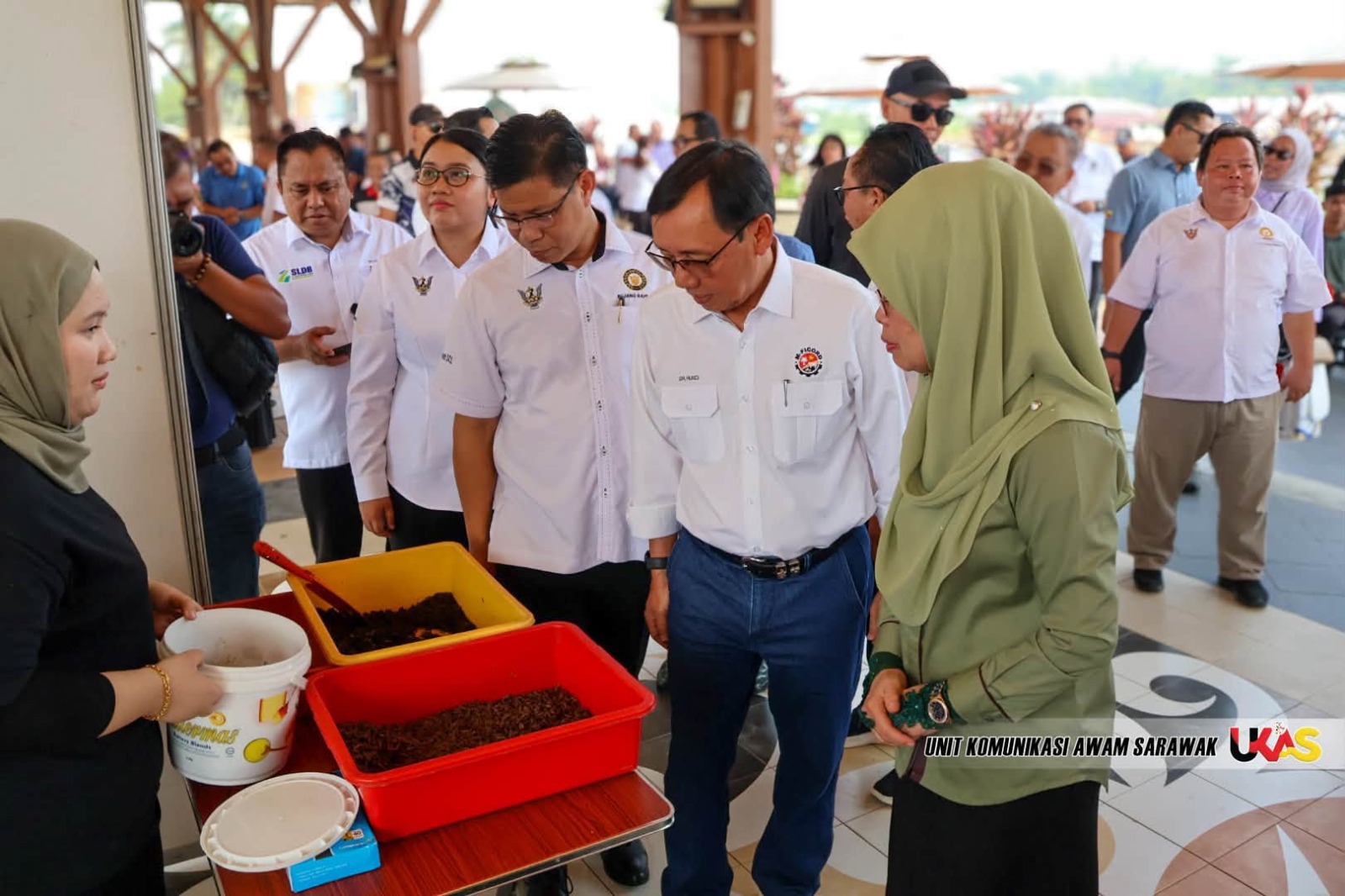
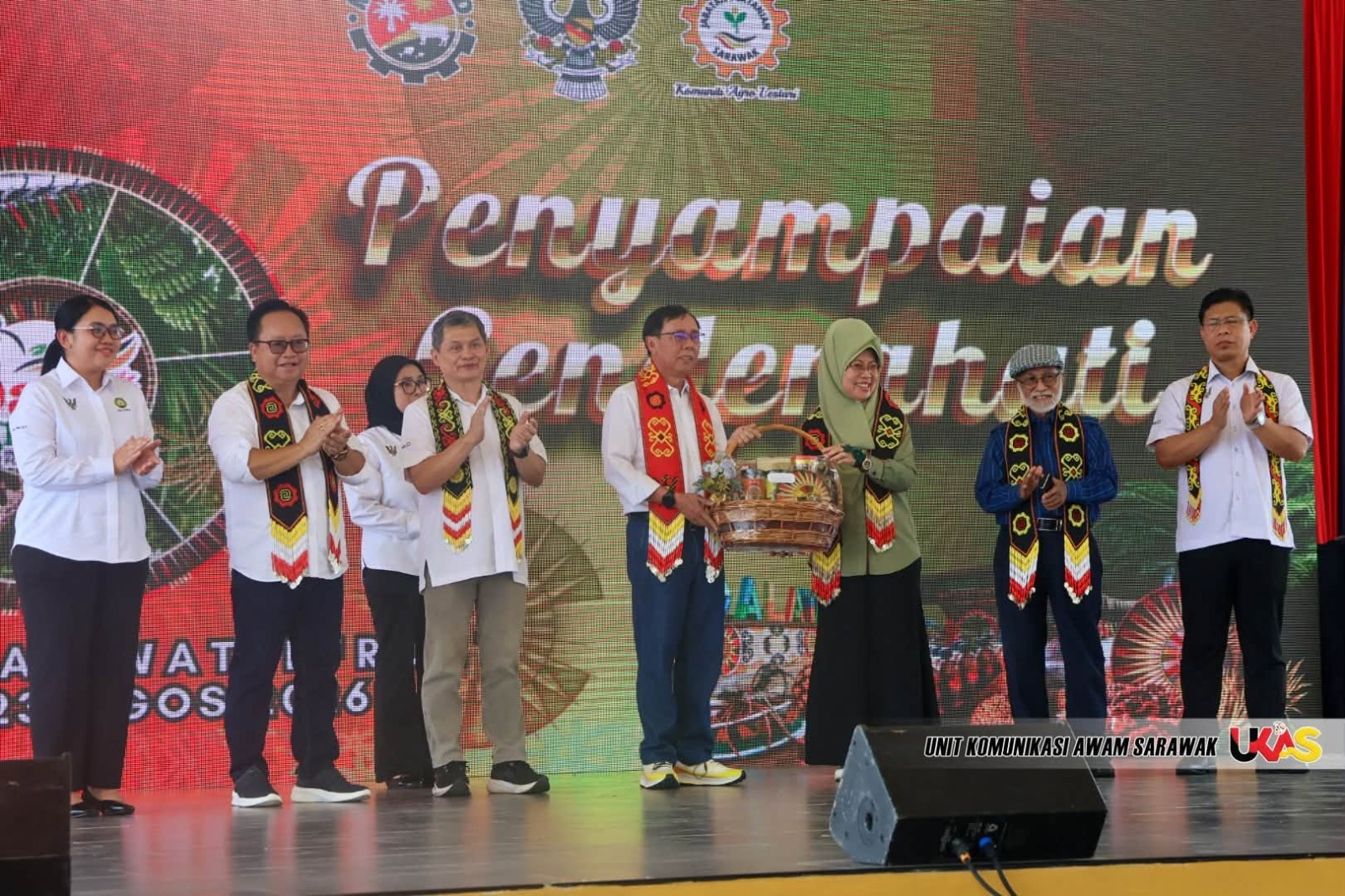
“Technology not only increases productivity but also reduces production costs, making the sector more attractive to young people,” he said at the Mini Agrofest organised by the Ministry of Food Industry, Commodity and Regional Development (M-FICORD) at the Dalat Waterfront on Friday (Aug. 21).
Dr Rundi said technologies such as precision agriculture, the Internet of Things (IoT), smart farming, greenhouses and mechanisation were changing the way agriculture was carried out.
He said these technologies could help dispel the perception that farming was a dangerous, difficult and dirty occupation while making agricultural activities more efficient and commercially viable.
Dr Rundi said rural communities needed to embrace commercial agriculture by adopting modern technology and working collectively to increase productivity and returns.
“This transformation is important to ensure rural communities, particularly the B40 group, also benefit from the state’s economic growth. Every drop of sweat we put in must bring returns to us,” he said.
He said the Sarawak Government was also exploring new technologies and crop varieties that could boost productivity while lowering production costs.
One example was perennial rice, which could be harvested several times from a single planting.
“The future of agriculture should not be measured solely by the size of land owned, but by the quality, productivity and commercial value that can be generated.
“We want to see RM1,000 this year become RM2,000 next year and continue to increase,” he said.