WHAT really makes a good leader?
Is it charisma? Intelligence? Experience? The ability to speak well and inspire people?
Or is leadership ultimately measured by something much simpler – the ability to turn ideas into action and, more importantly, ensure that those actions make a difference to the people?
I found myself pondering these questions after reading the remarks by Sultan of Pahang Al-Sultan Abdullah Ri’ayatuddin Al-Mustafa Billah Shah during his recent visit to Teluk Melano.
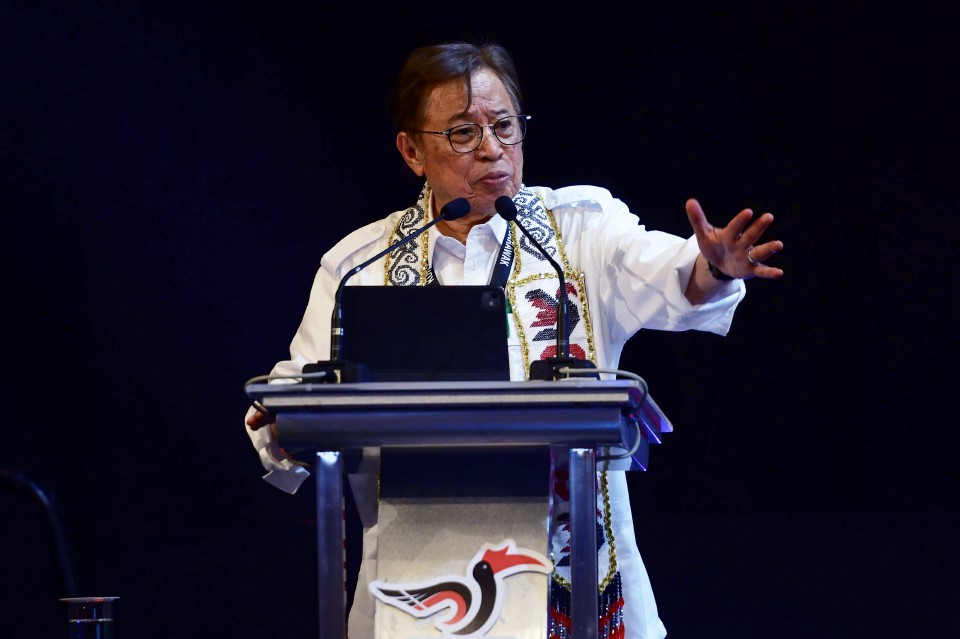
The Sultan had some warm words for Premier Datuk Patinggi Tan Sri Abang Johari Tun Openg, describing him as a dynamic leader who is approachable, friendly and deeply concerned about Sarawak’s development and the well-being of its people.
That is certainly a meaningful compliment.
But what caught my attention most was something else.
Al-Sultan Abdullah said he had consistently followed the ideas put forward by Abang Johari and regarded them as meaningful and effective.
More importantly, he observed that those ideas had not remained merely ideas.
They had been realised, implemented and, in his words, had “borne fruit for the people of Sarawak”.
To me, therein lies one of the most important lessons about leadership.
It is relatively easy to come up with ideas.
It is also easy to announce plans, unveil visions, launch programmes and talk about what we hope to achieve five, 10 or even 20 years from now.
But turning an idea into something tangible is an entirely different matter.
That requires political will, careful planning, competent people, sufficient resources, coordination, persistence and, quite often, the courage to venture into areas that others may initially consider too ambitious.
And perhaps this is where the Sultan’s remarks resonate particularly strongly in the Sarawak context.
Since taking the helm of the Sarawak Government in 2017, Abang Johari has pursued a decidedly forward-looking development agenda.
Sarawak has ventured more aggressively into areas such as renewable energy, green hydrogen, new technology and economic diversification, while the Post COVID-19 Development Strategy 2030 has set the broader goal of transforming Sarawak into a developed and high-income economy driven increasingly by innovation and sustainability.
Some of these ideas might once have sounded ambitious.
Hydrogen-powered transport, renewable energy, new revenue streams and positioning Sarawak within the emerging green economy are hardly conventional approaches for a state government.
Yet that willingness to look beyond today’s needs and prepare Sarawak for tomorrow has increasingly become a defining feature of the state’s development direction.
And there is one achievement that is particularly difficult to overlook – Sarawak’s financial position.
When Abang Johari’s administration began, state revenue stood at about RM5.9 billion in 2016. By 2024, it had reached RM14.2 billion – some 2.4 times higher.
According to the Premier himself, that increase was driven partly by the creation of new revenue sources, including the State Sales Tax on petroleum products and other commodities, as well as a state dividend policy.
The final revenue figure for 2025 stood at RM13.5 billion, still more than double the 2016 level.
That is no small achievement.
More importantly, stronger revenue gives Sarawak greater financial capacity to pursue development according to its own priorities.
Money, of course, is not the only measure of progress.
Neither should higher revenue figures alone be regarded as proof that every problem has been solved.
There will always be more roads to build, more rural communities to connect, more jobs to create and more needs to address.
But financial strength matters because without sufficient resources, even the best development plans can remain nothing more than plans.
Perhaps leadership can therefore be viewed through three simple stages:
Idea. Implementation. Impact.
The first tells us what a leader wants to achieve. The second tells us whether he has the ability to make it happen. The third tells us whether it actually makes a difference to people’s lives. And surely, the third is what matters most.
After all, ordinary people do not live inside policy documents. They may not read development blueprints or follow every announcement made at official functions.
But they understand results. They know when roads improve. They know when water and electricity reach their communities. They know when there are better schools and facilities. They know when jobs and business opportunities become available. And they certainly know when development improves their daily lives.
That is why the Sultan’s observation about ideas bearing fruit for the people is particularly significant.
Development should never be measured solely by how impressive a plan sounds, just as leadership should never be measured by the number of announcements made.
The real questions come afterwards. What happened after the announcement? Was the idea implemented? Did it achieve what it was supposed to achieve? And most importantly, did the people benefit?
There was another point in the Sultan’s remarks that deserves attention.
He described Abang Johari as approachable and concerned not only about the state’s development but also about the well-being of Sarawakians.
That distinction is important.
Development and people’s well-being must always go together. There is little point celebrating economic progress if ordinary people feel left behind.
Ultimately, development must have a human face.
Behind every policy are people. Behind every development allocation is a community hoping for something better. And behind every economic strategy are workers, families, entrepreneurs and young Sarawakians hoping for greater opportunities.
At the same event, Al-Sultan Abdullah also spoke highly of Head of State, Tun Pehin Sri Dr Wan Junaidi Tuanku Jaafar, describing him as knowledgeable and experienced.
The Sultan recalled working with Wan Junaidi when the latter was a federal minister during his tenure as Yang di-Pertuan Agong, saying Wan Junaidi had provided him with considerable assistance and advice.
That, too, tells us something about leadership.
Experience matters. Institutional knowledge matters. Having capable people occupying positions of responsibility provides continuity and stability.
But regardless of titles and positions, leadership must always come back to one fundamental purpose — serving the people.
That is perhaps the biggest takeaway I draw from the Sultan’s remarks.
A leader’s legacy will not ultimately be determined by how many speeches he delivered, how many plans he announced or how many slogans were created during his time in office.
It will be determined by what changed.
What was built. What was improved. What new opportunities were created. And whether the people became better off because of the decisions made.
Ideas certainly matter. Vision matters. Ambition matters.
But ideas without action remain words, while action without meaningful results serves little purpose.
Perhaps the true measure of leadership is therefore not what a leader promises to do.
It is what actually gets done — and whether the fruits of that effort ultimately reach the people. Now, that is something worth pondering.
Caption: Al-Sultan Abdullah poses for a photo with Abang Johari during the inauguration of the mosque at Kampung Telok Melano in Lundu.
DISCLAIMER:
The views expressed here are those of the writer and do not necessarily represent the views of Sarawak Tribune. The writer can be reached at drnagrace@gmail.com.