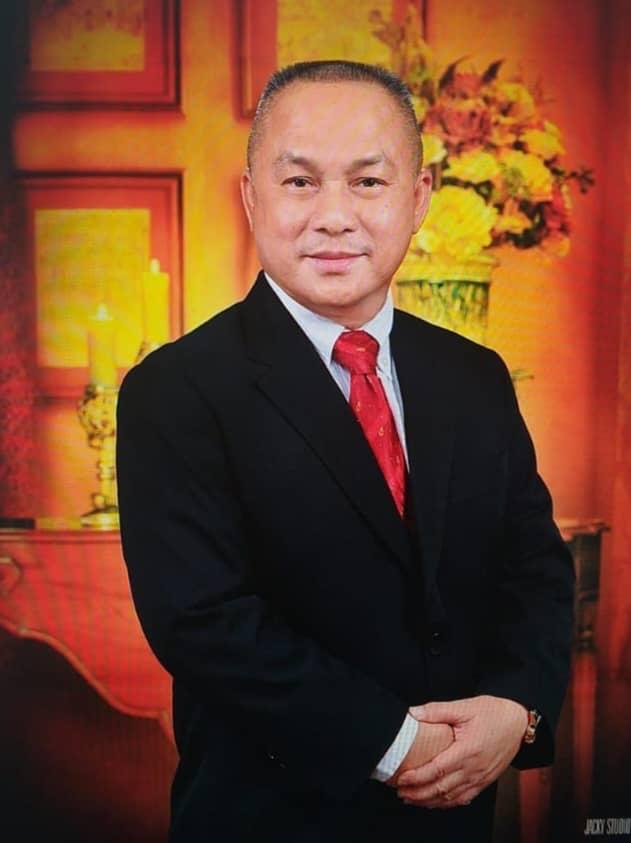
BY DR ALIM IMPIRA
ON August 31, 2026, Malaysians will once again raise the Jalur Gemilang and celebrate their 69th National Day.
We will remember our history. We will honour those who came before us. We will celebrate the peace, stability and progress that Malaysia has achieved.
There will be parades, patriotic songs, speeches and celebrations.
But National Day should also be a moment for reflection.
Beyond the flags and celebrations, perhaps we should ask ourselves a fundamental question:
What kind of Malaysia do we really want to build?
For me, the answer is clear.
I want a Malaysia united for a purpose. I want a Malaysia that is progressive in its thinking. I want a Malaysia that is developed in its economy and institutions. And I want a Malaysia where Malaysians come before labels.
United for a purpose
Malaysia has always been a diverse nation. We come from different ethnicities, religions, cultures, languages and traditions.
Our diversity is part of our identity and one of the unique strengths of our country.
But I believe we sometimes spend too much time talking about our differences and too little time talking about what unites us.
What is our common purpose? To build a prosperous nation.
To provide opportunities for our children. To create good jobs. To strengthen education.
To develop competitive businesses. To protect our natural resources. To strengthen our institutions. To protect public money. To maintain peace and security.
And, above all, to create a country where every Malaysian has a fair opportunity to live a dignified and meaningful life.
That should be our national purpose. We should not always ask: “What does my community get?”
We should also ask: “What can my community contribute to Malaysia?” That is the difference between simply living in a country and building a nation.
Malaysians before labels
I dream of the day when we no longer identify one another primarily by race, religion or colour. This does not mean that we should abandon our heritage.
Our cultures matter. Our languages matter. Our traditions matter. Our faiths matter. They are part of the rich tapestry of Malaysia. But they should not become walls that prevent us from seeing one another first as fellow citizens.
I want the day to come when we do not first ask: “What race are you?” but: “What can you contribute to Malaysia?”
I want a Malaysia where a Malay, Chinese, Indian, Iban, Bidayuh, Kadazan-Dusun, Melanau, Orang Ulu, Orang Asli or any other Malaysian can say with equal confidence:
“I am Malaysian. I belong here. This country is also mine.”
Race, religion or colour should not determine a person’s worth, opportunity or destiny. Our differences should enrich the Malaysian identity, not divide it.
Unity does not mean uniformity
I do not want a Malaysia where everyone thinks alike. That would not be democracy.
I want a Malaysia where we can disagree without becoming enemies.
Where political opponents can debate fiercely but still respect one another. Where different religions can coexist peacefully.
Where different cultures can flourish. Where different regions can have different priorities without questioning one another’s loyalty to Malaysia.
Unity does not mean uniformity. Unity means having enough common purpose to move forward together despite our differences. That is the Malaysia I want.
A progressive Malaysia
Progress is not simply about building taller buildings, wider highways or bigger shopping malls.
A progressive nation must also have progressive institutions, progressive education, progressive businesses, progressive technology and, most importantly, progressive thinking. The world is changing rapidly. Artificial intelligence is transforming industries. Digitalisation is changing the way we work and conduct business.
Green technology is creating new economic opportunities. Global supply chains are being reshaped.
Countries are competing for investment, talent, technology and markets. Malaysia cannot afford to stand still.
We must move forward. We must prepare our young people for the jobs of tomorrow. We must encourage innovation and entrepreneurship. We must strengthen our universities and research institutions.
We must help Malaysian businesses compete globally. We must embrace technology while ensuring that no community is left behind. We should not participate in the future. We should help shape it.
A developed Malaysia
What does it really mean to be a developed nation?
Is it simply a high GDP? More skyscrapers? More highways? More sophisticated cities?
I believe development must mean something deeper.
A developed Malaysia should have strong institutions, quality education, accessible healthcare, productive businesses, good infrastructure, competitive wages, technological capability, sound public finances, a clean environment and effective public services. A developed nation should not merely be wealthy. It should be well governed. It should be fair. It should be resilient.
And progress must reach ordinary Malaysians. National development cannot be measured only by economic statistics.
We must ask a more important question: Are Malaysians living better lives? No Malaysian should be left behind.
Development must not stop in our major cities. Malaysia is much bigger than Kuala Lumpur, Penang and Johor.
There are communities across Sarawak, Sabah and the peninsula that must be part of our national development story. A child growing up in a rural community should not have fewer opportunities simply because of where he or she was born.
Roads matter. Schools matter. Healthcare matters. Water and electricity matter. Internet connectivity matters. Access to financing matters. But above all, opportunity matters. We should build a Malaysia where geography does not determine destiny.
Sabah and Sarawak as partners
As a Sarawakian, I believe Malaysia’s future must fully recognise the importance and contribution of Sabah and Sarawak.
Our two Borneo states are not merely geographical extensions of the country. They are fundamental partners in the Malaysian story.
Our people, resources, cultures, strategic location and economic potential contribute significantly to the Federation. The future should therefore not be about Peninsular Malaysia versus Sabah and Sarawak.
It should be about Malaysia moving forward together.
We should build a Federation where every part of the country feels that it has a meaningful place in the national story.
I want mature politicians
Perhaps this is the most important part of the Malaysia I want. I want to see mature politicians in Parliament.
I want Parliament to be a place where national issues are debated seriously.
Where ideas compete. Where policies are scrutinised. Where ministers are held accountable. Where the opposition performs its constitutional role. But where everyone remembers that they are ultimately there to serve Malaysia.
I want politicians who can disagree without insulting. Politicians who can debate without provoking hatred. Politicians who can criticise without humiliating. Politicians who can compromise without surrendering their principles. Politicians who can admit when they are wrong.
And politicians who can acknowledge a good idea even when it comes from their political opponent. That is political maturity.
Parliament should be a chamber of ideas, not a theatre of insults.
The ‘rakyat’ do not care whether a good policy originated from the government or the opposition if that policy improves their lives.
If an opposition MP proposes a good idea, the government should be willing to consider it. If the government introduces a good policy, the opposition should be willing to acknowledge it.
That should not be weakness. That should be maturity. The country must come before the party.
We need statesmen, not merely politicians
There is a difference between a politician and a statesman.
A politician thinks about the next election. A statesman thinks about the next generation.
A politician may ask: “Will this win votes?”
A statesman asks: “Is this the right thing for Malaysia?”
A politician may ask: “How will this benefit my party?”
A statesman asks: “How will this benefit the country?”
Malaysia does not need fewer politicians. We need more statesmanship. We need leaders capable of seeing beyond the next election cycle.
(To be continued tomorrow in Part 2)