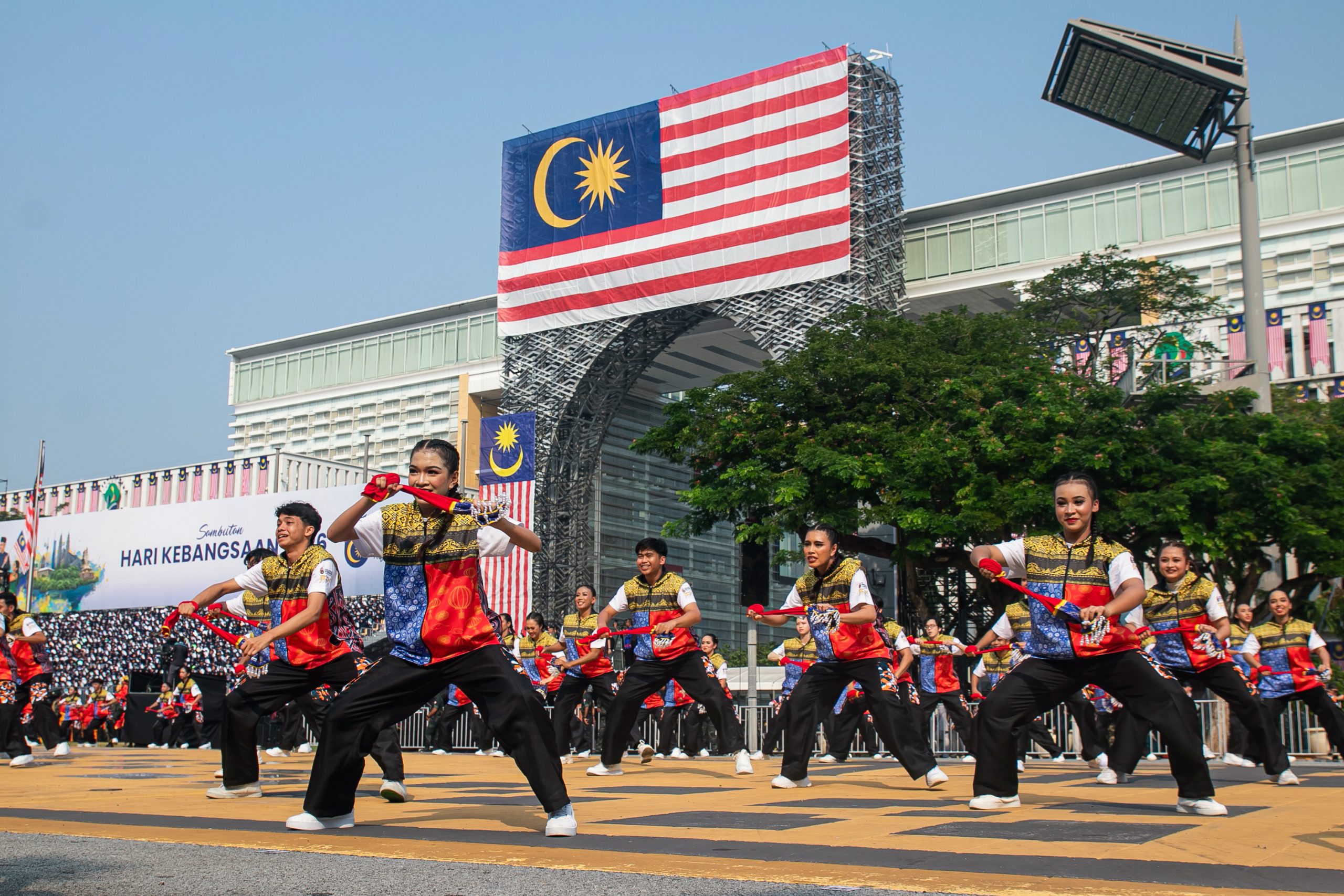
MONDAY, August 31, should have been a perfect day to go out and heal.
After all, it was a public holiday as Malaysia celebrated its 69th National Day – the sort of day when many of us would normally take advantage of the break to spend time with family and friends, enjoy a good meal or simply take a leisurely drive.
I had wanted to do exactly that.
Sadly, the haze had other ideas.
One glance outside was enough to change my mind.
The sky was grey, visibility had deteriorated and the familiar smell of smoke lingered in the air. Worse still, the Air Pollutant Index (API) had breached the 300 mark in several parts of Sarawak, reaching hazardous levels.
So much for going out to heal.
In the end, like many others, I found myself staying indoors, doors and windows closed, watching the outside world disappear behind a thick curtain of haze.
Even then, the indicator on my air purifier kept flashing red, signalling that the air quality inside the house was poor as well. Apparently, polluted air had somehow seeped indoors despite the doors and windows being shut.
And I certainly was not alone in having my National Day plans disrupted.
The situation had become serious enough for the Sarawak Government to call off the state-level National Day celebration scheduled in Kapit.
Just think about that.
An official celebration marking one of the most important dates on our national calendar had to be cancelled because the air had become too unhealthy for people to gather outdoors.
Here we were celebrating 69 years of nationhood – progress, development and unity – yet in parts of Sarawak, the simple act of breathing clean outdoor air could no longer be taken for granted.
There is a certain irony in that.
For all the advancement we have made, nature reminds us that some of life’s most precious things are also the simplest: clean water, a healthy environment and clean air. We rarely think about the air we breathe when it is clean. But when it becomes hazardous, everything changes.
Children stay indoors. Outdoor activities are cancelled. Masks come out. Those with respiratory conditions become particularly vulnerable. Businesses suffer as fewer people venture outside.
And a public holiday meant for celebration becomes a day spent staring through closed windows.
As I sat indoors watching that grey curtain, one thought kept bothering me.
How many more times must we go through this?
Haze is hardly something new to Malaysia.
For decades, we have experienced smoke pollution associated with forest and peatland fires, particularly during prolonged hot and dry weather.
We know the routine almost by heart. The sky turns grey, visibility deteriorates, the smell of smoke appears and everyone starts checking the API.
When readings climb, the familiar advice follows: stay indoors, reduce outdoor activities, wear a mask when necessary, and seek medical attention if breathing becomes difficult.
All of that advice is sensible. But there is something troubling about how familiar the routine has become.
Have we become so accustomed to haze that we now regard it almost as an unavoidable seasonal inconvenience?
That should concern us.
The current episode once again shows that haze is not merely about an unpleasant-looking sky.
On Sunday, the Department of Environment reported 1,211 hotspots across the southern ASEAN region based on satellite imagery. Of these, 1,180 were detected in Kalimantan, while 13 were recorded in Malaysia.
When fires burn on such a scale, smoke does not recognise national borders. Carried by prevailing winds, it can travel hundreds of kilometres, leaving communities far from the source breathing the consequences.
And therein lies one of the most frustrating aspects of transboundary haze.
The people suffering from it are not necessarily the people who caused it.
A child staying indoors in Kuching did not start a forest fire. Neither did the trader losing customers, the elderly person struggling to breathe or the worker who must spend hours outside.
Yet they pay the price.
To be fair, tackling transboundary haze is enormously complicated.
No country in the region can solve the problem alone. It requires cooperation, enforcement and sustained commitment.
ASEAN already has mechanisms to deal with the problem, including the ASEAN Agreement on Transboundary Haze Pollution. Technology has also advanced: satellites can detect hotspots, monitor wind direction, and enable information to be shared across borders almost instantly.
In fact, satellite monitoring in July had already observed smoke from West Kalimantan drifting into western Sarawak.
So perhaps the question is no longer whether we can see the problem developing.
We can.
The bigger question is: how effectively can we prevent it from becoming a crisis?
For too long, much of the public conversation surrounding haze has focused on what to do after it arrives.
Stay indoors. Close the windows. Put on a mask. Monitor the API. Wait for rain or the wind to change.
But these measures deal with the consequences.
Surely greater emphasis must be placed on prevention.
That means stronger enforcement against illegal burning, better forest and peatland management, quicker intervention when hotspots are detected, and greater accountability when fires repeatedly occur.
Prevention also makes economic sense.
Haze carries a price far beyond inconvenience: healthcare costs, productivity losses, disrupted schools and workplaces, affected flights, weaker tourism and postponed community events.
Kapit losing the opportunity to host Sarawak’s National Day celebration is a reminder of how far-reaching those consequences can become.
And behind all those economic considerations lies something far more valuable – our health.
Clean air should never be regarded as a luxury.
Neither should we accept haze as something people in this part of the world simply have to learn to live with.
Perhaps that is what worries me most.
We have experienced haze so many times that the cycle has become almost predictable.
The sky turns grey. We check the API. We complain. We stay indoors. Eventually rain comes or the wind changes. The smoke disappears. The sky turns blue again.
And we move on.
Until the next episode.
Maybe that is the cycle that really needs to be broken.
This latest haze should be more than another temporary environmental emergency. It should remind us that preventing transboundary haze must remain a regional priority even after the skies clear and public attention moves elsewhere.
ASEAN has long aspired towards a haze-free region. It is an ambition worth pursuing with urgency.
Because ultimately, ordinary people will not measure the success of regional cooperation by the number of meetings held, agreements signed, committees formed or statements issued.
They will measure it through something much simpler.
The air they breathe.
For now, I will continue looking through my window and waiting for the grey sky to clear.
Hopefully, one day future generations will read about severe haze as something Southeast Asia once struggled with – rather than something they, too, must repeatedly endure.
After all, 69 years after Merdeka, surely the freedom to step outside and breathe clean air should not be too much to hope for.
For the moment, all we can ask is: When will we finally breathe easy? That’s certainly something to ponder.
DISCLAIMER:
The views expressed here are those of the writer and do not necessarily represent the views of Sarawak Tribune. The writer can be reached at drnagrace@gmail.com.