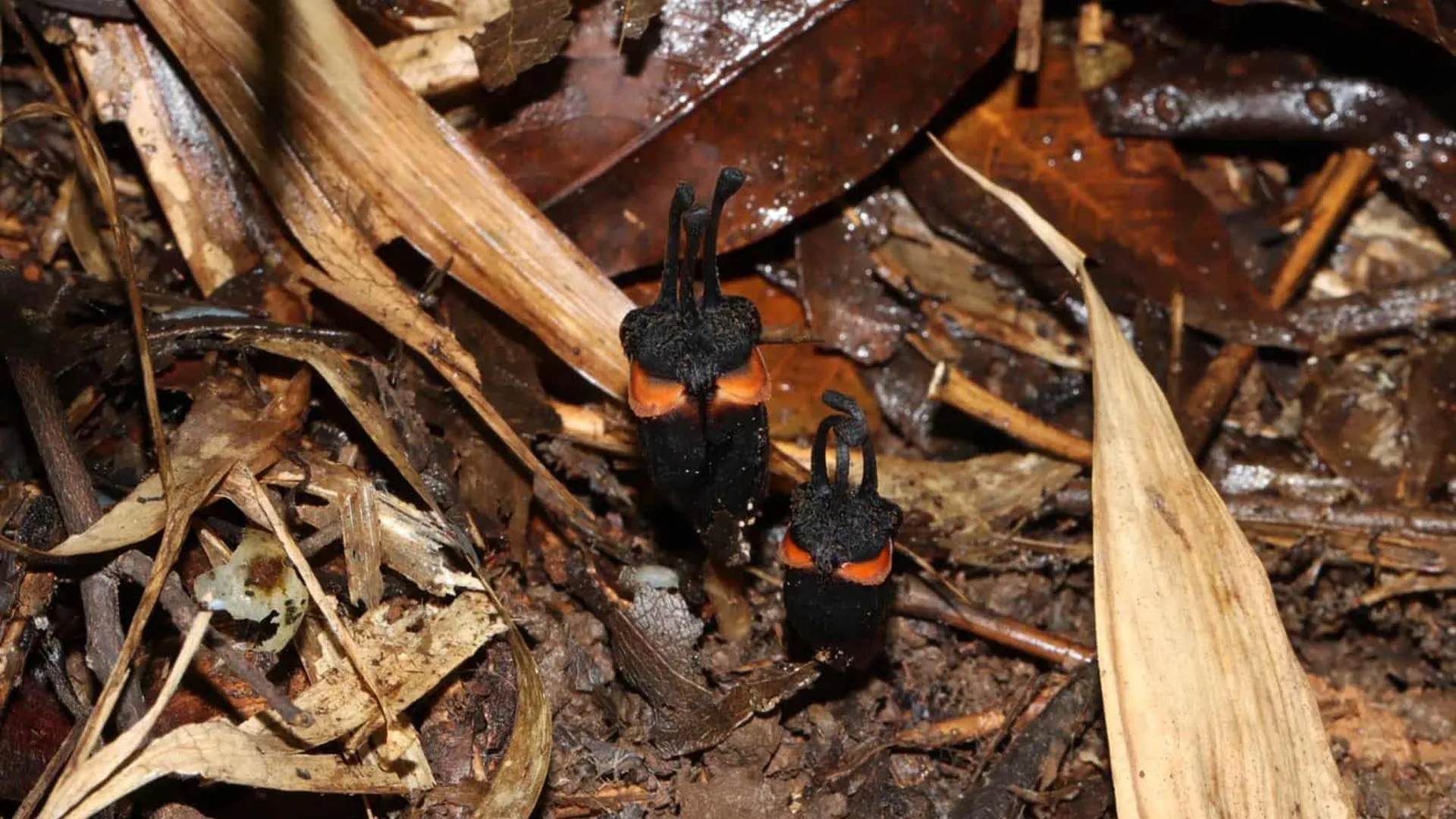
KUCHING: A newly discovered flowering plant with a striking black-and-orange appearance has earned the name “devil flower”, after botanists uncovered the rare species in western Thailand.
The plant, formally identified as Thismia daemona, was discovered by researchers from Chulalongkorn University and Prince of Songkla University during botanical surveys at Thong Pha Phum National Park in 2025.
Their findings were recently published in the peer-reviewed journal PhytoKeys.
Named for its dark colouring, horn-like appendages and mysterious appearance, the species belongs to the Thismia genus, commonly known as “fairy lanterns”.
Unlike most flowering plants, Thismia daemona lacks chlorophyll and cannot produce its own food through photosynthesis. Instead, it survives by obtaining nutrients from underground fungi, spending almost its entire life hidden beneath leaf litter before emerging briefly to flower and produce fruit.
Researchers said the discovery was significant because the species was found at nearly 1,000 metres above sea level in a relatively dry montane forest — an unusual habitat for the genus, which is more commonly associated with humid lowland rainforests in Peninsular Malaysia, Borneo and Sumatra.
The find also extends the known northern range of the Geomitra section of the Thismia genus.
The species’ scientific name reflects both its unusual appearance and elusive lifestyle.
“Combined with its hidden, subterranean and mysterious lifestyle on the forest floor, our team unanimously agreed that naming it Thismia daemona perfectly captured its enigmatic and devil-like essence,” researcher Sahut Chantanaorrapint said.
Despite the discovery, researchers believe the plant is already facing an uncertain future.
Only a single population containing fewer than 50 individual plants has been recorded in an area smaller than a football field within the national park, leading researchers to provisionally classify the species as Critically Endangered.
Although the park is protected, its popularity with tourists and the plant’s extremely limited distribution leave it particularly vulnerable.
Around 120 species of Thismia are currently known worldwide, most of them occurring across Asia, Australia and Southeast Asia, with many considered at risk of extinction.